 أفيتاس هوم
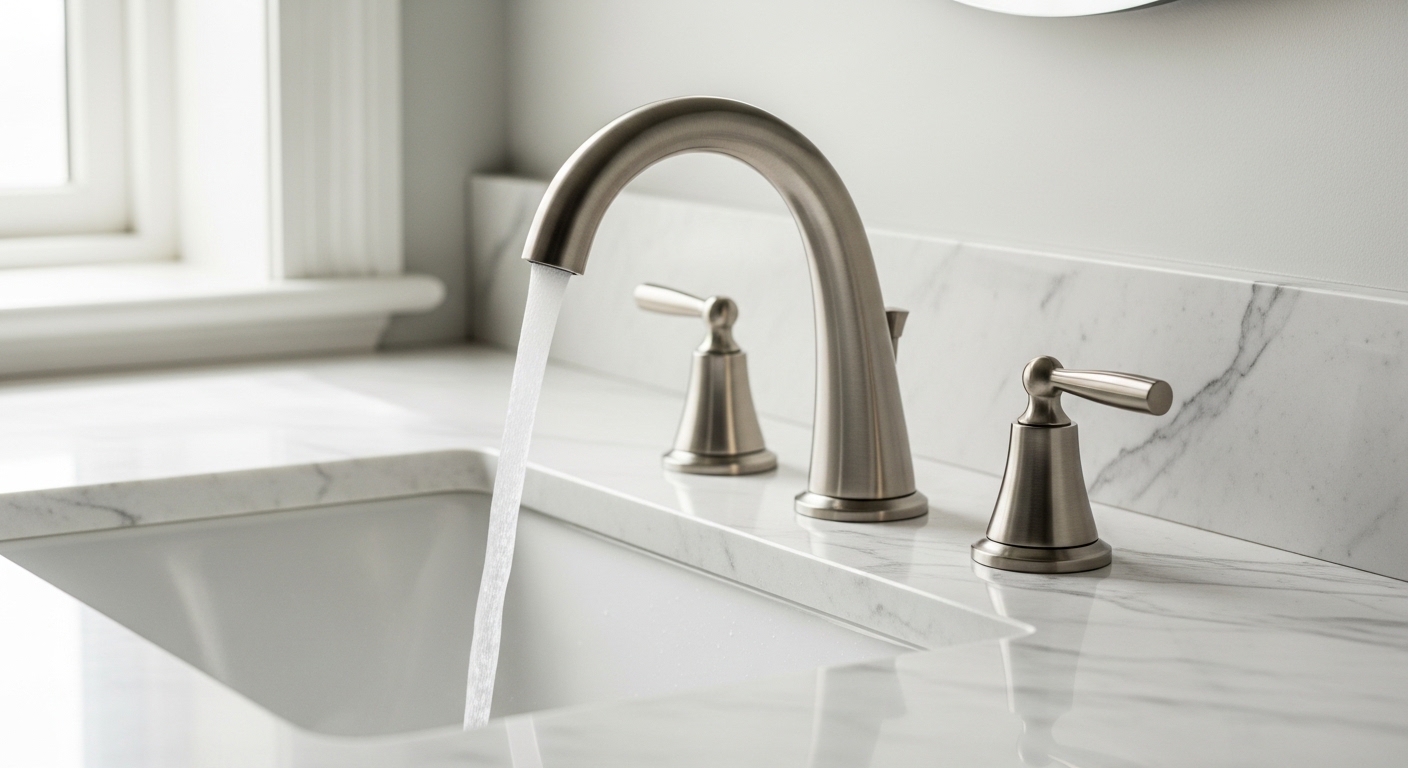
If you’re shopping for a bathroom faucet USA buyers can actually trust, the decision comes down to four things: the valve inside, the metal it’s built from, whether it’s certified for US plumbing code, and how fast it can reach your door with real warranty support. Get those right and a faucet lasts 15–20 years. Get them wrong — usually by chasing the cheapest listing — and you’re back at the sink in 18 months chasing a drip. This guide walks through exactly what “USA-grade” means, what to pay, which finishes hold up, and how to match a faucet to your specific sink so you buy once.
At avitashome, we sell and stress-test bathroom fixtures every week, and the questions below are the ones real customers actually ask us before they check out. Let’s answer them the way a knowledgeable friend would.
What actually makes a bathroom faucet “USA quality”?
A USA-quality bathroom faucet is one that’s certified to US plumbing standards, built from lead-free brass or high-grade stainless, and backed by a warranty a US-based company will honor. The “made in USA” sticker matters less than those three things — most faucet bodies are cast overseas, but the certifications and the support are what protect you.
Here’s what to look for on the spec sheet or listing before you buy:
- NSF/ANSI 61 & 372 (lead-free): Federal law caps lead at 0.25% weighted average on wetted surfaces. Legitimate US listings state this outright.
- WaterSense / CALGreen flow: Bathroom faucets sold for US homes should flow 1.2 GPM or less; California, Colorado, and Washington enforce as low as 1.0–1.2 GPM. A WaterSense label means it hit that number without feeling weak.
- Ceramic-disc cartridge: This is the single biggest longevity factor. Ceramic discs shrug off grit and outlast rubber-washer valves by years.
- ASME A112.18.1 / CSA B125.1: The core North American faucet performance standard. If a listing cites it, the product was tested for pressure, durability, and flow.
If a $29 “USA seller” faucet lists none of these, that’s your answer. The metal is likely zinc alloy under the chrome, and the valve is a rubber washer that’ll weep within a year.
How much should I spend on a bathroom faucet — is $50 enough or do I need $200+?
For a bathroom faucet that lasts, plan on $80–$250. Below about $60 you’re almost always buying zinc-alloy bodies and plastic cartridges; above $250 you’re mostly paying for designer branding and premium finishes, not better function. The sweet spot for a durable, code-compliant faucet from a US warehouse sits right in the middle.
Here’s roughly what each tier buys you in 2026:
| Price range | Typical build | Valve | Best for | Expected lifespan |
|---|---|---|---|---|
| $25–$59 | Zinc alloy, thin plating | Rubber washer / plastic | Rentals, short-term flips | 1–4 years |
| $60–$120 | Brass-and-zinc mix, PVD finish | Ceramic disc | Most guest baths | 8–12 years |
| $120–$250 | Solid lead-free brass, PVD finish | Sealed ceramic disc | Primary baths, hard water | 15–20 years |
| $250+ | Solid brass, designer | Premium ceramic | High-end remodels | 20+ years |
The jump that actually matters is from the $25–$59 tier to the $60–$120 tier — that’s where you gain a ceramic-disc valve and real plating. Spending more than $250 rarely buys more reliability; it buys a name and a finish. If your home runs on hard water, spend toward the top of the $120–$250 band, because the metal and valve quality directly determine how well the faucet survives mineral scale. We break the metallurgy down in our guide to the best bathroom faucet material for hard water.
Single-hole, centerset, or widespread — which one fits my sink?
Match the faucet to the number of holes already drilled in your sink or vanity: one hole means single-hole, three holes 4 inches apart means centerset, and three holes 8–16 inches apart means widespread. Buying the wrong configuration is the number-one reason faucets get returned in the USA.
Quick way to choose:
- Count the holes in your sink deck (flip a pedestal sink over; look under the counter for a vanity top).
- Measure hole spacing center-to-center on the two outer holes.
- Match it: 1 hole → single-hole faucet (or add a deck plate to cover a 3-hole sink). 4″ spread → centerset. 8″+ spread → widespread (three separate pieces).
Single-hole faucets are the easiest DIY install and the most popular in modern US bathrooms because they’re clean-looking and fast to mount. Widespread faucets look more upscale and let you set the handles wherever you like, but they take longer to install and cost more. If you want a hands-free upgrade, the widespread footprint also opens the door to motion-sensor models — we cover those in our widespread touchless faucet buyer’s guide.
Which finish holds up best — brushed nickel, chrome, matte black, or bronze?
Brushed nickel is the most forgiving everyday finish because it hides water spots and fingerprints; chrome is the toughest and easiest to clean but shows every splash; matte black looks striking but demands more wiping in hard-water homes. The real durability factor isn’t the color — it’s whether the finish is applied by PVD (physical vapor deposition) or cheap electroplating.
| Finish | Hides spots? | Cleaning effort | Hard-water friendly? | Best room style |
|---|---|---|---|---|
| Brushed / satin nickel | Excellent | Low | Very good | Transitional, warm |
| Chrome | Poor | Low but frequent | جيد | Classic, clean |
| Matte black | جيد (dust shows) | Medium-high | Fair — scale shows | Modern, bold |
| Oil-rubbed bronze | Excellent | Low | Very good | Rustic, traditional |
| Polished nickel | Fair | Medium | جيد | Luxe, timeless |
Whatever color you pick, insist on a PVD finish. PVD bonds the finish at a molecular level and resists scratching, tarnishing, and corrosion far better than standard plating — most quality US faucets now carry a lifetime finish warranty because of it. If you’re leaning toward a warmer, high-end look that coordinates with a shower, our take on the polished nickel faucet and shower pairing is worth a read before you commit to a whole-bathroom finish.
How long does a good bathroom faucet last, and what actually breaks first?
A quality US-code faucet lasts 15–20 years, but the aerator and the valve cartridge are what fail first — usually from mineral buildup, not wear. The good news: both are cheap, user-replaceable parts, so a “dead” faucet is often a $10 fix, not a replacement.
Here’s the typical failure timeline and what to do:
- Aerator (2–5 years): Flow drops or sprays sideways. Unscrew the tip, soak in vinegar, or swap it. Not every aerator fits every faucet, though — check our explainer on whether a bathroom faucet universal aerator actually fits your model before buying a replacement.
- Cartridge (8–15 years): Handle drips or gets stiff. Replace the ceramic cartridge — most brands sell an exact-match kit.
- O-rings / supply lines (10+ years): Slow drip at the base or under the sink. A drip usually means a worn O-ring, not a broken faucet — here’s how to fix a leaky bathroom sink faucet yourself.
The lesson: buy from a seller that stocks replacement cartridges and O-rings for the exact model. A cheap faucet with no parts support is disposable; a mid-range faucet with a lifetime warranty and available parts is a 20-year fixture.
Where should I actually buy — big-box store, Amazon, or a specialty faucet retailer?
For a bathroom faucet in the USA, a specialty fixtures retailer usually beats both big-box and generic marketplaces on the two things that matter most after the sale: real warranty support and available replacement parts. Big-box stores win on same-day pickup; marketplaces win on price; but both often leave you stranded when a cartridge fails in year six.
Compare the trade-offs honestly:
| Where you buy | ثمن | Warranty support | Parts availability | Expert help |
|---|---|---|---|---|
| Big-box home store | Medium | Store return window only | Limited to stocked brands | Generalist |
| Generic marketplace | Lowest | Varies by third-party seller | Often none | None |
| Specialty faucet retailer | Medium | Full manufacturer + retailer | Model-specific parts | Fixture specialists |
A quality faucet is a decade-plus purchase, so weight the after-sale support heavily. Buying the bathroom faucet USA homeowners keep for 15 years means buying from a seller who’ll still answer the phone about a cartridge in year eight — that’s the whole argument for a specialty retailer over saving $12 on a marketplace listing.
How do I install a bathroom faucet myself — is it a weekend job?
Installing a bathroom faucet is a 45–90 minute DIY job for most people, needing only an adjustable wrench, a basin wrench, شريط سباك, and a bucket. If your shutoff valves work and the sink already has the right hole configuration, you don’t need a plumber.
The basic sequence:
- Turn off the hot and cold shutoff valves under the sink and open the old faucet to drain the lines.
- Disconnect the supply lines and the old faucet’s mounting nuts (this is where a basin wrench earns its keep).
- Clean the deck, drop in the new faucet through the correct holes, and hand-tighten the mounting hardware.
- Wrap threads with plumber’s tape, connect new braided stainless supply lines, and snug — don’t overtighten.
- Turn the water back on slowly and check every joint for drips before you walk away.
One tip that saves callbacks: always install fresh braided-stainless supply lines rather than reusing old ones, and never crank fittings past hand-tight plus a quarter turn — overtightening cracks compression nuts and is a leading cause of “brand-new faucet” leaks.
FAQ
Are all bathroom faucets sold in the USA lead-free?
Legally, yes — since 2014 the Reduction of Lead in Drinking Water Act requires faucets sold for potable use to have no more than 0.25% weighted-average lead on wetted surfaces (NSF/ANSI 372). But gray-market imports on some marketplaces skirt this. Confirm the listing states NSF/ANSI 61 and 372 certification before buying.
What’s the difference between GPM ratings, and which do I need?
GPM is gallons per minute of flow. US bathroom faucets are capped at 1.5 GPM federally, but WaterSense models and states like California require 1.2 GPM or lower — some go to 1.0 or 0.5 GPM. For a bathroom sink, 1.0–1.2 GPM feels perfectly strong for washing hands and won’t run afoul of any US code.
Do I need a plumber to replace a bathroom faucet?
Usually not. If your under-sink shutoff valves function and the sink hole configuration matches your new faucet, it’s a straightforward DIY swap in under 90 minutes. Call a plumber only if the shutoff valves are seized, corroded, or leak when you turn them.
How do I stop hard water from ruining a new faucet?
Pick a solid-brass body with a PVD finish and a ceramic-disc valve, then wipe the faucet dry after use and soak the aerator in white vinegar every few months. Those steps neutralize the two ways hard water attacks a faucet: scale on the aerator and mineral grit in the valve.
Is brushed nickel or matte black better for a family bathroom?
Brushed nickel is the better call for a busy family bathroom because it hides fingerprints, toothpaste splatter, and water spots with minimal wiping. Matte black looks fantastic but shows dust and hard-water residue, so it needs more frequent cleaning to stay looking sharp.
What warranty should a good bathroom faucet come with?
Look for a lifetime limited warranty on both finish and function for residential use — that’s the standard quality US brands offer and a strong signal the maker trusts its ceramic valve and PVD finish. Anything shorter than five years suggests the manufacturer expects the faucet to fail.
The bottom line
For a bathroom faucet USA homeowners can install once and forget for 15–20 years, buy a solid-brass, WaterSense-certified, ceramic-disc faucet in the $80–$250 range, match it exactly to your sink’s hole configuration, choose a PVD finish, and buy from a seller who stocks parts and honors a lifetime warranty. Skip the $29 zinc special — it’s the most expensive faucet you can buy, because you’ll buy it twice.
Author note: This guide was written by the avitashome fixtures team, who source, install, and pressure-test bathroom and kitchen faucets year-round. Our recommendations are grounded in US plumbing standards (NSF/ANSI 61/372, ASME A112.18.1, EPA WaterSense) and hands-on testing of valve durability and finish wear — not spec-sheet marketing. avitashome ships code-compliant fixtures from US warehouses with model-specific replacement parts and warranty support.