 أفيتاس هوم
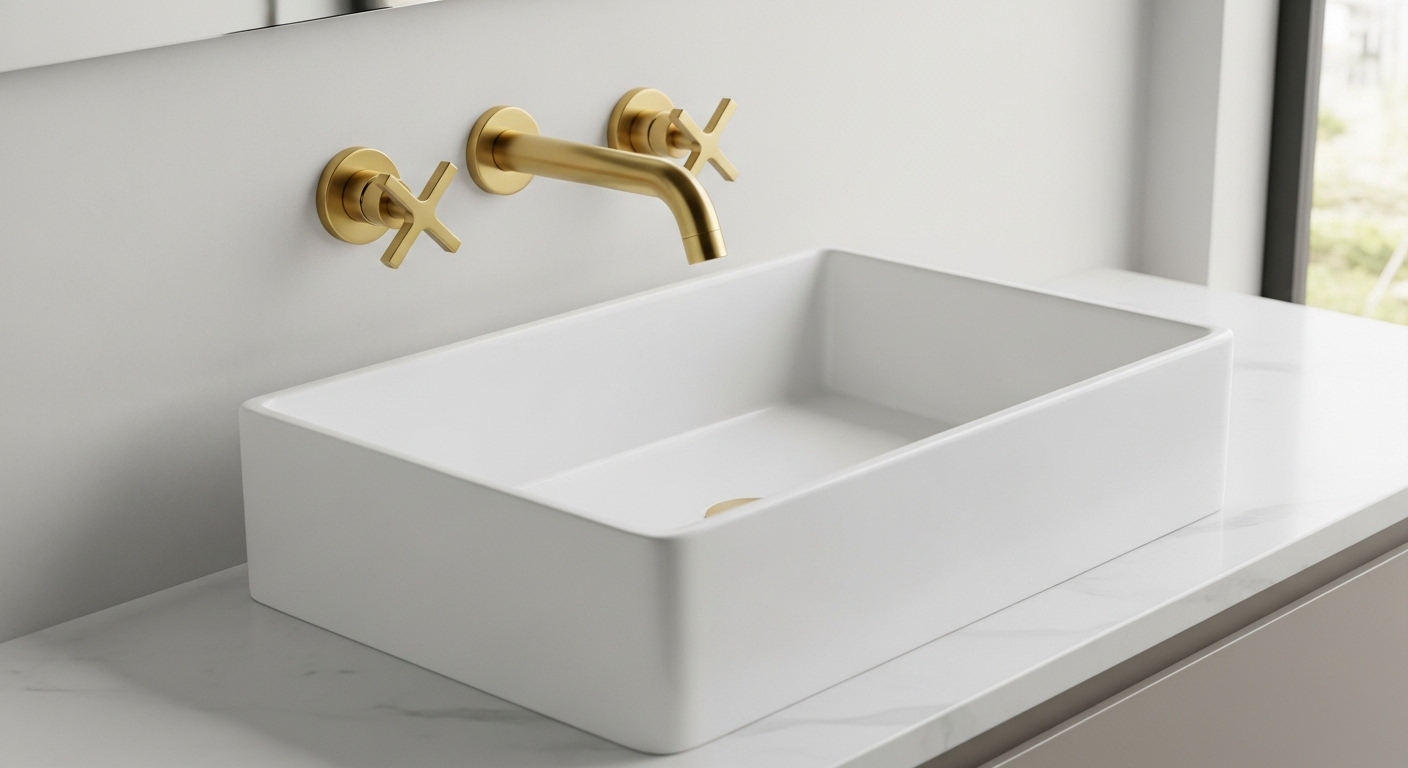
If you are shopping for a widespread faucet wall mount, you are looking at one of the most striking upgrades you can make to a bathroom or powder room. Unlike a standard deck-mounted faucet that sits on the sink or counter, a widespread wall mount faucet emerges directly from the wall, with the spout and two handles installed as separate pieces. The result is a floating, architectural look that pairs beautifully with vessel sinks, floating vanities, and trough basins. But because the plumbing lives inside the wall, choosing and installing one takes a little more planning than a typical faucet swap.
At avitashome, we have spent years helping homeowners and remodelers match fixtures to real-world plumbing situations. This guide walks you through everything that matters before you buy: configuration, spread dimensions, valve types, finishes, flow rates, and the install details that quietly make or break the project.
What Is a Widespread Faucet Wall Mount?
A widespread faucet wall mount combines two ideas. “Widespread” refers to the three-hole configuration: a separate spout and two independent handles, each connected by flexible supply lines underneath or behind the wall. “Wall mount” means the entire assembly anchors into the wall surface rather than the sink deck or countertop.
The defining feature is the spread — the center-to-center distance between the two handles. On widespread models this typically ranges from 8 inches up to 16 inches, and on many wall mount versions the handles and spout can be positioned with even more flexibility because they are not locked to pre-drilled sink holes. That adjustability is the main reason designers love this style.
Compare that to a centerset faucet, where the spout and handles share a single base on 4-inch centers, or a single-hole faucet with one lever. Widespread wall mount faucets sit at the premium end of the category, and they signal a deliberate, considered bathroom design.
Where Wall Mount Widespread Faucets Work Best
- Vessel sinks: A bowl that sits on top of the counter is tall, so a wall mount spout clears the rim without needing an extra-tall deck faucet.
- Floating and stone vanities: Keeping the faucet off the counter shows off the slab or the floating cabinet line.
- Trough and console sinks: Long shallow basins are easier to serve from the wall.
- Small powder rooms: Freeing up the counter makes a tight vanity feel larger.
- Easy-clean priorities: No deck holes means no grime ring around the faucet base.
Widespread Faucet Wall Mount vs. Other Faucet Types
Choosing a widespread faucet wall mount over a deck-mounted option is partly about looks and partly about plumbing reality. The table below lays out the practical differences so you can see where this style earns its place.
| Faucet Type | Mounting | Hole / Spread Requirement | Best For | Install Difficulty |
|---|---|---|---|---|
| Widespread wall mount | Into the wall | In-wall rough-in valves, 8–16 in. spread | Vessel sinks, floating vanities, design-forward baths | High — needs open wall or planned rough-in |
| Widespread deck mount | On sink/counter | 3 holes, 8–16 in. spread | Larger vanities, traditional looks | Moderate |
| Centerset | On sink/counter | 3 holes on 4 في. centers | Standard bathroom sinks, budget builds | Easy |
| Single-hole | On sink/counter | 1 hole | Compact vanities, modern minimalism | Easy |
| Wall mount single-lever | Into the wall | In-wall valve, single plate | Minimalist wall-mount look without dual handles | High |
The takeaway: a widespread wall mount gives you the most design impact and the cleanest counter, but it asks the most of your plumbing. If your wall is already closed up and you are not ready to open it, a widespread deck mount delivers a similar split-handle look with far less disruption.
Key Dimensions: Spread, Spout Reach, and Mounting Height
Getting the measurements right is where most widespread wall mount projects succeed or fail. Three numbers matter most.
Handle Spread
The spread is the distance between the centerlines of the two handle valves. Most widespread faucets are adjustable from 8 to 16 inches. For a wall mount, your plumber sets the rough-in valves at a fixed spread inside the wall, so you must decide the spread before the wall is closed. A 8-inch spread suits smaller basins; 10 to 12 inches looks balanced over a wide vessel or trough.
Spout Reach and Height
Spout reach is how far the spout projects from the wall, and it must land the water stream near the center of the basin or drain — not against the back rim, and not splashing over the front edge. Measure from your finished wall to the center of your sink bowl. For vessel sinks, also confirm the spout sits high enough above the bowl rim for comfortable hand washing.
Mounting Height Above the Sink
Plan the faucet centerline 4 to 8 inches above the sink rim for a deck-set basin, or above the vessel bowl rim for a vessel sink. Too low and you cannot fit your hands under the spout; too high and you get splashing. Always dry-fit with the actual sink in place before the rough-in is finalized.
- Confirm the sink model and its exact dimensions first.
- Mark the spout centerline based on basin center and comfortable clearance.
- Set handle valves at your chosen spread, level and plumb.
- Verify spout reach reaches the basin center with the actual sink dry-fit.
- Photograph the open wall before closing it — you will want that reference later.
Finishes That Work for Wall Mount Faucets
Because a wall mount faucet is visually isolated against the wall — not crowded by a sink deck — its finish reads more prominently than a deck faucet’s would. Choose with that visibility in mind.
- Chrome: Bright, easy to clean, and budget-friendly. A safe, timeless pick.
- Brushed nickel: Warm-neutral, hides water spots and fingerprints well.
- Matte black: High contrast against light walls and tile; a strong modern statement.
- Brushed gold / champagne bronze: The current favorite for design-forward baths; warm and elegant.
- Oil-rubbed bronze: Traditional and rich, pairs with farmhouse and transitional styles.
One practical tip: match the faucet finish to the drain, the exposed P-trap (if your sink shows one), and any towel bars or accessories nearby. With a wall mount, the eye travels along the wall and notices mismatched metals quickly. For a deeper walkthrough of finish coordination and broader selection criteria, see our bathroom faucets buying guide.
Valve Types and What’s Inside the Wall
A widespread faucet wall mount is really two systems: the visible trim (spout and handles) and the in-wall rough-in valve body. The rough-in is the part you cannot change later without opening the wall, so it deserves attention.
Ceramic Disc Cartridges
Modern widespread faucets use ceramic disc cartridges in each handle valve. They resist hard-water wear, give a smooth quarter-turn feel, and rarely drip. If you have ever dealt with a constantly dripping or spraying faucet, you know how much the cartridge quality matters — our guide on fixing a faucet that sprays water everywhere shows how worn internal parts cause exactly those problems.
Rough-In Valve Bodies
The rough-in valve body connects to your hot and cold supply lines and to the spout outlet inside the wall. Many manufacturers sell the rough-in separately from the trim, which is useful: a builder can install the rough-in during framing, and you can pick the visible finish later. Always confirm your trim kit and rough-in are compatible — they are often brand- and series-specific.
Supply Connections and Shutoffs
Behind the wall you still want accessible shutoff capability. Some rough-in bodies include integral stops; if yours does not, plan an access panel or place shutoffs in a reachable spot. This is the single most common regret we hear — a beautiful faucet with no way to isolate it for service.
How to Install a Widespread Faucet Wall Mount
Wall mount installation is best done when the wall is open — during a remodel or new construction. Retrofitting into a finished wall is possible but means cutting and patching. Here is the general sequence; always defer to your specific product’s instructions and local plumbing code.
- Plan the rough-in. Decide spread, spout height, and spout reach with the actual sink on hand.
- Install the rough-in valve body. Secure it to blocking between studs so it sits flush with the finished wall depth. Account for tile thickness.
- Run and pressure-test supply lines. Connect hot and cold, then test for leaks before closing the wall.
- Close and finish the wall. Drywall, waterproofing, and tile go on, with openings for the spout and handle stems.
- Install the trim. Mount the spout and handle escutcheons, seal penetrations, and attach handles.
- Test and adjust. Check hot/cold orientation, flow, and that every joint is dry.
If you are comfortable with supply-line work — the same skills involved in our leaky kitchen faucet repair guide — the trim installation is approachable. The rough-in stage, however, is where we strongly recommend a licensed plumber, because mistakes there are buried behind tile.
Flow Rate, Water Efficiency, and Standards
In the United States, lavatory faucets are federally capped at 2.2 gallons per minute (GPM), and many states — California most notably — require 1.2 GPM or lower. WaterSense-labeled faucets meet a 1.5 GPM maximum while still delivering a satisfying stream through engineered aerators. For a powder room that sees light use, a lower flow rate is rarely noticeable and saves water and heating costs.
When you shop, check that the faucet is certified to NSF/ANSI 61 and NSF/ANSI 372 for drinking-water safety and low lead content, and that it carries cUPC or equivalent listing for code compliance. These certifications are not marketing fluff — many jurisdictions require them for permitted work, and a faucet without them can fail inspection.
Common Mistakes to Avoid
- Buying the faucet after closing the wall. Always select the exact model first so the rough-in matches.
- Ignoring spout reach. A short spout over a wide bowl sends water against the back rim; a long spout over a small bowl splashes the floor.
- Forgetting access for shutoffs. Plan an access panel or integral stops so future service does not mean demolition.
- Mismatched rough-in and trim. Confirm series compatibility before ordering.
- Skipping the dry-fit. Mock up the sink and faucet positions before anything is permanent.
- Overlooking finish coordination. The drain and exposed trap should match the faucet.
Is a Widespread Faucet Wall Mount Right for You?
Choose a widespread faucet wall mount if you want a distinctive, counter-clearing look and you are either building new or remodeling with the wall open. The payoff is a bathroom that looks custom, plus a vanity surface that wipes clean in one pass. Choose a deck-mounted widespread or centerset faucet instead if your wall is closed, your budget is tight, or you want a straightforward weekend swap.
Whatever you decide, measure twice, confirm certifications, and buy the complete system — rough-in and trim — from the same series. That single habit prevents the majority of wall mount headaches.
Author note: This guide was written by the avitashome fixtures content team, drawing on hands-on experience helping homeowners and contractors spec bathroom faucets for real remodels. avitashome is a dedicated faucet and bathroom fixtures retailer; our product specialists review configuration, rough-in, and finish questions every day. All faucets we recommend should carry current drinking-water safety certifications and a manufacturer warranty — always register your faucet and keep documentation for warranty coverage.
FAQ
What is the difference between a widespread faucet and a wall mount faucet?
“Widespread” describes the three-piece configuration — a separate spout and two handles with an adjustable spread, usually 8 to 16 inches. “Wall mount” describes where it installs — into the wall rather than on the sink deck. A widespread faucet wall mount combines both: a three-piece faucet that emerges from the wall.
Can I install a wall mount widespread faucet on a finished wall?
It is possible but involved. You will need to open the wall to install the rough-in valve body and supply connections, then patch and refinish. It is far easier to install during a remodel or new construction when the wall is already open. We recommend a licensed plumber for the rough-in stage.
What spread should I choose for a wall mount widespread faucet?
It depends on your sink width. An 8-inch spread suits standard and smaller basins, while 10 to 12 inches looks balanced over wide vessel sinks or troughs. Because the rough-in valves are fixed inside the wall, decide the spread before the wall is closed.
How far should the spout reach from the wall?
The spout should deliver water near the center of the basin or drain. Measure from your finished wall to the center of your sink bowl, and dry-fit the actual sink before finalizing the rough-in. Too short splashes the back rim; too long splashes the front edge or floor.
Do widespread wall mount faucets meet plumbing code?
Quality models do, as long as they carry the right certifications — look for NSF/ANSI 61 and 372 for drinking-water safety and low lead content, plus cUPC or equivalent listing. Permitted work typically requires these, so confirm them before you buy.
Are widespread wall mount faucets harder to maintain?
Day-to-day cleaning is actually easier because there is no faucet base on the counter collecting grime. Internal service is harder, though, since the valves are in the wall — which is why planning accessible shutoffs or an access panel during installation is so important.