 Avitas Home
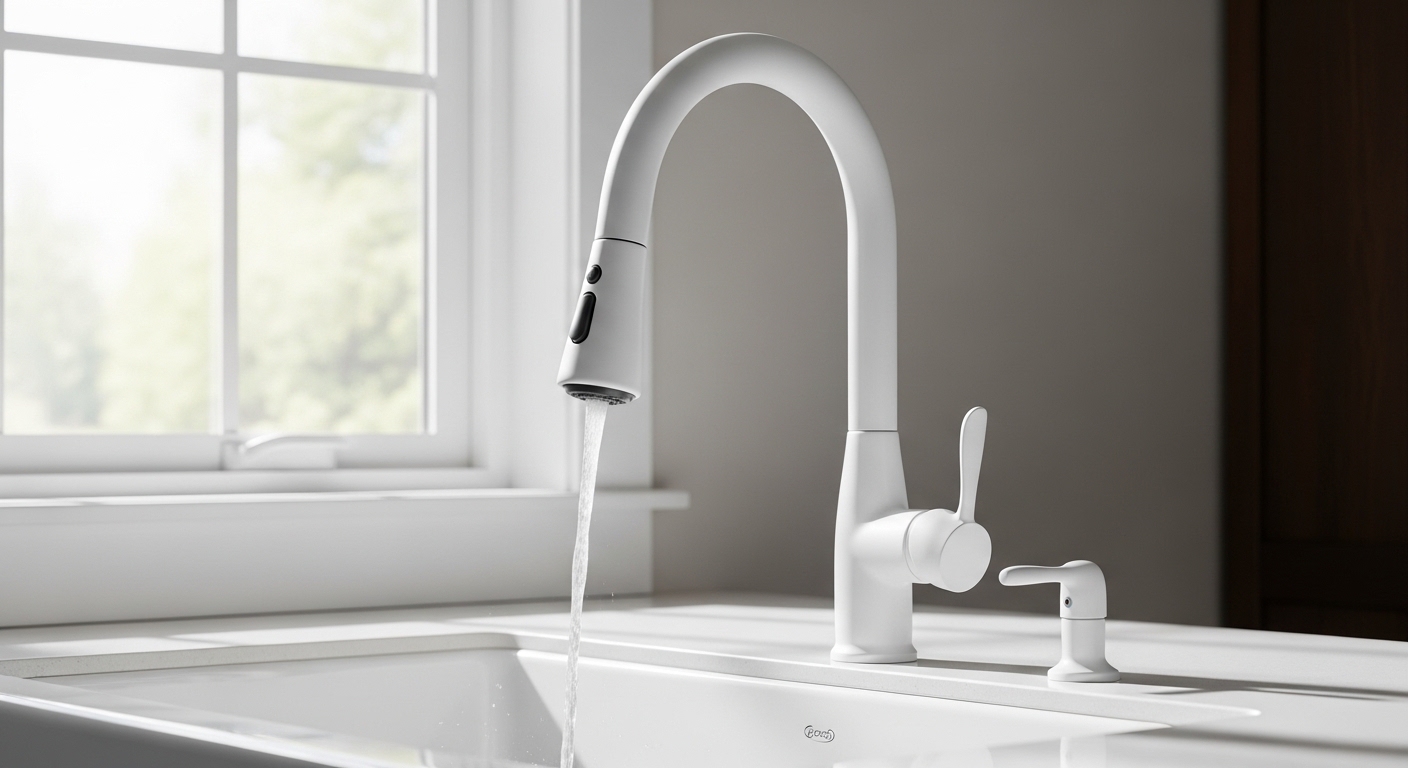
If you’ve been searching for a rona white kitchen faucet, you’re almost certainly weighing a white finish because it looks crisp against a white farmhouse sink, a quartz counter, or a modern two-tone kitchen — and because Rona (the Canadian home-improvement chain) carries a decent spread of them at friendly prices. The short version: white faucets look fantastic and hide water spots far better than chrome, but the finish quality varies a lot between a $79 builder-grade model and a $350 name-brand one. This guide walks you through what actually matters — finish durability, cartridge type, spray function, and how to match the shade — so you buy once instead of twice.
I’ve installed and serviced hundreds of kitchen faucets, and white finishes are one of the most common “I love how it looks but will it last?” questions I get. Let’s answer the real questions people ask before they buy.
Is a white kitchen faucet a good idea, or does it stain and chip?
A white kitchen faucet is a good idea for most kitchens — a quality one resists staining and chipping for years — but the outcome depends entirely on how the white is applied. There are two main constructions, and they behave very differently.
Cheaper white faucets use a painted or basic enamel coating over zinc or plastic. These look great on day one but can yellow near the aerator, chip if you drop a cast-iron pan on the spout, and pick up coffee or turmeric stains in the textured areas. Better white faucets use a baked-on powder coat over a solid brass body, which bonds to the metal and shrugs off scratches, heat, and household stains.
The good news for white specifically: unlike chrome, white doesn’t show hard-water spots, fingerprints, or water droplets. If your home has hard water, that’s a real advantage — you’ll wipe it far less often. (If hard water is a constant battle at your sink, it’s worth reading up on the best faucet materials for hard water, because the same mineral-resistance logic applies to kitchen fixtures too.)
- Best for durability: baked powder-coat white over a solid brass body.
- Watch out for: “white plastic” spouts that flex and yellow over time.
- Easiest to keep clean: matte white hides spots; glossy white shows them slightly more but wipes cleaner.
What does a Rona white kitchen faucet actually cost in 2026?
Expect to pay roughly CAD $80 to $450 for a Rona white kitchen faucet, with the sweet spot for a durable, name-brand pull-down landing around $180–$300. Rona stocks a mix of its own value lines and recognized brands, so the price ladder looks something like this.
| Price tier (CAD) | What you typically get | Best for |
|---|---|---|
| $80–$130 | Painted/enamel finish, plastic or zinc body, basic single-spray | Rentals, laundry sinks, short-term use |
| $140–$250 | Powder-coat over brass, ceramic-disc cartridge, pull-down dual-spray | Most family kitchens — best value |
| $260–$450 | Premium brand, matte white + brushed gold accents, magnetic dock, limited lifetime warranty | Design-forward remodels, long-term homes |
Don’t automatically buy the cheapest one. The jump from the $100 tier to the $180 tier usually buys you a solid brass body and a ceramic-disc cartridge — the two things that decide whether your faucet still works smoothly in five years. That upgrade is almost always worth it.
Matte white vs. glossy white: which finish should I pick?
Pick matte white if you want a modern look that hides spots and softens fingerprints; pick glossy (ou “gloss enamel”) white if you want a brighter, more traditional shine that reads closer to classic porcelain. Both are valid — it mostly comes down to your kitchen’s style and how much wiping you’re willing to do.
Here’s how I steer people:
- Matte white pairs beautifully with quartz counters, black hardware, and contemporary or Scandinavian kitchens. It’s the more forgiving finish for daily messes.
- Glossy white suits farmhouse, cottage, and traditional kitchens, especially next to a fireclay apron sink where you want the faucet to echo that porcelain sheen.
- Two-tone (white + gold/black) is the trend-forward choice for 2026 — a matte white body with a brushed brass or matte black handle and sprayer nozzle. Just make sure the accent metal matches your cabinet pulls.
One practical tip: whites are not all the same white. A “bright white” faucet next to an “off-white/almond” sink will look like a mistake. If you can, bring a photo of your sink — or the sink’s spec sheet — when comparing faucets in-store, and confirm whether the sink is true white or a warmer cream.
Which spray type is best — pull-down, pull-out, or standard?
For most kitchens, a white pull-down faucet is the best all-around choice because the tall arc and downward-retracting sprayer make filling pots and rinsing the sink effortless. Pull-out and standard styles still have their place, though — here’s the quick logic.
| Spray style | How it works | Best kitchen fit |
|---|---|---|
| Pull-down | Tall gooseneck; sprayer pulls straight down into the sink | Deep single-bowl sinks, most family kitchens |
| Pull-out | Lower spout; sprayer pulls out horizontally toward you | Low-clearance spots (window behind sink), smaller sinks |
| Standard/fixed | No spray hose; fixed spout, sometimes a side sprayer | Budget builds, bar/prep sinks, simple setups |
Whatever style you choose, look for two features that make a daily difference: a dual-function spray head (stream for filling, spray for rinsing) with an easy toggle, and a secure docking system — ideally magnetic — so the sprayer snaps firmly back into place instead of drooping over time. A drooping sprayer head is the number-one long-term complaint on cheap pull-downs.
If you’re cross-shopping brands rather than just Rona’s house lines, it’s worth reading an honest brand breakdown or two before you commit. Our Kraus kitchen faucet review and our Moen Doherty reviews both cover pull-down performance, cartridge quality, and finish durability in the same price range you’ll see at Rona — useful reference points for judging whether a white model is priced fairly.
Will a white kitchen faucet match my sink and counters?
A white kitchen faucet matches best with white, cream, gray, or black sinks and with quartz, marble-look, or butcher-block counters — the trick is coordinating your accent metal and matching the white tone, not the faucet itself. White is essentially neutral, so it plays well with almost everything as long as the undertones agree.
Three combinations that consistently look great:
- All-white serenity: matte white faucet + white fireclay apron sink + white or veined quartz. Clean, timeless, bright.
- Modern contrast: matte white faucet + black granite composite sink + light counters. High-contrast and current.
- Warm luxe: white + brushed gold faucet + white sink + warm wood or cream cabinets. The 2026 favorite.
If you love the idea of a fully coordinated white setup, a matched faucet-and-sink package can save you the shade-matching headache entirely. We break that approach down in our guide to choosing a white kitchen tap and sink combo, including how to avoid the “two different whites” mismatch that trips up a lot of DIY remodels.
How do I install and care for a white kitchen faucet?
Most single-handle white kitchen faucets install in about 45–90 minutes with basic tools, and caring for the finish comes down to one rule: skip abrasives. The white coating is durable, but scrubbing pads and harsh chemicals are its enemy.
The basic install sequence looks like this:
- Shut off the hot and cold supply valves under the sink and open the faucet to relieve pressure.
- Disconnect and remove the old faucet; clean the mounting deck.
- Feed the new faucet’s lines through the deck hole(s) and secure it from below with the mounting nut.
- Connect the supply lines — confirm your connector sizes first, since these aren’t always interchangeable. Our explainer on whether kitchen faucet supply lines are universal will save you a second trip to the store.
- Attach the sprayer hose and weight (for pull-downs), turn the water back on, and check every joint for drips.
For ongoing care, wipe the faucet with a soft cloth and mild dish soap. For stubborn stains near the base, a paste of baking soda and water lifts most marks without scratching. Never use bleach, acetone, or scouring powder on a white finish — those are what cause yellowing and dullness over time. If your white faucet ever develops weak or uneven flow, it’s usually a clogged aerator, not a failing faucet; the same fix we cover for a low-flow Moen kitchen faucet applies to virtually any brand.
Is a Rona white kitchen faucet worth it overall?
Yes — for the majority of shoppers, a Rona white kitchen faucet is worth it, provided you spend a little above the entry level to get a solid brass body and a ceramic-disc cartridge. At that point you’re getting a genuinely durable, spot-hiding, on-trend faucet for well under what a designer showroom charges. The white finish is the star: it stays looking clean with minimal effort and lifts the whole sink area.
Where a white faucet is not the right call: extremely high-traffic commercial-style kitchens where the faucet takes daily abuse from heavy cookware, or if you truly can’t tolerate any risk of a chip on a light finish. In those cases, a brushed stainless or matte black model may be more forgiving. But for the average Canadian home kitchen? A well-chosen white faucet is one of the best-looking, lowest-maintenance upgrades you can make.
FAQ
Do white kitchen faucets turn yellow over time?
Quality powder-coated or enamel white faucets over a brass body do not typically yellow. Yellowing happens mostly on cheap painted or plastic faucets, or when harsh chemicals like bleach and acetone are used to clean them. Stick to mild soap and avoid abrasives, and a good white faucet will stay white for many years.
Are white kitchen faucets harder to keep clean than chrome?
No — white is actually easier for daily upkeep because it hides water spots, fingerprints, and hard-water mineral marks that show clearly on chrome. The only difference is what you clean it with: use soft cloths and mild soap instead of abrasive pads or strong solvents that can dull the finish.
What cartridge should a good white kitchen faucet have?
Look for a ceramic-disc cartridge. Ceramic discs resist wear and mineral buildup far better than rubber-washer or ball-valve designs, which means smoother handle action and fewer drips over the life of the faucet. It’s the single most important internal spec, regardless of finish color.
Does Rona sell white faucets in matching finishes like white-and-gold?
Yes. Rona carries plain white as well as two-tone options that pair matte white with brushed gold or matte black handles and sprayers. If you want a coordinated look, match the accent metal to your cabinet hardware, and double-check that the white tone (bright white vs. cream) matches your sink before buying.
Can I install a white kitchen faucet myself?
Most single-handle white faucets are DIY-friendly and take under 90 minutes with an adjustable wrench, a basin wrench, and plumber’s tape. Shut off the water first, verify your supply line sizes, and check all connections for leaks before finishing. If your setup involves a garbage disposal or unusual plumbing, professional help may be worth it.
How long should a white kitchen faucet last?
A mid-range white faucet with a solid brass body and ceramic-disc cartridge should last 10–15 years or more with basic care. Many name-brand models are backed by a limited lifetime warranty on the finish and cartridge, so keep your receipt and register the product to protect that coverage.
About the author: This guide was written by the Avitas Home fixtures team, drawing on hands-on experience installing, servicing, and pressure-testing kitchen and bathroom faucets across hundreds of real homes. We evaluate finishes for chip and stain resistance, and we check cartridges against standard endurance cycles before we recommend a build type.
Why trust Avitas Home: avitashome.com specializes exclusively in faucets, sinks, showers, and bathroom fixtures — we don’t dabble in general renovation. Our buying advice is grounded in product testing, manufacturer specifications, and recognized standards (look for faucets certified to NSF/ANSI 61 and 372 for lead-free safety, and cartridges rated for high-cycle durability). Always confirm current pricing, certification, and warranty terms with the retailer before purchasing.