 Avitas Home
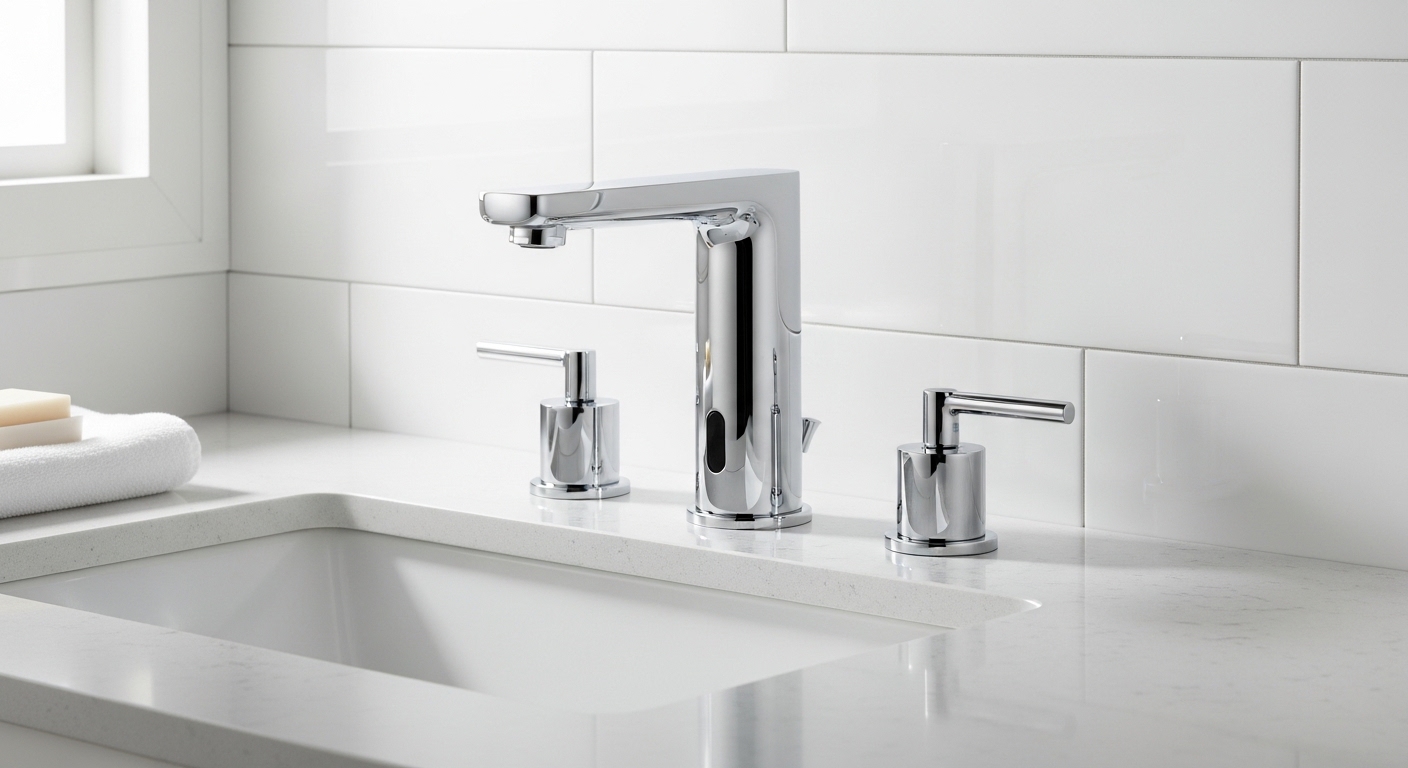
A widespread touchless faucet is one of the smartest upgrades you can make to a primary or guest bathroom in 2026, because it solves two problems at once: it looks like a premium fixture, and it keeps your hands off a germy handle. “Widespread” describes the configuration — three separate pieces (a spout flanked by two handles) that mount in holes spaced roughly 8 to 16 inches apart. “Touchless” describes the technology — an infrared sensor that starts and stops the flow when it sees your hands. Combine the two and you get a faucet that feels both timeless and genuinely modern.
At avitashome, we test fixtures the way our customers actually use them, and touchless models raise more buying questions than almost any other category. This guide walks through every decision point — sensor performance, valve and cartridge quality, finishes, power, and water efficiency — so you spend on the features that matter and skip the ones that don’t.
What Makes a Widespread Touchless Faucet Different
Most touchless faucets you see in airports and restaurants are single-hole, center-set commercial units. A widespread touchless faucet brings that hands-free convenience into a residential, design-forward package. The spread layout gives the vanity a balanced, custom appearance and lets you set hot and cold temperature with dedicated handles rather than a single lever.
The trade-off is complexity. You’re combining the plumbing of a three-piece faucet with the electronics of a sensor system. That means more connection points under the sink, a control box, and a power source. None of it is difficult, but it’s worth understanding before you buy. If you’re still deciding between layouts, our complete guide to widespread wall-mount faucets explains how hole spacing and mounting style change your installation footprint.
How the Touchless Sensor Actually Works
Inside the spout (or at its base) sits an infrared emitter and receiver. The emitter sends out an invisible beam; when your hands break the beam, the receiver detects the reflection and tells a solenoid valve to open. Move your hands away and the valve closes after a short delay. This is why placement of the sensor window matters — a poorly aimed sensor either misses your hands or runs constantly when you lean over the sink.
Better units let you adjust sensor range and the auto-shutoff timer. A 60-second safety shutoff is standard, which prevents the faucet from running endlessly if something is left in the detection zone.
Temperature Control on a Touchless Model
Here’s a detail many first-time buyers miss: on most widespread touchless faucets, the side handles set your temperature mix, but the sensor controls the on/off. You dial in your preferred warmth once, and then the sensor simply starts and stops the pre-mixed water. A few premium models add a thermostatic mixing valve for scald protection — a feature worth seeking out in homes with kids or older adults.
Key Features to Compare Before You Buy
Not all hands-free faucets are built to the same standard. When we evaluate a widespread touchless faucet, these are the specifications that separate a fixture that lasts a decade from one that fails in eighteen months.
- Valve and cartridge: Look for a ceramic-disc cartridge and a brass (not plastic) solenoid valve body. Ceramic discs resist hard-water wear far better than rubber seals.
- Sensor type and adjustability: Adjustable range and an adjustable shutoff timer reduce false triggers and overruns.
- Power source: Battery (typically 4×AA or 6V lithium), AC adapter, or a hybrid that accepts both. Hybrid is the most flexible.
- Flow rate: A WaterSense-labeled faucet caps out at 1.2 GPM or less while still feeling strong.
- Finish durability: PVD (physical vapor deposition) finishes resist scratching and tarnish; cheaper electroplated finishes don’t.
- Spout reach and height: Match these to your sink so water lands in the basin, not on the rim.
- Backup manual control: The best units still let you operate water manually if the electronics ever fail.
Power Options Explained
Power is the single most-returned-to question in touchless faucet shopping. Battery models install anywhere with no electrician — most run a year or more on a set of quality batteries and flash a low-battery warning before they quit. AC-powered models plug into an outlet under the vanity and never need battery changes, but they require an available receptacle. Hybrid models give you AC convenience with battery backup, which is our default recommendation for a primary bathroom.
Widespread Touchless Faucet Types Compared
The table below compares the most common configurations so you can match a widespread touchless faucet to your bathroom, your budget, and your plumbing setup.
| Type | Best For | Power | Typical Flow | Price Range |
|---|---|---|---|---|
| Battery-powered widespread touchless | Retrofits with no nearby outlet | 4×AA or 6V lithium | 1.0–1.2 GPM | $$ |
| AC-powered widespread touchless | New builds with under-sink outlet | Plug-in adapter | 1.0–1.2 GPM | $$–$$$ |
| Hybrid (AC + battery backup) | Primary baths wanting reliability | Both | 1.0–1.2 GPM | $$$ |
| Thermostatic touchless | Homes needing scald protection | AC or hybrid | 1.2 GPM | $$$$ |
| Commercial-grade touchless (single-hole) | High-traffic or accessibility use | AC, hardwired | 0.5–1.0 GPM | $$$ |
If you’re cross-shopping across the whole category and not yet locked into hands-free, our bathroom faucets buying guide covers center-set and single-hole alternatives alongside widespread layouts.
Choosing the Right Finish for a Touchless Faucet
Finish is more than a color choice on a touchless faucet — because you’re not constantly gripping a handle, fingerprints and water spots actually show less than on a manual faucet. That makes finishes like brushed nickel and matte black even more appealing here.
- Brushed/Spot-Resist Nickel: The forgiving all-rounder. Hides water spots, pairs with warm and cool palettes.
- Matte Black: Bold and modern; shows dust more than water spots, so it’s a great touchless match.
- Polished Chrome: Bright and budget-friendly, the most widely available; shows spots more readily.
- Or brossé / Champagne Bronze: Warm, on-trend, premium feel; insist on a PVD finish for durability.
Whatever you choose, confirm the finish is PVD-coated. PVD bonds the color at a molecular level, so it resists the scratches and tarnish that plague cheaper electroplated coatings — important on a fixture you intend to keep for ten years.
How to Install a Widespread Touchless Faucet
Installing a widespread touchless faucet is a confident DIY project for most homeowners — budget about 60 to 90 minutes. The electronics add a few steps beyond a standard faucet, but manufacturers design them to be plug-and-play. Here’s the overview.
- Shut off the water at the under-sink supply valves and open the old faucet to relieve pressure.
- Remove the old faucet and clean the deck. Confirm your hole spacing (typically 8 inches center-to-center for widespread).
- Mount the spout and two handles through the three holes, securing each from below with the supplied nuts.
- Connect the hot and cold supply lines to the handle valves, then route both into the mixing tee.
- Install the solenoid valve and control box, connecting the sensor cable from the spout to the box.
- Add power — insert batteries or plug in the AC adapter.
- Open the supplies, flush the lines with the aerator removed, then test the sensor and adjust range and shutoff timer.
Take your time at the connection points. Cross-threaded or under-tightened fittings are the number-one cause of post-install drips. If you later notice the stream fanning out or shooting sideways, that’s usually a clogged aerator rather than a faulty sensor — our walkthrough on fixing a faucet that sprays water everywhere shows the quick fix. And should a supply connection ever weep, the same diagnostic logic in our step-by-step leaky faucet repair guide applies to bathroom fixtures too.
Water Savings and Hygiene Benefits
The hands-free draw isn’t just convenience. A touchless faucet only runs when hands are present, which trims the water wasted while you lather, brush, or shave. Pair that with a WaterSense flow rate of 1.2 GPM or less and a busy household can cut bathroom-sink water use meaningfully over a year.
On the hygiene side, the appeal is obvious: nobody touches the faucet with dirty hands and then re-touches it after washing. In shared and guest bathrooms, that’s a tangible win. The convenience also helps anyone carrying a baby, juggling cleaning supplies, or living with limited hand mobility.
Common Problems and How to Avoid Them
Touchless faucets are reliable, but a few issues come up often enough to plan around:
- False triggers: Usually a sensor range set too wide, or a reflective sink reflecting the beam. Dial the range down.
- Weak flow: Almost always a clogged aerator or a partially closed supply valve, not the electronics.
- Dead batteries at a bad time: Choose a hybrid model or one with a clear low-battery indicator.
- Temperature drift: Hard-water buildup in the cartridge; flush periodically or choose a ceramic-disc model.
Most of these are prevented at purchase by choosing a quality valve and an adjustable sensor — which loops back to the comparison criteria above.
Is a Widespread Touchless Faucet Worth It?
For a primary bathroom or a frequently used guest bath, yes. You’re paying a premium over a manual widespread faucet, but you get hygiene, water savings, and a high-end look in one fixture. For a rarely used powder room, a standard widespread faucet may be the smarter spend. Match the technology to how the room is actually used, and a widespread touchless faucet pays you back daily in convenience.
Author note: This guide was written by the avitashome fixtures editorial team, drawing on hands-on bench and in-bathroom testing of widespread and touchless faucets. We check flow rate against the unit’s stated GPM, cycle the sensor hundreds of times to gauge responsiveness and false-trigger behavior, and inspect valve materials before recommending any configuration.
About avitashome: avitashome is a dedicated faucet and bathroom-fixtures retailer. Every faucet we feature is evaluated against WaterSense efficiency labeling and NSF/ANSI safety standards, and we prioritize models backed by a manufacturer warranty — typically a limited lifetime warranty on the finish and function, with multi-year coverage on the electronic components. Always register your faucet and keep the receipt to activate that coverage.
FAQ
What is a widespread touchless faucet?
It’s a three-piece bathroom faucet — a center spout with two separate handles mounted 8 to 16 inches apart — that adds an infrared motion sensor to turn the water on and off hands-free. The handles set your temperature; the sensor controls the flow.
Do widespread touchless faucets need electricity?
They need power, but not necessarily an outlet. Many run on batteries (commonly 4×AA or a 6V lithium pack) that last a year or more. Others use a plug-in AC adapter, and hybrid models accept both, using AC normally with battery backup if the power drops.
Can you still control water temperature on a touchless faucet?
Yes. The two side handles mix hot and cold to your preferred temperature, and the sensor simply starts and stops that pre-mixed water. Premium models add a thermostatic valve for consistent temperature and scald protection.
Will a touchless faucet work during a power or battery failure?
The best models include a manual override so you can still get water if the electronics fail. Choosing a hybrid (AC plus battery backup) model is the surest way to avoid ever losing function.
Are widespread touchless faucets hard to install?
No — most homeowners can install one in 60 to 90 minutes with basic tools. You mount the three pieces, connect the supply lines to a mixing tee, attach the solenoid and control box, add power, and adjust the sensor. The only extra step versus a standard faucet is wiring the sensor and power.
Do touchless faucets really save water?
Yes. Because water only runs when your hands are detected, you stop the waste that happens while lathering or brushing. Combined with a WaterSense flow rate of 1.2 GPM or less, that adds up to noticeable savings in a busy household.