 Avitas ホーム
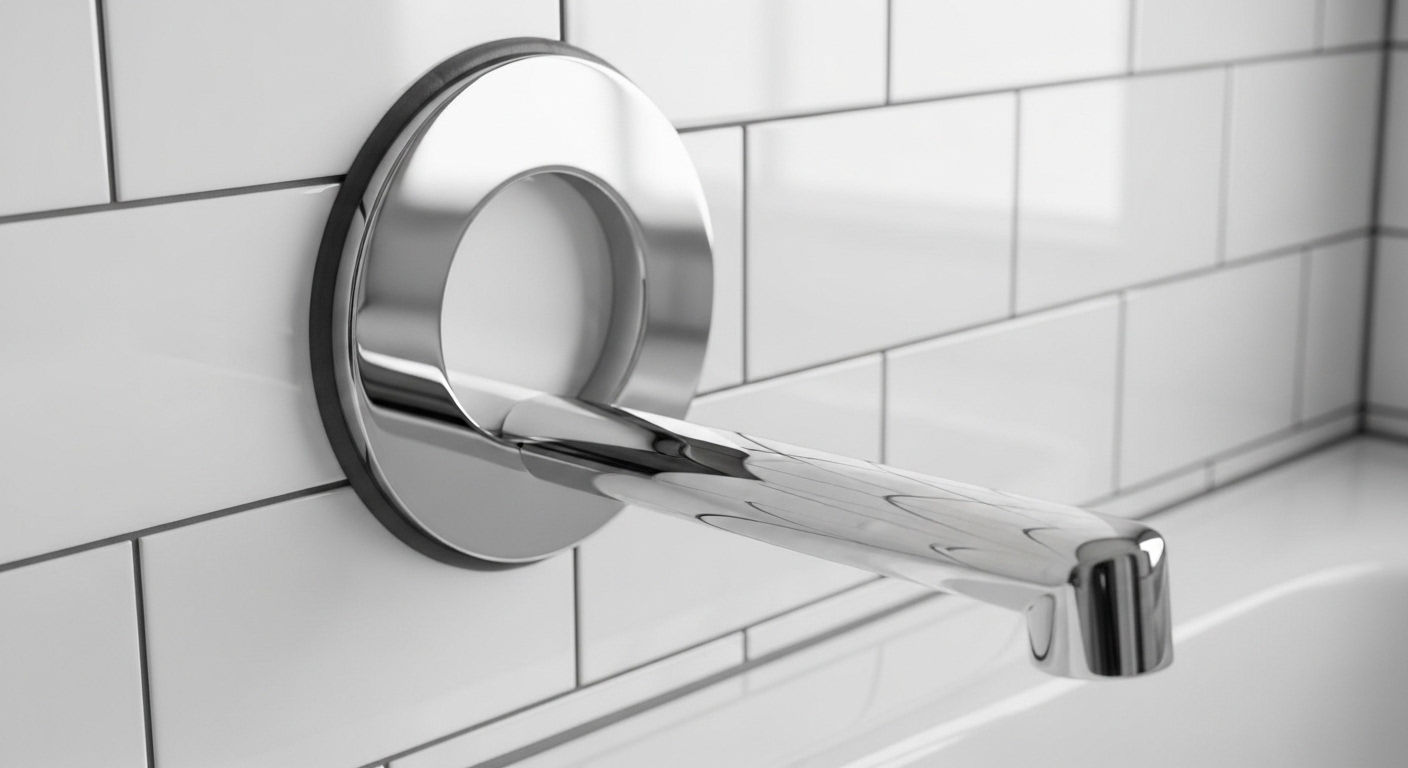
If you’ve been staring at a stained, wobbly ring behind your tub spout and wondering what it’s even called, you’re looking at a bathtub faucet flange. It’s a small part with a bigger job than it looks: it hides the rough wall opening, keeps splashed water from running behind the tile, and gives the whole faucet a finished, deliberate look instead of a raw hole in the wall. Below, I’ll explain exactly what it does, how to tell if yours needs replacing, how to size and match one, and how to install it yourself without calling a plumber.
What exactly does a bathtub faucet flange do?
A flange is the decorative and functional cover ring that seals the gap between your faucet component and the finished wall. On a tub, you’ll usually find flanges in three spots: behind the tub spout, behind each handle (or the single mixing valve), and sometimes behind the shower arm above. Each one hides a drilled or cut opening and blocks water from sneaking into the wall cavity.
Functionally, it does three things. First, concealment — it covers the oversized rough opening that installers cut so they have wiggle room to connect the pipes. Second, water management — paired with a bead of caulk, it directs splash water back out and away from the drywall or backer board behind your tile. Third, aesthetics — it’s the visible “collar” that makes the fixture look intentional. A cracked or crooked flange is the fastest way to make an otherwise nice bathroom look neglected.
It’s worth knowing the vocabulary, because you’ll see these words used interchangeably online: flange, escutcheon, and trim ring all refer to the same basic part. “Escutcheon” is the term you’ll see on manufacturer parts diagrams; “flange” is what most homeowners and hardware store staff call it.
How do I know if my bathtub faucet flange needs replacing?
Replace your flange if it’s loose, corroded, cracked, or if the caulk behind it keeps failing. Those four signs cover about 90% of real cases. Here’s how each one shows up:
- It spins or wobbles. A flange that rotates freely or rocks against the wall isn’t sealing anymore, which means splash water can reach the wall cavity behind it.
- Green, white, or rust-colored crust. Mineral scale and corrosion around the edge signal water has been sitting where it shouldn’t. On chrome, you’ll often see the finish flaking or pitting.
- Cracks or chips. Cheaper plastic-cored flanges get brittle after years of heat cycling from hot water and can crack right at the base.
- Caulk that won’t stay. If you re-caulk the ring every few months and it keeps peeling or blackening with mildew, the flange is often sitting proud of the wall or is warped, so caulk can’t get a clean seal.
One important distinction: a failing flange is a cosmetic and moisture-barrier problem, not usually the source of an active drip. If water is actually running or dripping when the tub is off, your issue is more likely inside the valve — a worn cartridge or seal. In that case, swapping the flange won’t fix anything; you’d want to look at a cartridge replacement in the bathtub instead. Replace the flange for looks and wall protection; replace the cartridge for actual drips.
What are the different types of bathtub faucet flanges?
The two things that separate flanges are how they attach and what they’re made of. Attachment matters most because it determines whether you can even swap yours without touching the plumbing.
| Flange type | How it attaches | Best for | Rough price |
|---|---|---|---|
| Slip-on (spout escutcheon) | Slides over the pipe, held by the spout or set screw | Most standard tub spouts | $8–$20 |
| Threaded flange | Screws onto a threaded nipple or the spout base | Screw-on tub spouts | $10–$25 |
| Handle/valve escutcheon | Mounts to the valve body with screws or a threaded collar | Handle trim on tub/shower valves | $12–$40 |
| Split (two-piece) flange | Snaps around the pipe without removing the fixture | Retrofits where you can’t pull the spout | $10–$18 |
| Deep / extra-large flange | Deeper skirt to cover big or off-center holes | Ugly or oversized wall openings | $15–$35 |
On materials: solid brass flanges are the ones you want if budget allows — they resist corrosion, hold their finish, and feel substantial. Metal-plated zinc is the common mid-tier and is fine for most bathrooms. Plastic-core chromed flanges are the cheapest and the ones most likely to crack or discolor within a few years. If you’re already investing in a nicer fixture like a matte black tub faucet, match it with a solid-metal flange so the finishes don’t wear at different rates.
Does the flange finish have to match my faucet exactly?
Yes — match the finish and, ideally, the brand family. A chrome flange next to a brushed-nickel spout reads as a mistake even from across the room, because the two metals reflect light completely differently. The safest move is to buy the flange from the same manufacturer and product line as your faucet, since finishes like “brushed nickel,” “champagne bronze,” and “matte black” are not standardized between brands. When in doubt, bring the old part to the store or order the OEM replacement part number listed on your faucet’s spec sheet.
What size bathtub faucet flange do I need?
Measure two things: the outside diameter of the flange face and the diameter of the pipe or hole it has to cover. The flange must be wider than the wall opening by at least a half-inch all around, or it won’t hide the hole. Standard tub spout flanges run roughly 2 to 2.5 inches across the visible face and slip over a 1/2-inch pipe (which has about a 5/8-inch to 3/4-inch outside diameter with fittings).
Here’s the reliable way to size a replacement:
- Measure the wall hole. Note its diameter and whether it’s centered on the pipe. This tells you the minimum flange face width you need.
- Measure the pipe. Most residential tub supply is 1/2-inch nominal copper or a threaded 1/2-inch nipple. Measure the outside diameter so the flange’s center bore slips over it.
- Check the depth clearance. Some flanges have a deep skirt; make sure it won’t hit the pipe fitting before it reaches the wall.
- Compare to your old part. The simplest check is to lay the old flange on top of the candidate — same bore, same or larger face, same finish.
If your problem is a genuinely oversized or off-center hole that no standard ring covers, that’s a slightly different fix — a dedicated bathtub faucet gap filler or an extra-deep flange is what you want there. And if you’re unsure how your spout even connects to the pipe in the first place, it’s worth reading up on the different tub spout connection types before you buy, because a slip-fit spout and a threaded spout use different flange styles.
Can I replace a bathtub faucet flange myself?
Yes — for a standard slip-on or threaded spout flange, this is a genuine 20-to-30-minute DIY job with basic tools and no plumbing skills. You typically don’t even need to shut off the water for a spout flange, since you’re working outside the valve. Handle-valve escutcheons are a little more involved because you have to pull the handle trim, but they’re still homeowner-friendly.
Here’s the basic process for the most common case — the flange behind a tub spout:
- Remove the spout. For a slip-on spout, loosen the set screw on the underside with a hex key and pull the spout straight off. For a threaded spout, turn it counterclockwise by hand or with a cloth-wrapped wrench.
- Slide off the old flange. Cut any old caulk with a utility knife first, then work the flange off the pipe. A split flange can be pried apart.
- Clean the pipe and wall. Scrape off old caulk, scale, and mildew. A clean surface is what makes the new caulk seal actually hold.
- Fit the new flange. Slide or thread it on. For threaded connections, wrap the threads with plumber’s (PTFE) tape first.
- Reinstall the spout. Reverse the removal step. Make sure it seats fully so the flange pulls tight to the wall.
- Caulk the top and sides. Run a thin bead of 100% silicone caulk around the flange — but leave the very bottom edge un-caulked so any water that does get behind can drain out.
That last tip — leaving the bottom open — is one plumbers know and homeowners often miss. If you fully seal the ring, trapped water has nowhere to go. If this whole job sounds like more than you signed up for, our full walkthrough on how to change a faucet in a bathtub covers the spout and valve side in more detail.
What tools and materials do I need?
Almost nothing specialized. Here’s the full kit:
- Allen/hex key set (for the spout set screw)
- Adjustable wrench and a rag (for threaded spouts)
- Utility knife (to cut old caulk)
- PTFE plumber’s tape
- 100% silicone caulk (not acrylic — silicone survives constant moisture)
- The correctly sized, finish-matched replacement flange
How much should a bathtub faucet flange cost, and is it worth replacing?
Expect to pay $8–$40 for the part depending on material and brand, and $0 in labor if you do it yourself. It’s absolutely worth it: a $15 flange plus 20 minutes protects the wall cavity behind your tub — where hidden water damage can quietly cost hundreds or thousands to repair. Compared to nearly any other bathroom fix, the return on a fresh, properly caulked flange is enormous.
The one time it’s worth spending up is when you’re matching a premium fixture or a specialty finish. Buying the OEM flange in solid brass for a $300 faucet is smart; buying a $6 plastic ring that’ll discolor in a year to sit next to it is false economy. Match the quality to the fixture, and you’ll never think about that part of the wall again.
A note on doing this right — author & brand
About the author: This guide was written by the AvitasHome fixtures team, drawing on hands-on installs and returns data across thousands of tub and shower trim orders. We’ve handled the exact “my flange is spinning and stained” question from customers enough times to know where people get stuck — sizing the bore and matching the finish are the two that trip up most first-timers.
About AvitasHome: AvitasHome is a US-based specialist retailer focused exclusively on faucets, showers, and bathroom fixtures. We test the trim and flange hardware we sell for finish durability and fit against standard 1/2-inch residential tub plumbing, and we prioritize components that meet common industry standards for lead-free wetted surfaces. Many of our solid-brass flanges and matching spouts carry a manufacturer finish warranty, so if a finish flakes or corrodes prematurely, it’s covered — something a generic hardware-store ring rarely offers. Our support team can also help you match a replacement flange to your existing faucet by spec sheet or part number before you buy, so you don’t end up with a mismatched finish.
FAQ
Is a bathtub faucet flange the same as an escutcheon?
Yes. “Flange,” “escutcheon,” and “trim ring” all describe the same round cover plate that hides the wall hole behind a tub spout or handle. Manufacturers usually label it “escutcheon” on parts diagrams, while homeowners and store staff say “flange.”
Do I need to turn off the water to replace a tub spout flange?
Usually no. The spout flange sits outside the valve, so you can remove the spout and swap the flange without shutting off the supply. You only need to shut off the water if you’re replacing a handle/valve escutcheon and pulling the trim off the live valve.
Why does my flange keep getting loose and leaking behind it?
A flange that won’t stay tight is usually either the wrong depth (so the spout can’t pull it flush) or has failed caulk. Reseat it against a clean wall, make sure the spout seats fully, and re-caulk with 100% silicone around the top and sides while leaving the bottom edge open to drain. If it still won’t tighten, the flange may be warped and should be replaced.
Can I use one universal flange for any tub spout?
Not reliably. While many slip-on flanges fit standard 1/2-inch pipe, the bore size, depth, and especially the finish vary. The safest match is the flange from your faucet’s own product line, ordered by part number. Bring the old part with you if you’re buying in person.
What kind of caulk should I use around a bathtub flange?
Use 100% silicone caulk, not acrylic or “tub and tile” latex. Silicone stays flexible and waterproof under constant moisture and heat cycling, while latex-based caulks shrink, crack, and grow mildew faster. Apply a thin bead around the top and sides only, leaving the bottom open so trapped water can escape.
How long does a bathtub faucet flange last?
A solid-brass or good plated flange with proper caulk can last 15–20 years or the life of the faucet. Cheap plastic-core flanges often crack or discolor within 3–5 years, especially with hard water. If yours is corroding or spinning well before then, replace it — the part is inexpensive and the wall protection it provides is not.