 아비타스 홈
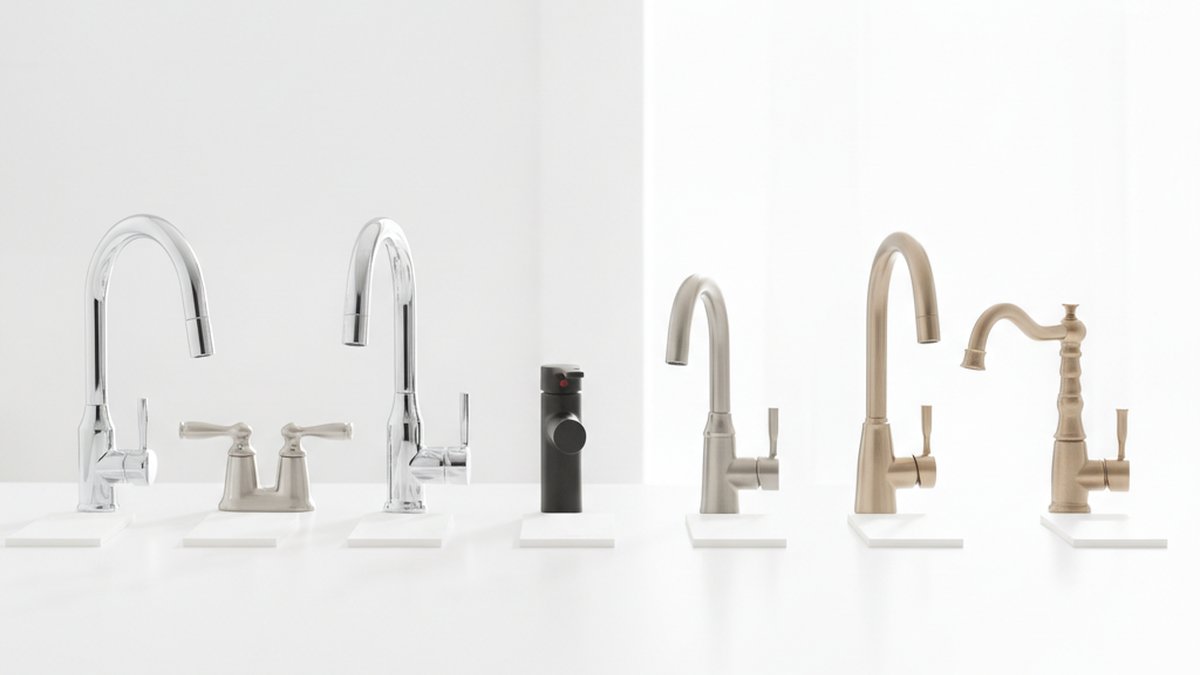
When people ask about quality faucet brands, they’re almost never asking “which logo looks nicest.” They’re asking a real, money-on-the-line question: which faucet won’t drip, corrode, or strip its handle in two years? That’s the question this guide answers. We’ll name the brands that actually hold up, show you the specs that separate a $60 disappointment from a $180 keeper, and give you a side-by-side table so you can match a brand tier to your budget and your water.
Here’s the honest framing up front: brand name matters, but it’s a proxy. What you’re really buying is a valve, a body material, a finish process, and a warranty department that answers the phone. Learn those four things and you can judge any faucet — even a brand you’ve never heard of.
Which faucet brands are actually the most reliable in 2026?
For most homeowners, the safest bets are Delta, Moen, and Kohler — all three offer lifetime limited warranties, sell replacement cartridges at every hardware store, and have decades of parts availability. If you want European-engineered precision and are willing to pay for it, Grohe and Hansgrohe (and Hansgrohe’s premium line, Axor) lead. Brizo is Delta’s luxury design brand, and Pfister is the value pick that punches above its price.
The reason these names keep coming up isn’t marketing — it’s serviceability. A “quality” faucet isn’t one that never needs a part; it’s one where the part costs $12 and takes ten minutes to swap. Delta and Moen win here because their cartridges are everywhere. If your Moen 1225 or Delta RP cartridge wears out in year seven, you’ll have a replacement in your hand the same afternoon. That’s a hidden feature no spec sheet lists.
- Delta — DIAMOND Seal valve tech, easy DIY cartridge service, huge parts network, lifetime warranty. Best all-rounder for kitchens.
- Moen — 1225/1255 cartridges, Reflex pulldown docking, excellent customer support and free replacement parts.
- Kohler — heavier solid-brass bodies, standout finishes (Vibrant PVD), strong bathroom lineup.
- Grohe / Hansgrohe — German ceramic cartridges, tight tolerances, premium feel; higher price and pricier proprietary parts.
- Brizo — design-forward luxury (Delta’s premium sibling); pay for looks, get Delta’s guts.
- Pfister — the value champ; Pforever lifetime warranty, solid mid-tier hardware under $150.
If you’re specifically outfitting a busy or commercial-style kitchen, it’s worth reading how one brand handles heavy duty use in our deep dive on which commercial kitchen faucet from Delta to buy for a busy kitchen — the same durability logic applies to residential pulldowns too.
What actually makes a faucet “high quality” — the 4 things to check?
A high-quality faucet comes down to four checkable specs: a ceramic-disc cartridge, a solid-brass or 304 stainless body, a PVD finish, and a lifetime warranty on both finish and function. Get those four and the brand name almost stops mattering. Miss any one and even a famous logo can disappoint.
Let’s break each one down in plain language, because these are the phrases you’ll see on product pages and the ones that separate real quality from lookalikes.
1. The cartridge (the single most important part)
The cartridge is the valve that turns water on, off, and blends hot/cold. Ceramic-disc cartridges are the gold standard — two polished ceramic discs slide against each other and can outlast a rubber-and-spring “compression” valve by 15–20 years. If a listing doesn’t say “ceramic disc,” assume it isn’t, and expect drips sooner. When one does eventually wear, replacing it is a genuinely easy job — see our walkthrough on a Delta faucet cartridge replacement to see how simple a well-designed cartridge system is to service.
2. The body material
Lift the faucet. Weight is a decent proxy for quality because good faucets use solid brass or 304 stainless steel bodies. Cheap ones use zinc alloy (sometimes called “zamak”) or thin pot metal that corrodes and cracks at threaded joints. A quality kitchen faucet usually weighs 4–7 lbs; a suspiciously light one is a red flag. Brass also resists the pinhole corrosion that hard, chlorinated water causes over time.
3. The finish process
Two faucets can both say “brushed nickel” and behave completely differently. PVD (Physical Vapor Deposition) bonds the finish at a molecular level — it’s scratch-, tarnish-, and corrosion-resistant, and it’s what premium lines use. Electroplated finishes are cheaper and can flake or discolor, especially around the aerator where water sits. If a matte black or champagne bronze faucet is unusually cheap, it’s almost certainly electroplated, not PVD.
4. The warranty (read the fine print)
“Lifetime warranty” is common, but read whether it covers finish AND function, and whether it’s transferable. The best brands cover both for the original residential owner. This is also an E-E-A-T and trust signal from the manufacturer: a company that stakes a lifetime finish warranty on a PVD coating is telling you it tested that coating to industry standards (look for ASME A112.18.1 / CSA B125.1 certification and NSF/ANSI 61 & 372 lead-safe compliance).
Quality faucet brands compared: which tier fits your budget?
Here’s the fastest way to match a brand to your wallet. The table below groups the main quality faucet brands by price tier, body material, cartridge type, and who each one is best for. Prices are typical U.S. street prices for a mid-range single-handle kitchen or bathroom faucet in 2026.
| Brand | Typical price | Body material | Cartridge | Warranty | Best for |
|---|---|---|---|---|---|
| Pfister | $70–$150 | Brass / zinc mix | Ceramic disc | Lifetime (Pforever) | Best value on a tight budget |
| Delta | $120–$300 | Solid brass | Ceramic / DIAMOND Seal | Lifetime finish + function | All-round kitchens, easy DIY service |
| Moen | $120–$320 | Solid brass | 1225/1255 ceramic | Lifetime limited | Best customer support & parts |
| Kohler | $180–$450 | Heavy solid brass | Ceramic disc | Lifetime limited | Premium finishes, bathrooms |
| Grohe | $220–$500 | Solid brass | German ceramic (SilkMove) | Limited lifetime | Precise European feel |
| Hansgrohe / Axor | $250–$800+ | Solid brass | German ceramic | Limited lifetime | Design-led luxury builds |
| Brizo | $400–$900+ | Solid brass | Delta ceramic tech | Lifetime | Statement pieces, luxury kitchens |
The practical takeaway: you don’t have to spend $500 to get quality. A $150 Delta or Pfister shares the two specs that matter most — ceramic cartridge and brass body — with a $600 Brizo. What the extra money buys is finish sophistication, spout engineering, valve smoothness, and design, not fundamentally longer life.
Is an expensive faucet brand actually worth it, or is a mid-range one fine?
For 90% of homes, a mid-range faucet from Delta, Moen, Kohler, or Pfister ($120–$300) is the sweet spot — you get the durable internals of a luxury faucet without paying for the designer badge. Spend up to premium (Grohe, Hansgrohe, Brizo) only when you specifically want a distinctive design, a buttery-smooth handle feel, or a finish that anchors a high-end room.
Where cheap genuinely bites you is the sub-$60 no-name aisle. Those faucets use zinc bodies, rubber compression valves, and electroplated finishes — the exact three things that fail. You’ll replace it in 2–4 years, so the “cheap” faucet costs more per year of service than a mid-range one you keep for 15. If you want to see how a well-built mid-range pulldown performs against that logic, our review of the Delta Levette kitchen faucet is a good real-world example of the tier we recommend, and our roundup of the best pull-down sprayer kitchen faucet in stainless steel under $250 shows how much quality you can get without going premium.
Which faucet brand is best for hard water and won’t clog or spot?
For hard water, prioritize brands with easy-clean spray nozzles and serviceable aerators — Delta (Touch-Clean rubber nozzles you wipe with a finger), Moen (Power Clean / easy-clean spray face), and Kohler all handle mineral buildup well. The brand matters less than the maintenance access: you want an aerator and spray head you can unscrew, soak in vinegar, and reinstall in five minutes.
Hard water’s real enemies are the aerator and the spray face, where calcium and magnesium deposits collect and choke flow. That’s true of a $600 faucet as much as a $90 one — so the smarter “hard water” decision is picking a fixture whose aerator pops out for cleaning. If your flow ever drops to a trickle, that’s almost always mineral buildup, and it’s a two-minute fix; our guide on what to do when your sink aerator is clogged walks through it. A PVD finish also helps here because it resists the etching and water-spotting that hard water leaves on cheaper electroplated finishes.
- Pick a faucet with a removable aerator and a wipeable/silicone spray face.
- Choose a PVD finish (spot-resistant) over electroplated in hard-water regions.
- Consider adding a filter if buildup is severe — see our comparison of the best tap water filter attachments.
- Deep-clean the aerator in white vinegar every 2–3 months to keep pressure up.
Should you buy a quality faucet in-store or online?
Buy online for selection and price; buy in-store only when you want to feel the weight and handle action before committing. The internals — cartridge, body, warranty — are identical whether you order online or grab it off a shelf, so there’s no quality penalty for buying online from an authorized seller. Just make sure the seller is authorized, because faucet warranties are often void on gray-market units.
The one real advantage of a showroom is the “heft test” — you can lift two faucets and instantly feel which one is solid brass and which is hollow zinc. If you’re buying online, replicate that by checking the shipping weight in the specs. We break the local-vs-online tradeoff down further in our guide to finding the best kitchen taps near me, and if you’re modernizing a bathroom specifically, our overview of what makes a modern bathroom faucet worth it pairs well with this buying framework.
How do you verify a faucet’s quality before you buy? (a quick checklist)
Run this five-point check on any faucet — brand-name or not — and you’ll almost never get burned:
- Cartridge: Does the listing say “ceramic disc”? If not, skip it.
- Body: Solid brass or 304 stainless? Check shipping weight (4+ lbs for a kitchen faucet).
- Finish: Is it PVD? Especially critical for matte black, bronze, and gold.
- Certification: Look for ASME A112.18.1/CSA B125.1 and NSF/ANSI 61 & 372 (lead-safe) marks.
- Warranty: Lifetime, covering finish and function, from an authorized seller.
If a faucet clears all five, it’s a quality faucet no matter what the badge says. If it fails two or more, no amount of showroom polish will save it.
FAQ
What is the most reliable faucet brand overall?
Delta and Moen are the two most reliable mainstream brands for most homeowners, largely because of their easy DIY servicing, universally available replacement cartridges, and lifetime warranties. Kohler is close behind with heavier brass bodies and premium finishes. All three routinely last 15–20 years with basic maintenance.
Are expensive European brands like Grohe and Hansgrohe worth the extra money?
They’re worth it if you value a precise, buttery handle feel and distinctive design — that’s what the premium buys. Mechanically, their ceramic cartridges and brass bodies aren’t dramatically more durable than a mid-range Delta or Kohler. Their proprietary parts can also be pricier and slower to source, so factor long-term serviceability into the decision.
How long should a good quality faucet last?
A quality faucet with a ceramic-disc cartridge and brass body should last 15–20 years, and often longer with occasional cartridge and aerator maintenance. Cheap zinc-body faucets with compression valves typically fail within 2–5 years, usually starting with a persistent drip or a flaking finish.
Is a solid brass faucet always better than stainless steel?
Both are excellent — solid brass and 304 stainless are the two premium body materials. Brass is easy to cast and naturally corrosion-resistant; stainless is fully lead-free and has a clean, modern look. Avoid zinc alloy (“zamak”) bodies regardless of the finish on top, as that’s where cheap faucets cut corners.
Does the finish (matte black, brushed gold, chrome) affect faucet quality?
The color doesn’t, but the finishing process does. A PVD finish resists scratches, spotting, and tarnish in any color, while a cheap electroplated finish can flake or discolor within a couple of years. This matters most on trendy finishes like matte black, champagne bronze, and brushed gold, where cheap coatings fail fastest.
Can I replace a faucet cartridge myself, or do I need a plumber?
On quality brands like Delta and Moen, you can absolutely replace the cartridge yourself in about 15–30 minutes with basic tools — that easy serviceability is part of what makes them “quality” in the first place. Shut off the supply valves, pull the old cartridge, drop in the matching replacement, and you’re done. Only complex wall-mounted or diverter valves usually justify calling a plumber.
Author note: This guide was written by the AvitasHome fixtures team, which has spent years testing, installing, and servicing kitchen and bathroom faucets across a wide range of brands and price points. We evaluate faucets on cartridge type, body material, finish durability, and real-world serviceability — not on marketing. At avitashome.com we sell and support faucets that meet ASME A112.18.1/CSA B125.1 and NSF/ANSI lead-safe standards, and we always recommend buying from authorized sellers so your lifetime warranty stays valid.