 Avitas Acasă
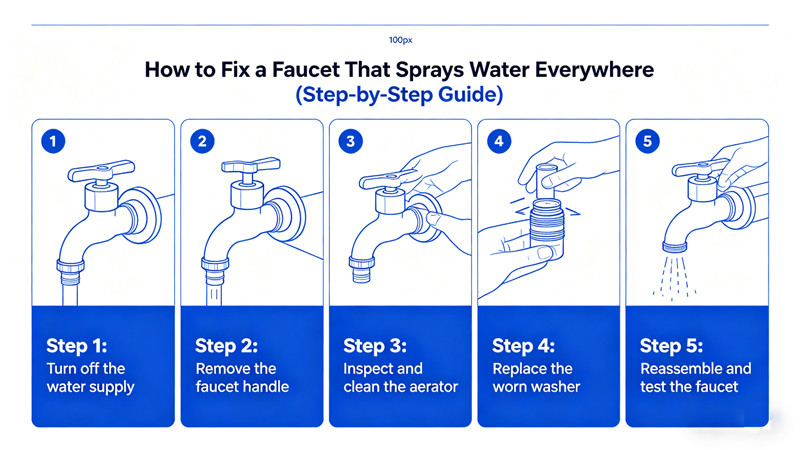
Turning on your faucet should give you a smooth, steady stream—not a chaotic spray that splashes water all over your sink and countertop. If your faucet is spraying water in multiple directions, sputtering, or creating a messy flow, don’t worry—this is a common problem with simple fixes.
In most cases, the issue is caused by clogs, worn parts, or pressure problems, and you can fix it yourself without replacing the entire faucet. This guide will walk you through the causes and step-by-step solutions.
Why Your Faucet Is Spraying Water Everywhere
Before fixing it, it’s important to understand the cause. The most common reasons include:
- A clogged or dirty aerator
- Mineral buildup from hard water
- Damaged or misaligned faucet parts
- High water pressure
- Debris inside the faucet
- Faulty spray head (for pull-down faucets)
Each of these can disrupt the normal water flow and create splashing or spraying.
1. Check and Clean the Aerator (Most Common Fix)
The aerator is the small screen at the tip of your faucet. It controls how water flows out. When it gets clogged, water is forced through uneven openings, causing spraying.
How to fix it:
- Unscrew the aerator (use pliers if needed, but wrap with cloth to avoid scratches)
- Rinse it under running water
- Soak it in vinegar for 10–15 minutes to dissolve mineral buildup
- Scrub gently with a toothbrush
- Reinstall and test
👉 In many cases, this alone solves the problem.
2. Remove Mineral Buildup (Hard Water Issue)
If you live in a hard water area, minerals like calcium can build up inside your faucet.
Signs:
- White or chalky residue
- Uneven or split water streams
- Reduced flow
Fix:
- Soak affected parts in vinegar
- Clean internal components if accessible
- Repeat regularly to prevent buildup
Mineral deposits are one of the biggest causes of irregular water flow.
3. Inspect the Aerator for Damage
Sometimes cleaning isn’t enough—the aerator itself may be damaged.
Look for:
- Broken mesh screen
- Warped or cracked parts
- Missing components
Fix:
- Replace the aerator (inexpensive and easy to find)
A damaged aerator cannot properly regulate water flow.
4. Check for Debris in the Faucet

After plumbing work or water interruptions, debris can enter your pipes and clog the faucet.
Signs:
- Sudden spraying after recent repairs
- Grit or particles in water
- Inconsistent flow
Fix:
- Remove the aerator
- Turn on the faucet briefly to flush out debris
- Clean and reinstall the aerator
5. Examine the Faucet Cartridge
The cartridge controls water flow and direction. If it’s worn or clogged, it can cause uneven pressure and spraying.
Signs:
- Irregular flow even after cleaning the aerator
- Difficulty controlling water output
- Sudden changes in pressure
Fix:
- Turn off the water supply
- Remove the handle
- Take out the cartridge
- Clean or replace it
Replacing the cartridge often restores smooth flow.
6. Check Water Pressure
Excessively high water pressure can force water out too aggressively, causing splashing and spray.
Signs:
- Strong, uncontrolled water flow
- Splashing even with a clean aerator
- Noise when turning on the faucet
Fix:
- Check your home’s water pressure (ideal: 40–60 PSI)
- Install or adjust a pressure regulator if needed
Balanced pressure ensures controlled water flow.
7. Inspect Pull-Down or Spray Head Faucets
If you have a pull-down or pull-out faucet, the spray head may be the issue.
Common problems:
- Clogged spray nozzles
- Stuck diverter valve
- Worn internal seals
Fix:
- Clean the spray head thoroughly
- Soak it in vinegar
- Replace the spray head if necessary
Spray heads wear out over time and may need replacement.
8. Check for Loose or Misaligned Parts
Loose components can disrupt water flow.
Inspect:
- Aerator connection
- Faucet spout alignment
- Internal fittings
Fix:
- Tighten connections gently
- Ensure parts are properly aligned
Even small misalignments can cause spraying.
Step-by-Step Quick Fix Checklist
If your faucet sprays water everywhere, follow this order:
- Clean the aerator
- Soak parts in vinegar
- Check for damage and replace if needed
- Flush out debris
- Inspect cartridge
- Check water pressure
- Clean or replace spray head
This systematic approach solves most issues quickly.
When to Replace the Faucet
If none of the fixes work, the faucet itself may be the problem.
Consider replacement if:
- Internal parts are severely worn
- The faucet is old or low quality
- Multiple components keep failing
A new faucet may save time and provide better performance.
Preventing Future Spray Problems
Keep your faucet working smoothly with simple maintenance:
- Clean the aerator regularly
- Remove mineral buildup monthly
- Use a water softener if needed
- Avoid letting debris enter plumbing
- Check water pressure periodically
Preventive care reduces the chance of recurring issues.
Common Mistakes to Avoid
- Ignoring early signs of uneven flow
- Using harsh chemicals that damage parts
- Over-tightening components
- Skipping regular cleaning
- Reinstalling damaged parts
Small mistakes can lead to bigger problems over time.
Final Thoughts
A faucet that sprays water everywhere is messy, inconvenient, and often easy to fix. In most cases, the problem comes down to a clogged aerator, mineral buildup, or minor internal issue.
By following a step-by-step approach—starting with the simplest fixes—you can restore a smooth, controlled water flow in minutes.
Regular maintenance is the key to preventing this problem in the future. With just a little care, your faucet can deliver consistent, splash-free performance every time you turn it on.