 Avitas Acasă
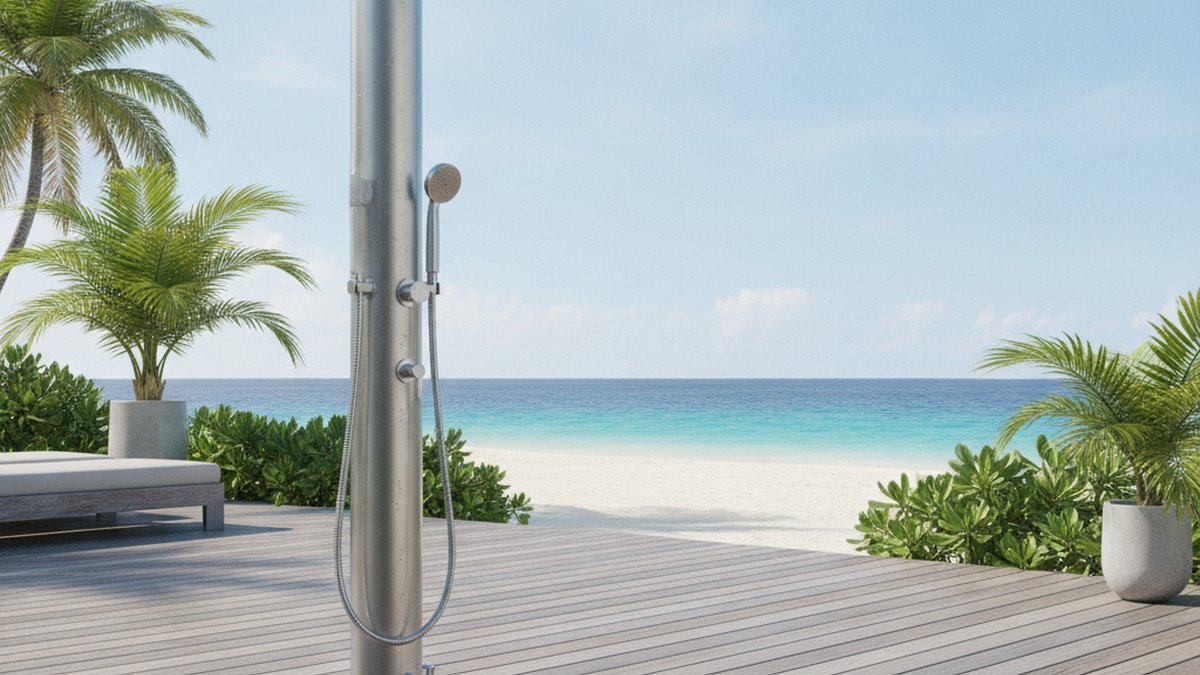
A great shower system outdoor is one built to survive sun, rain, salt, chlorine, and freezing nights while still giving you a strong, comfortable spray — which is exactly why a $40 hardware-store hose sprayer and a real outdoor shower system are not the same purchase. If you’re rinsing off after the pool, hosing sand off the dog and kids at a beach house, or building a garden spa corner, the right fixture, material, and valve type matter far more than looks. Below we answer the real questions people ask before they buy, with concrete specs, price ranges, and the mistakes that ruin outdoor showers within a season.
At avitashome, we spec and sell exterior-rated shower fixtures every day, so this guide is written the way we’d explain it to a friend standing in the plumbing aisle — no fluff, just what actually holds up outside.
What exactly is an “outdoor shower system,” and how is it different from an indoor one?
An outdoor shower system is a shower fixture engineered specifically for exposure — meaning corrosion-resistant materials, UV-stable finishes, and (often) a way to drain the pipe so it doesn’t freeze and burst. An indoor shower valve dropped outside will typically pit, seize, or crack within one or two seasons.
Three things separate a true outdoor unit from an indoor one used outside:
- Material: 304 or 316 stainless steel, solid brass, or marine-grade aluminum — not chrome-plated pot metal, which flakes and rusts fast in salt air.
- Valve design: either a standard mixer (fine in warm climates) or a frost-free / drain-down valve for freezing regions.
- Water supply flexibility: many outdoor systems run cold-only off a garden spigot, while premium ones tie into hot and cold lines for year-round comfort.
The single biggest reason outdoor showers fail early is people buying an indoor-grade finish. If corrosion resistance and finish durability are new to you, our overview of what separates a durable fixture from a cheap one in the best quality faucet brands to buy in 2026 applies directly here — the same tells that reveal a good indoor faucet reveal a good outdoor one.
Cold-only or hot and cold? Which outdoor shower do I actually need?
Go cold-only if you’ll only use it in summer for quick rinses; choose hot and cold if you want the shower usable in spring, fall, or chilly evenings, or if anyone will actually bathe out there. It’s the first real decision, and it drives everything else — plumbing, cost, and where you can install it.
A cold-only rinse station connects to a single garden-hose bib and costs the least. A hot-and-cold system needs both supply lines run to the location, which usually means tapping into your home’s plumbing — a bigger job, but a dramatically nicer shower. Here’s how the three main setups compare:
| Setup type | Typical price | Water supply | Best for | Install difficulty |
|---|---|---|---|---|
| Cold-only rinse station | $80–$200 | Single garden spigot | Pool/beach rinse, dogs, sandy feet | Easy (DIY) |
| Hot & cold freestanding | $250–$600 | Hot + cold lines | Year-round backyard bathing | Moderate |
| Wall-mounted spa system | $300–$900+ | Hot + rece, often rough-in valve | Enclosed outdoor bathrooms, luxury builds | Harder (may need pro) |
A quick reality check on temperature: cold water straight from an underground line often sits around 50–60°F (10–16°C) even in summer — refreshing after a hot pool, brutal on a cool morning. That’s why hot-and-cold is worth the extra plumbing for anyone using the shower beyond peak summer.
What if I just want to rinse off after the pool?
For pure pool or beach rinsing, a cold-only wall-mounted or freestanding rinse station is all you need, and it’s the easiest DIY install. Look for a unit with a foot-rinse tap at the base — genuinely the most-used feature at any pool because it keeps grass and sand out of the water. Stainless steel (SUS304) is the sweet spot for price versus corrosion resistance; upgrade to 316 stainless only if you’re right on the ocean where salt spray is constant.
What material holds up best outside — stainless steel, brass, or aluminum?
For most homes, 304 stainless steel is the best balance of price and durability; for oceanfront salt exposure, step up to 316 stainless or solid brass, and skip anything chrome-plated over zinc or pot metal. Material is where cheap outdoor showers reveal themselves within a single season.
- 304 stainless steel: Excellent all-around corrosion resistance, handles chlorine and rain well, affordable. The default choice for backyards and most pools.
- 316 stainless steel: Adds molybdenum for superior salt-water resistance. Worth it within a few hundred feet of the ocean.
- Solid brass: Naturally corrosion-resistant and long-lasting; often used for valve bodies and living-finish fixtures that develop a patina. If you like the wall-mount look, the same durability logic in our guide to a brass wall-mounted faucet setup carries straight over to outdoor use.
- Marine-grade aluminum: Lightweight and rustproof, but softer and can oxidize; fine for freestanding bodies, less ideal for high-wear valves.
- Chrome-plated pot metal (avoid): Cheapest upfront, flakes and rusts fastest. This is what you get when a listing won’t tell you the base material.
One tell: if a product page lists a finish (like “brushed nickel”) but never names the underlying metal, assume it’s plated pot metal and move on.
How do I keep my outdoor shower from freezing and bursting in winter?
To stop freeze damage, either install a frost-free (drain-down) valve that empties the pipe when shut off, or shut off the supply at an indoor valve and drain the outdoor line before the first freeze. In any climate that dips below 32°F (0°C), this isn’t optional — trapped water expands as it freezes and splits pipes and valve bodies.
You have three realistic strategies depending on your climate:
- Warm climates (no hard freeze): A standard mixer valve is fine. Southern California, Florida, Gulf Coast — you’re set.
- Freeze-prone climates, seasonal use: Run the supply through an indoor shutoff valve. Each fall, close it and open the outdoor faucet to let the line drain. Simple and cheap.
- Freeze-prone climates, permanent install: Use a frost-free wall hydrant or a self-draining outdoor shower valve that sits below the frost line, so water never sits in the exposed pipe.
Never leave a hose connected to an outdoor shower over winter — the hose traps water back against the valve and is a classic cause of a cracked bib even on “frost-free” units.
Why is my outdoor shower’s water pressure so weak, and how do I fix it?
Weak outdoor shower pressure is almost always caused by a long, narrow, or kinked supply line, a clogged shower head, or too much flow restriction — not by the fixture itself. The fix is usually cheap and takes minutes.
Start with the head. Mineral buildup from hard water clogs the nozzles fast outdoors, especially on well water. The same low-pressure troubleshooting we walk through for indoor units in why your shower head has low pressure and how to fix it fast applies outside — soak the head in vinegar, clear the nozzles, and check the flow restrictor. If you’re specifically fighting low incoming pressure at the property, choosing a head designed for it, like the ones in our roundup of the best rainfall shower head for low water pressure, makes a bigger difference than any pump.
After the head, check these in order:
- Hose diameter: A ½-inch garden hose chokes flow. Use a ¾-inch supply line where you can.
- Run length: Every extra 25 feet of narrow hose drops pressure. Keep the run short and direct.
- Kinks and quick-connects: Cheap brass quick-connects and any kink cut flow dramatically.
- Shutoff valve: A partially open indoor shutoff quietly starves the shower.
Do outdoor shower jets or a spa panel make sense outside?
Body jets are great outdoors only if you have strong incoming pressure and hot water — otherwise they underperform and feel like a trickle. A multi-jet spa panel needs both flow and heat to feel luxurious; on a cold-only garden spigot it’s a disappointment. If you’re weighing a jetted setup, our breakdown of whether shower system jets are actually worth it covers the pressure and plumbing requirements that decide whether they’ll feel amazing or anemic — and those requirements are harder to meet outdoors, so plan the supply first.
Where should I install an outdoor shower, and what do I need for drainage?
Install your outdoor shower on a solid, level, well-draining surface — a gravel bed, permeable pavers, or a proper drain — never on bare soil that turns to mud or against a wall where splash rots the siding. Drainage is the part most people underestimate.
Your realistic drainage options:
- Gravel dry well: A pit of gravel under the shower lets rinse water percolate away. Cheapest and fine for cold rinse stations with light use.
- Permeable pavers on a gravel base: Clean look, good drainage, no standing water.
- Dedicated drain to sewer or graywater: Required in many jurisdictions for enclosed or heavily used showers, and if you use soap. Check local codes — soapy graywater often can’t legally drain to open ground.
Position the shower where prevailing splash blows away from the house, and keep the fixture at least a foot off any wood siding. For freestanding units, anchor the base to a paver or small concrete pad so it doesn’t tip.
What should I actually look for on the spec sheet before I buy?
Before buying, confirm the base material (SUS304 or better), the valve type (mixer vs. frost-free), the flow rate, the connection size, and the warranty length — those five specs tell you more than any photo. Here’s a quick pre-purchase checklist:
- Base material named explicitly — 304/316 stainless or solid brass, not just a finish color.
- Valve type matched to your climate — frost-free if you freeze.
- Flow rate — 1.8–2.5 GPM is comfortable; below 1.5 GPM can feel weak outdoors.
- Connection — standard ½-inch NPT or ¾-inch garden hose thread; confirm it matches your supply.
- Warranty — a real outdoor-rated product should carry a multi-year finish and function warranty.
On standards and testing: reputable outdoor fixtures use ceramic-disc cartridges (rated for tens of thousands of cycles) and finishes tested to resist corrosion and UV fading. Look for lead-free / low-lead compliance on any line you might drink from and for a stated warranty — a brand that won’t warranty its finish outdoors is telling you something. If you ever need to service the valve, the process mirrors an indoor swap; our walkthrough on a bathtub faucet replacement cartridge swap shows the same cartridge principles you’ll use on a mixer-style outdoor valve.
How much does a good outdoor shower system cost in 2026?
Expect $80–$200 for a solid cold-only rinse station, $250–$600 for a quality hot-and-cold freestanding unit, and $300–$900+ for a premium wall-mounted spa system with a rough-in valve. Where you land depends far more on the valve and material than on brand name.
A few honest cost notes:
- The cheapest units ($40–$70) are almost always plated pot metal — you’ll replace them within a season or two, so they cost more over time.
- Running new hot and cold lines to the shower location is often the real expense — budget for a plumber if the supply isn’t already nearby.
- Foot-rinse taps, handheld sprayers, and diverters add modest cost but big everyday convenience.
Author note & why trust avitashome
This guide was written by the avitashome fixtures team — we specify, sell, and field service questions on faucets and shower systems every day, including exterior-rated hardware for pools, beach houses, and backyards. Our recommendations lean on real-world corrosion behavior (why 316 beats 304 near salt water), cartridge and valve engineering, and the warranty and testing standards that separate a fixture that lasts a decade from one that fails in a season. We don’t recommend a spec we wouldn’t install ourselves.
FAQ
Can I connect an outdoor shower to a regular garden hose?
Yes — a cold-only outdoor shower connects to a standard garden spigot using ¾-inch garden hose thread. It’s the easiest DIY setup. For hot water, though, you’ll need to run a hot supply line, which typically means tapping into your home’s plumbing rather than using a hose.
Do I need hot water for an outdoor shower?
Not for summer rinsing — cold is fine and refreshing after a pool or beach. But if you want to use the shower in spring, fall, or on cool evenings, hot water makes it usable year-round. Cold supply water often sits at 50–60°F even in summer, which is bracing on a chilly morning.
How do I winterize an outdoor shower?
Before the first freeze, shut off the water at an indoor valve, open the outdoor shower faucet to drain the line, and disconnect any hose. If your unit has a frost-free or drain-down valve, it self-empties, but you should still disconnect hoses. Trapped water is what cracks pipes and valve bodies.
What’s the most durable material for an outdoor shower?
304 stainless steel is the best all-around choice for most homes; 316 stainless steel is better for oceanfront salt exposure; and solid brass is excellent for valve bodies and living-finish looks. Avoid chrome-plated pot metal — it flakes and rusts fastest.
Does an outdoor shower need a permit or special drainage?
It depends on your local codes. A simple cold rinse station draining to a gravel dry well usually doesn’t, but an enclosed shower, one using soap, or one connected to your home’s hot/cold plumbing often requires a permit and a proper drain to sewer or graywater. Soapy water frequently can’t legally drain to open ground — check your municipality before you build.
Why does my outdoor shower have low pressure even though my indoor showers are fine?
The culprit is usually the supply path, not your home’s pressure: a long or narrow garden hose, a kink, a cheap quick-connect, or a clogged shower head all choke outdoor flow. Use a shorter ¾-inch line, clear mineral buildup from the head, and make sure the indoor shutoff is fully open.