 Avitas Home
Here is the complete, publish-ready HTML article:
“`html
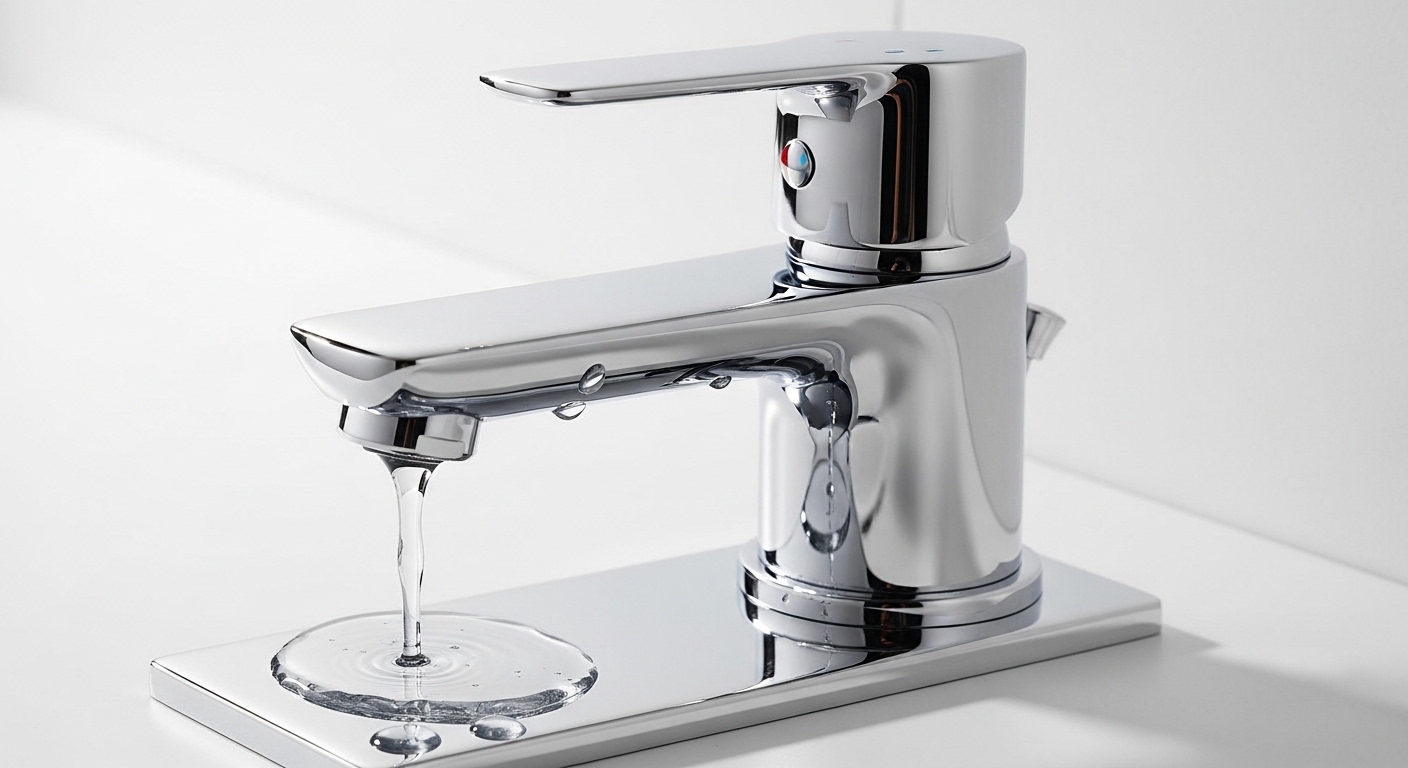
If your bathroom faucet is leaking from the handle — water seeping out around the base of the lever every time you turn it on, or a slow drip that pools behind the handle — you’re looking at one of the most common and most fixable faucet problems there is. In nine out of ten cases the water isn’t coming from a cracked pipe or a failed faucet body; it’s escaping past a $10 rubber or ceramic part inside that’s simply worn out. Below, we’ll walk through exactly why it happens, how to figure out which part failed, and how to fix it yourself without calling a plumber.
At Avitas Home we sell and service bathroom faucets every day, and handle leaks are the #1 repair question we get. Good news: this is genuinely a beginner-friendly DIY job on most faucets.
Why is water leaking out from around my faucet handle specifically?
Water leaks from the handle — rather than the spout — when the seal that’s supposed to hold pressure behind the handle fails. That seal is usually the cartridge, a set of O-rings, or on older faucets the packing nut and washer. When those wear out, pressurized water pushes up past the stem and escapes at the handle instead of flowing out the spout.
Here’s the key distinction that tells you a lot: where and when the leak shows up.
- Leaks only when the faucet is turned ON: the problem is almost certainly the cartridge or the O-rings on the cartridge stem. Water pressure is active and pushing past a worn seal.
- Leaks constantly, even when OFF: the valve seat or the cartridge’s shut-off seal has failed, so the faucet can’t fully close. You may also see the spout drip at the same time.
- Leaks only from the base of the handle, not the spout: classic worn O-ring or a loose retaining nut. The cartridge itself may still shut off fine.
Faucets take a beating — a bathroom faucet cycles thousands of times a year, and the rubber seals inside harden and crack over 5–10 years. Hard water speeds this up dramatically because mineral scale chews up the smooth sealing surfaces the O-rings ride against. If you’re on well water or hard municipal water, expect to do this repair more often.
How do I know if it’s the cartridge, the O-ring, or the valve seat?
The fastest way to diagnose it: shut off the water, pull the handle and cartridge, and inspect the rubber. A cracked, flattened, or gummy O-ring means O-rings; a scored or scaled-up cartridge body means cartridge; pitting on the brass seat inside the faucet body means valve seat. Here’s how each failure typically presents:
| Symptom | Most likely cause | Typical fix | Part cost |
|---|---|---|---|
| Drips from handle base only when running | Worn stem O-rings | Replace O-rings | $3–$8 |
| Leaks constantly, plus spout drips | Failed cartridge | Replace cartridge | $12–$25 |
| Handle is loose AND leaking | Loose retaining/packing nut | Tighten or reseal nut | $0–$5 |
| Leak returns fast after new O-rings | Pitted valve seat | Reseat or replace seat | $5–$15 |
| Two-handle faucet, one side leaks | That side’s washer/seat | Replace washer + seat | $3–$10 |
One shortcut: if your faucet is a single-handle model more than about 7 years old and it’s leaking from the handle, just replace the whole cartridge. New cartridges come with fresh O-rings already installed, so you fix the two most common causes at once for the same amount of labor. It’s the highest-value move.
What tools and parts do I need before I start?
You need very little: a Phillips or flat screwdriver, a hex/Allen key (many modern handles use a tiny set screw), an adjustable wrench or channel-lock pliers, plumber’s grease, and the correct replacement cartridge or O-ring kit. Total spend is usually under $25.
The single most important step before buying parts is identifying your faucet. Cartridges are not universal — a Moen 1225 will not fit a Delta or a Pfister. Look for a brand name stamped on the faucet, then match the model. If you can’t find a model number, pull the old cartridge first and take it to the store or match it online. While you’re sizing things up, it’s worth confirming your faucet supply line size in case a hose needs replacing too, and checking your faucet aerator thread size if the spout has also been sputtering.
- Replacement cartridge OR O-ring kit (brand-specific)
- Phillips + flat-head screwdrivers
- Allen/hex key set (for set screws)
- Adjustable wrench or channel-lock pliers
- Silicone plumber’s grease (never petroleum-based — it destroys rubber seals)
- An old towel and a small bowl for parts
- White vinegar (to dissolve mineral scale on reusable parts)
How do I actually stop a bathroom faucet leaking from the handle? (step by step)
The core repair is: turn off water → remove handle → pull cartridge → replace part → reassemble → test. Here’s the full walkthrough for a typical single-handle bathroom faucet, which is the most common setup.
- Shut off the water. Turn both angle-stop valves under the sink clockwise until they stop. Then open the faucet to release pressure and confirm the water is truly off. Plug the drain so no small screws fall in.
- Remove the handle. Pop off the decorative cap if there is one, then loosen the set screw with your Allen key (or the screw under the cap with a screwdriver). Lift the handle straight up and off.
- Take off the retaining nut and clip. Under the handle you’ll usually find a dome/bonnet nut and a small horseshoe-shaped retaining clip. Unscrew the nut with your wrench and pull the clip out with pliers. Keep track of the order of parts — photograph each step with your phone.
- Pull the cartridge. Grip the cartridge stem with pliers and pull straight up. Stubborn, scaled-up cartridges may need a cartridge-puller tool or gentle wiggling. Note the orientation — many cartridges have a notch or flat that must line up the same way on reassembly, or your hot and cold will be reversed.
- Inspect and replace. If the O-rings are cracked or flattened, replace them and grease the new ones. If the cartridge body is scored or scaled, replace the whole cartridge. Wipe out any grit inside the faucet body.
- Grease and reinstall. Apply a thin film of silicone plumber’s grease to the new O-rings or cartridge. Insert it in the correct orientation, replace the clip, and hand-tighten the retaining nut plus a small wrench nudge — don’t overtighten and crack the housing.
- Reassemble the handle and test. Put the handle and set screw back, then slowly turn the water back on. Run the faucet, then shut it off and watch the handle base for 60 seconds. Dry equals success.
If you have a two-handle faucet instead, the concept is identical but each handle has its own stem or cartridge, and older two-handle models often use a rubber seat washer plus a metal valve seat down in the faucet body. Replace both the washer and the seat on the leaking side for a lasting fix. The overall approach is the same one we cover in our full guide on how to fix a leaky faucet on a bathroom sink.
Should I just replace the whole faucet instead of repairing it?
Repair it if the faucet is decent quality and under ~10 years old; replace it if the body is cracked, the finish is flaking, parts are discontinued, or you’ve already rebuilt it twice. A $15 cartridge fixes 90% of handle leaks, so repair almost always wins on cost. But there’s a break-even point.
Consider full replacement when:
- The faucet body itself is corroded or hairline-cracked (water is coming through the metal, not past a seal).
- You can’t source parts — common with old, off-brand, or imported faucets.
- The finish is worn and you wanted to upgrade anyway.
- You’ve replaced the cartridge and O-rings and it still leaks, meaning the valve seat inside the cast body is pitted beyond reseating.
A quality bathroom faucet with a ceramic-disc cartridge and a solid brass body will outlast a cheap zinc-alloy unit many times over, and it’s far less likely to develop handle leaks in the first place. If you’re shopping, our guide to the best place to buy a bathroom faucet in the USA breaks down what to look for. And if the leak is at your shower or tub rather than the sink, we have dedicated fixes for a leaking single-handle bathtub faucet and for a loose shower faucet, since those use different valve assemblies.
How do I keep the handle leak from coming back?
Prevent repeat handle leaks by using silicone (not petroleum) grease on seals, managing hard water, and not cranking the handle shut. The single biggest killer of faucet seals is mineral scale, so if you’re on hard water, addressing it protects every fixture in the house.
Practical prevention:
- Grease correctly. Always use silicone plumber’s grease on O-rings and cartridge stems. Petroleum jelly swells and rots rubber within months.
- Don’t overtighten the handle to stop a drip. Forcing a worn cartridge shut just accelerates wear on the seat. Fix the seal instead.
- Tackle hard water. Descale aerators and cartridges periodically with vinegar; consider a whole-home softener if you’re seeing scale on everything.
- Buy ceramic-disc cartridges. They resist scale and wear far better than old rubber-washer compression valves.
- Do a 60-second annual check. Run each faucet and feel around the handle base for weeping so you catch it early, before it warps the finish or damages cabinetry.
Author note: This guide was written and reviewed by the Avitas Home fixtures team, who install, test, and service bathroom faucets professionally. We’ve personally rebuilt hundreds of single- and two-handle valves across Moen, Delta, Pfister, and Kohler platforms. Avitas Home has supplied residential and light-commercial bathroom fixtures across the U.S. since our founding, and every faucet we sell uses cartridges tested to industry cycle-life standards (ASME A112.18.1 / NSF 61 for lead-free wetted parts). If you buy a faucet from us and it develops a handle leak inside the warranty period, we ship the replacement cartridge free — because we stand behind the seals, not just the shine.
FAQ
Can I fix a leaking faucet handle without turning off the water?
No — always shut off the angle-stop valves under the sink first. The moment you loosen the retaining nut, pressurized water will spray. If the under-sink valves won’t fully close, shut off the main water supply to the house instead.
Why does my faucet still leak from the handle after I replaced the cartridge?
Usually one of three things: the cartridge is seated in the wrong orientation, the O-rings weren’t greased and got pinched during install, or the valve seat inside the faucet body is pitted. Re-open it, check that the cartridge notch lines up, and inspect the brass seat for scoring. A pitted seat needs reseating or a seat replacement.
How much does it cost to fix a bathroom faucet leaking from the handle?
DIY, it’s typically $8–$25 for the cartridge or O-ring kit plus a couple bucks for grease. A plumber will usually charge $100–$250 including the service call and parts, which is why this is such a popular DIY repair — you’re mostly paying for 30 minutes of your own time.
Is a handle leak the same as a dripping spout?
Not quite. A dripping spout means the faucet can’t fully shut off (worn cartridge seal or valve seat). A handle-base leak means water is escaping past the stem seals or a loose nut while the faucet runs. They can share a cause — a bad cartridge — which is why replacing the cartridge often fixes both at once.
How long should a faucet cartridge last before it leaks again?
A quality ceramic-disc cartridge lasts roughly 10–15 years in normal water conditions. On hard water it may be 5–7 years. Cheap rubber-washer valves wear faster. Using silicone grease at install and softening hard water meaningfully extends that life.
My faucet is really old and I can’t find the cartridge — what now?
Pull the old cartridge and match it physically at a plumbing-supply store, or replace the whole faucet if parts are truly discontinued. Off-brand and imported units from 15+ years ago are the hardest to source, and at that age a new faucet with a warrantied cartridge is often the smarter spend.
“`