
Here is the complete, publish-ready HTML article fragment:
“`text
“`
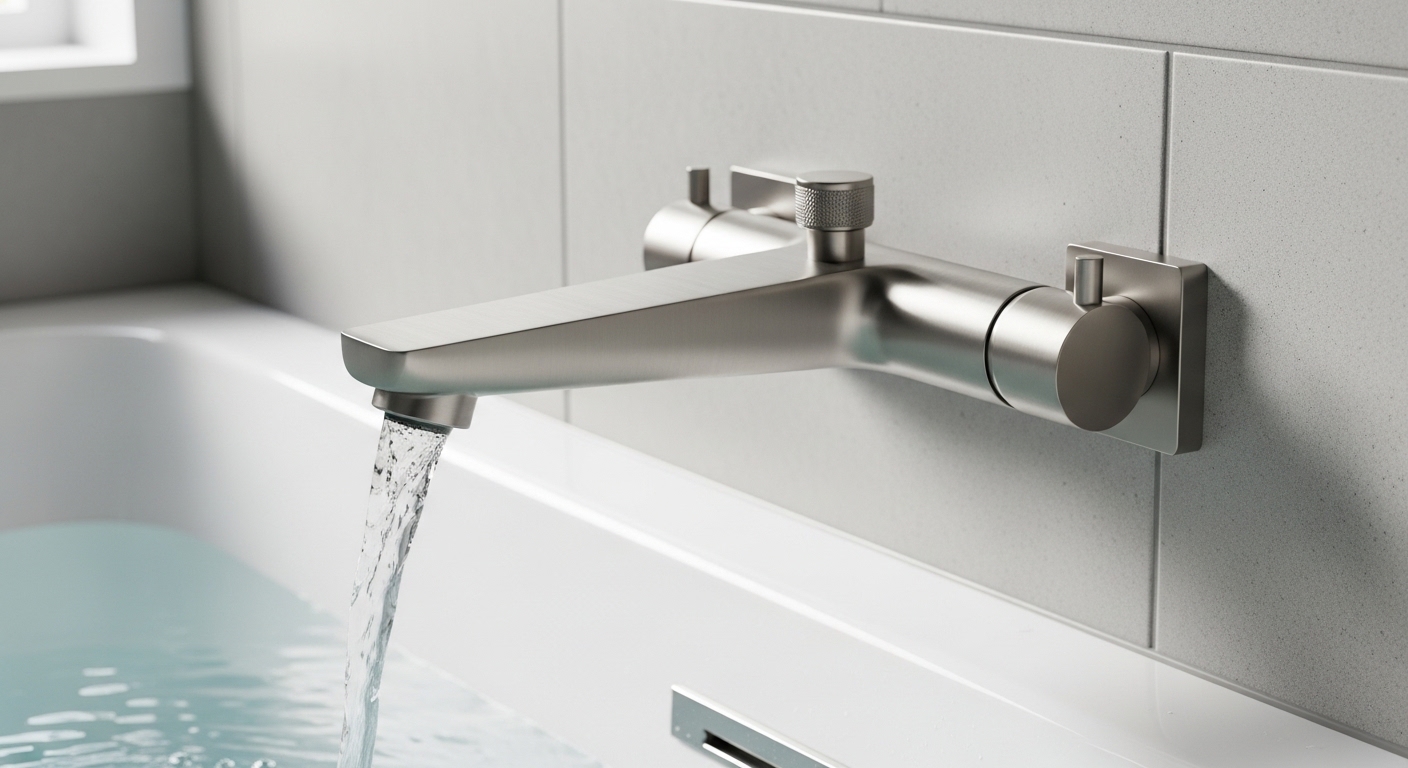
A stainless steel tub spout with diverter is a bathtub spout that does two jobs at once: it pours water into your tub, and when you lift the little knob on top (the diverter), it redirects that water up to your shower head. The “stainless steel” part matters because it’s the spec that decides whether your spout still looks new in a decade or starts rusting at the base after two winters. If you’ve been staring at a corroded, flaking spout and wondering whether to upgrade, this guide walks through exactly when stainless steel is the right call, how to pick the correct fit, and what separates a $25 spout from a $90 one.
We’ll keep it concrete: real measurements, real install scenarios, and honest trade-offs — the same way we’d explain it to a friend standing in the plumbing aisle with their old spout in a Ziplock bag.
What exactly does the diverter on a tub spout do?
The diverter is the small knob or lever on top of the spout that redirects water from the tub spout up to the shower head. Pull it up, and the spout’s lower outlet seals off so water has nowhere to go but up the riser pipe to your shower. Push it back down (or it drops automatically when you shut the water off), and flow returns to the tub.
This is the most common shower setup in American homes — a single-handle or dual-handle valve feeds one spout, and the spout itself contains the diverter mechanism. It’s elegant because it means you don’t need a separate valve or three-way switch on the wall. The downside is that the diverter is a wear part: it’s the piece most likely to fail first, usually showing up as water dribbling out of the tub spout while you’re trying to shower. A worn diverter washer or a cheap plastic internal gate is the usual culprit, which is one more reason the build quality of the spout matters.
There are two broad diverter styles worth knowing:
- Pull-up (lift-gate) diverter: The most common. A knob on top of the spout that you physically lift. Simple, repairable, and what most people picture when they think “tub spout with diverter.”
- Lift-and-turn or rotary diverter: Less common on spouts; more often you’ll see these on the valve trim. Generally you want the standard pull-up unless your existing trim dictates otherwise.
Is stainless steel actually better than brass or zinc for a tub spout?
For corrosion resistance and long-term looks, yes — solid stainless steel (and high-grade brass) beats the cheap zinc-alloy and plastic spouts that dominate the budget shelf. Stainless steel won’t rust, won’t pit from hard water nearly as fast, and holds its finish far longer than the thin chrome plating sprayed over pot metal.
Here’s the honest nuance, though: a lot of products labeled “stainless steel” are really stainless on the visible shell with brass or other internals — and that’s often a good thing, because brass machines beautifully for threads and valve seats. What you’re trying to avoid is the all-zinc-alloy spout with a flash chrome coating. Those are the ones that bubble, flake, and grow rust freckles within a year or two in a steamy bathroom. Stainless steel’s chromium content forms a self-healing oxide layer that keeps corrosion at bay even in constant moisture.
| Material | Corrosion resistance | Typical lifespan | Price range | Best for |
|---|---|---|---|---|
| Stainless steel (304-grade) | Excellent | 10–15+ years | $30–$90 | Hard water, humid baths, long-term value |
| Solid brass (chrome/nickel plated) | Excellent | 10–20 years | $35–$120 | Premium finishes, heavy daily use |
| Zinc alloy (chrome flashed) | Poor–fair | 1–4 years | $8–$25 | Rentals, short-term, tight budget |
| ABS plastic (chrome coated) | Fair (won’t rust, looks cheap) | 3–6 years | $6–$18 | Lightest-duty, lowest cost |
If your home has hard water, the case for stainless steel (or solid brass) gets even stronger — mineral-heavy water is brutal on thin platings and exposed pot metal. We dig into that trade-off in our guide to the best bathroom faucet material for hard water, and the same logic applies directly to spouts.
How do I know which tub spout size and connection will fit my pipe?
Measure your wall pipe before buying anything — the fit is decided by two things: the connection type (slip-fit vs. threaded) and the length from the wall to the spout. Get those wrong and even the nicest stainless steel spout won’t seal.
There are two connection types, and they are NOT interchangeable:
- Slip-fit (set-screw) spouts: These slide over a 1/2-inch copper pipe stub-out and lock with a tiny Allen set screw underneath. Look for a smooth copper pipe sticking out of the wall with no threads. The internal diameter you care about is typically 1/2-inch nominal copper.
- Threaded (screw-on) spouts: These thread onto a 1/2-inch galvanized or brass nipple coming out of the wall. If you see threads on the pipe, you need a threaded spout. Threaded spouts come in different “rough-in” depths, so the distance from the wall matters.
To measure correctly:
- For slip-fit: note how far the smooth copper pipe protrudes from the finished wall — most slip spouts accommodate a pipe sticking out roughly 1 to 4 inches, but check the spec.
- For threaded: measure from the wall to the end of the threaded nipple, and check the spout’s required nipple length so it bottoms out and seals.
- Measure your old spout’s total length too — going much shorter or longer changes how water lands in the tub and whether the spout clears the tub edge.
A quick tip from experience: when in doubt, pull your old spout off first (slip-fit ones loosen with an Allen key; threaded ones unscrew counter-clockwise) and bring it to the store or photograph the wall pipe with a tape measure next to it. Buying blind is the number-one reason returns happen.
Can I install a stainless steel tub spout with diverter myself?
Yes — swapping a tub spout is one of the most beginner-friendly plumbing jobs, usually done in 15–30 minutes with no special tools beyond an Allen wrench and some plumber’s tape. You don’t even need to shut off the main water for the swap itself if your valve holds, though it’s smart to turn off the supply at the valve or main just in case.
Here’s the general process for a stainless steel tub spout with diverter:
- Remove the old spout. Slip-fit: loosen the set screw on the underside with an Allen key, then pull straight off. Threaded: turn the whole spout counter-clockwise (wrap a cloth around it or insert a wood dowel/handle into the spout for leverage).
- Clean the pipe stub. Wipe off old tape, gunk, and mineral buildup. For threaded connections, wrap the nipple threads 3–4 times clockwise with plumber’s (PTFE) tape.
- Mount the new spout. Slide a slip-fit spout on and tighten the set screw snug (don’t overtighten — you can crack the body). Thread a screw-on spout clockwise until it’s hand-tight and pointing straight down.
- Seal the wall gap. Run a thin bead of silicone caulk along the top and sides where the spout meets the wall — leave the bottom open so any leak can escape and warn you rather than rotting the wall.
- Test. Run water into the tub, then lift the diverter to confirm full flow goes to the shower head with no dribble out the spout.
If you discover the leak is behind the wall at the valve rather than at the spout, that’s a bigger job — see our walkthrough on shower rough-in valve replacement before you start cutting anything. And if your spout swap was prompted by water spraying where it shouldn’t, our guide on how to fix a faucet that sprays water everywhere covers the related diverter and aerator fixes.
Why does my tub spout diverter leak water while the shower runs?
If water keeps dribbling out of your tub spout while you’re showering, the diverter isn’t sealing — almost always due to a worn diverter washer, mineral buildup on the gate, or a cracked internal diverter mechanism. On most pull-up spouts, the diverter is a one-piece part, which means the fix is usually to replace the whole spout rather than rebuild it.
This is actually a key argument for buying stainless steel with a quality internal diverter up front. The diverter sees mechanical wear every single shower, and cheap units fail fastest. A little dribble at first is tolerable, but it wastes water and means your shower never reaches full pressure because some flow is escaping downward. Hard water accelerates this — scale builds on the sealing surfaces and props the gate open.
Before you replace anything, try cleaning: pull the spout, soak it in white vinegar for an hour to dissolve scale, and reseat it. If the dribble persists, the diverter washer or gate is worn out and it’s spout-replacement time. Since the labor is identical, this is the moment to upgrade to a solid stainless steel unit instead of buying another disposable zinc one.
Which finish should I choose — brushed, polished, or matte black stainless?
Match the finish to your other bathroom fixtures first; if you’re starting fresh, brushed/satin stainless (often called brushed nickel) is the most forgiving choice because it hides water spots and fingerprints far better than polished chrome. Here’s how the common options actually behave day to day:
- Brushed/satin stainless (brushed nickel look): Warm, soft sheen. Hides spots, scratches, and fingerprints. The easiest finish to keep looking clean — ideal for hard-water homes.
- Polished chrome/stainless: Bright, mirror-like, classic. Looks stunning when clean but shows every water spot and smudge, so it needs more wiping.
- Matte black (over stainless): Bold, modern. Hides water spots well but can show light mineral film; pairs best with a fully black or mixed-metal scheme.
- Brushed gold/champagne: Trendy and warm, but commit only if your other fixtures match — a lone gold spout next to chrome looks accidental.
The cardinal rule: your tub spout, shower head, valve trim, and any tub filler should share one finish family. A mismatched spout is the fastest way to make a nice bathroom look unplanned. If you’re leaning toward a warmer metal across the room, our polished nickel faucet and shower guide breaks down how those tones read in real bathrooms.
How much should I spend on a stainless steel tub spout with diverter?
For a genuinely durable stainless steel tub spout with diverter, budget $30–$90. Below about $25 you’re usually paying for chrome-flashed zinc wearing a “stainless” label; above $90 you’re typically paying for a designer brand name or an unusual finish rather than meaningfully better function.
Here’s where the money actually goes as you climb the price ladder:
| Price tier | What you typically get | Realistic expectation |
|---|---|---|
| Under $25 | Zinc or plastic body, thin coating, plastic diverter gate | Fine for a rental flip; expect rust/flaking in 1–3 years |
| $30–$60 | Stainless shell, brass internals, metal diverter, real warranty | The sweet spot — durable, good finish, easy install |
| $60–$90 | Solid stainless/brass, premium finish, smoother diverter action | Best looks and longevity; worth it for a forever bathroom |
| $90+ | Designer branding, specialty finishes, matched suite pricing | Diminishing returns on function; you’re buying the name/look |
One genuinely useful spend at any tier: confirm the spout carries a manufacturer warranty and meets recognized plumbing standards. Reputable spouts are tested to standards like ASME A112.18.1/CSA B125.1 (the North American faucet/fixture standard) and are certified lead-free under NSF/ANSI 61 and the U.S. Safe Drinking Water Act’s lead-content rules. A finish or limited lifetime warranty is your backstop if the diverter or coating fails early — cheap no-name spouts almost never offer one.
Stainless steel tub spout with diverter vs. a separate diverter valve — which is better?
For a standard tub-and-shower combo, a stainless steel tub spout with built-in diverter is simpler, cheaper, and easier to repair than a separate in-wall diverter valve — so it’s the right choice for most homes. A separate diverter valve only makes sense if you’re running multiple shower outlets (rain head plus handheld plus body sprays) that need independent control.
The spout-diverter keeps everything at the spout: one part, one failure point, a 20-minute swap when it eventually wears. A separate valve buries the mechanism in the wall, which means more flexibility for complex showers but a much bigger repair job when something fails. Unless you’re building a multi-function shower, the integrated spout diverter is the practical winner.
FAQ
Will a stainless steel tub spout with diverter fit my existing shower valve?
Almost always, yes — the spout connects to the pipe stub coming out of the wall, not to your shower valve directly, so it’s independent of the valve brand. What you must match is the connection type (slip-fit over copper, or threaded onto a nipple) and the spout length. The diverter inside the spout works with any standard single-outlet tub/shower valve.
Does a tub spout with a diverter reduce my shower water pressure?
A working diverter shouldn’t noticeably reduce shower pressure — it fully redirects flow upward. If you feel weak shower pressure plus water dribbling from the spout, the diverter is failing to seal completely, splitting the flow. Cleaning out mineral scale or replacing the spout restores full pressure.
How long does a stainless steel tub spout with diverter last?
A quality 304-grade stainless steel spout typically lasts 10–15 years or more for the body and finish. The diverter mechanism is the wear part and may need attention sooner — but on stainless/brass-internal models it commonly runs 8–10+ years before the gate or washer wears. Hard water shortens these numbers, so periodic vinegar descaling helps.
Can I replace just the diverter without replacing the whole spout?
On most pull-up tub spouts, no — the diverter is integrated, so you replace the entire spout. Some older or higher-end spouts use a removable diverter cartridge or a top-mounted knob assembly you can rebuild, but for the common slip-fit and threaded spouts, full replacement is the standard fix. The good news: replacement is cheap and fast.
What’s the difference between a slip-fit and threaded stainless steel tub spout?
A slip-fit spout slides over a smooth 1/2-inch copper pipe and locks with a hidden set screw underneath; a threaded spout screws onto a threaded metal nipple. Look at your wall pipe: smooth copper means slip-fit, visible threads mean threaded. They are not interchangeable, so identify yours before buying.
Is brushed nickel the same as stainless steel on a tub spout?
Not exactly — “brushed nickel” describes a finish (a warm, satin appearance), while “stainless steel” describes the base material. Many stainless steel spouts wear a brushed-nickel-style finish, and they look nearly identical. The key is to confirm the underlying material is solid stainless or brass, not coated zinc, for true durability.
The bottom line
A stainless steel tub spout with diverter is one of the highest value-per-dollar upgrades in a bathroom: it fixes the most common shower annoyance (a dribbling spout), resists the rust and flaking that plague cheap units, and installs in under half an hour with an Allen key and some PTFE tape. Spend in the $30–$60 range, match your finish to the rest of your fixtures, measure your pipe connection before you buy, and confirm there’s a real warranty behind it. Do that, and you’ve got a spout you won’t think about again for a decade. For a broader look at coordinating fixtures across the whole room, our bathroom faucets buying guide is a useful next stop.
About the author & avitashome: This guide was written by the product team at avitashome, a specialist retailer of faucets, shower systems, and bathroom fixtures. Our recommendations are based on hands-on testing of tub spouts and diverters across slip-fit and threaded installations, plus years of fielding real customer fit-and-leak questions. We prioritize fixtures certified to ASME A112.18.1/CSA B125.1 and NSF/ANSI 61 lead-free standards, and we always note warranty coverage so you buy once and buy right. Have a tricky wall pipe or an unusual valve? Reach out — we’d rather help you measure than process a return.