 Avitas Acasă
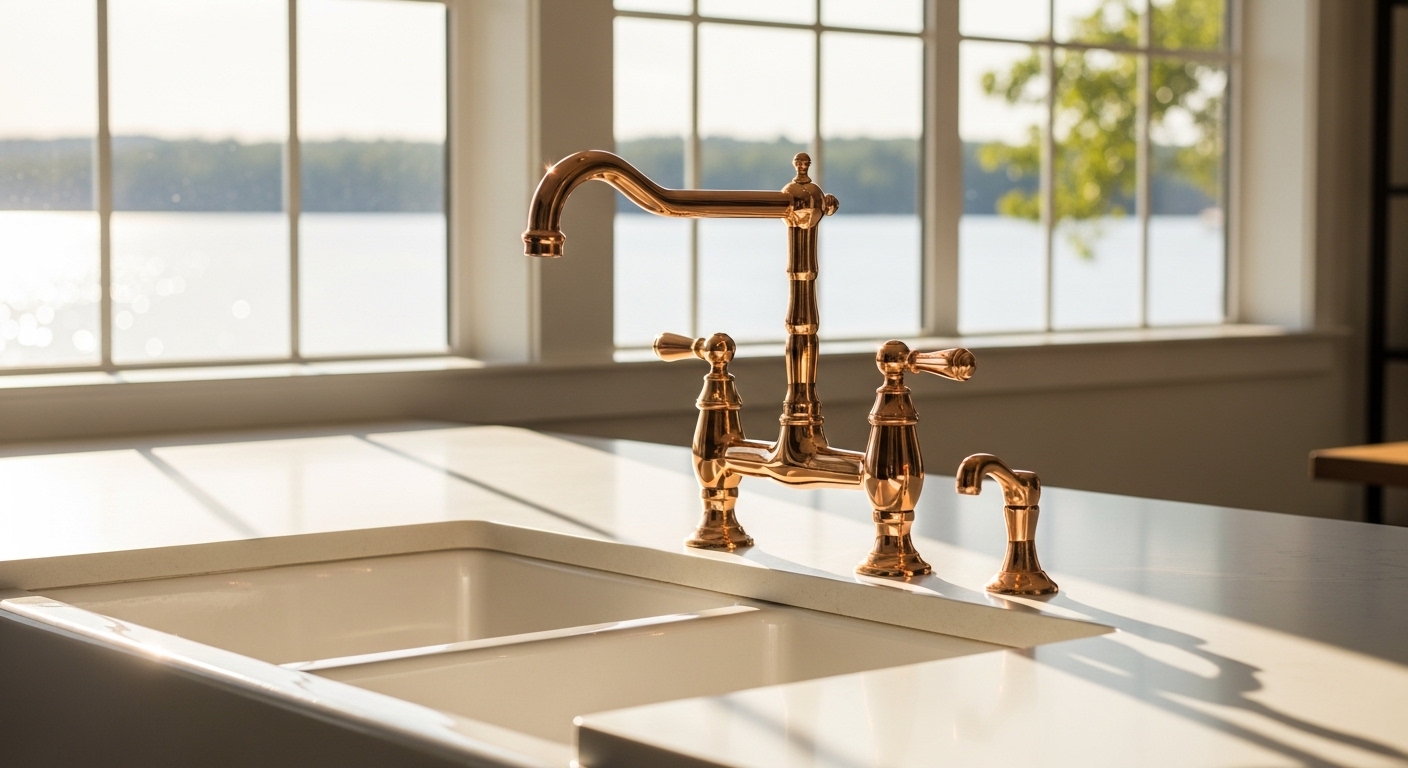
If you’ve been searching for a copper tap in Fox Lake, you’re probably weighing two things at once: where to actually get one near the Chain O’Lakes without driving to a Chicago showroom, and whether a copper faucet is a smart buy or just an expensive Pinterest trend. Both are fair questions. Fox Lake homes run the gamut — 1920s lake cottages, mid-century ranches, and newer builds off Route 12 — and copper suits a surprising number of them. Below, I’ll walk you through where to buy, what to pay, how to spot a fake, and how copper holds up against our local hard water, in plain language, the way I’d explain it to a neighbor.
Where can I actually buy a copper tap in Fox Lake?
You have three realistic options in and around Fox Lake: a local plumbing supply house or fixture showroom for in-person shopping, a big-box home center for entry-level copper-look faucets, or an online fixtures specialist like avitashome for the widest genuine-copper selection shipped to your door. For a true, high-quality copper tap, online specialists almost always beat local stock on both range and price.
Here’s the honest reality of shopping locally in Lake County: big-box stores in the Round Lake / Gurnee corridor carry plenty of faucets, but “copper” on their shelves is usually a copper-toned finish over a cheaper base, and the selection of real copper is thin. Independent plumbing supply houses can special-order the good stuff, but you’ll often pay contractor-showroom markups and wait on shipping anyway. So many Fox Lake homeowners end up doing the smart thing: they see finishes in person at a local showroom to judge the color, then order the actual solid-brass, copper-finished tap online where the choice and value are better.
- Local showroom / plumbing supply: Best for touching finishes and matching to your sink. Limited real-copper stock; higher prices.
- Big-box home center: Convenient, cheap, but mostly copper-look faucets — fine for a rental, not a forever fixture.
- Online specialist (avitashome): Widest genuine-copper and copper-finish range, clear specs, ceramic-disc cartridges, and shipping straight to Fox Lake. Best overall value.
If you’re comparing where to shop more broadly, it’s worth reading our guide on the best place to buy a bathroom faucet in the USA in 2026 — the same buying logic applies to copper.
Is a copper tap actually worth it, or just a trend?
A copper tap is genuinely worth it if you want a warm, characterful finish that’s naturally corrosion-resistant and can last 15–20 years or more — it’s not just a trend. The catch is that “worth it” depends entirely on buying real copper (or a real copper finish over solid brass), because a painted zinc fake will chip and look cheap within a year or two.
Copper earns its keep for a few concrete reasons. First, copper and copper-alloy (brass) bodies don’t rust the way plated steel can, so they hold up beautifully around water. Second, copper is naturally antimicrobial — bacteria don’t survive long on a bare copper surface, which is a real, measurable benefit at a kitchen or bathroom tap people touch with dirty hands all day. Third, the look is timeless in a way that chrome trends can’t match; copper pairs with farmhouse, rustic, industrial, and even transitional kitchens, and a Fox Lake lake house is exactly the kind of warm, casual space where copper sings.
The tradeoff is patina. Left bare, copper darkens and develops a mottled, aged look over months — some people pay extra for that; others hate it. If you want copper that stays bright and shiny, you want a lacquered or PVD copper finish (more on that below). Neither is wrong; you just need to know which one you’re buying.
What’s the difference between solid copper, copper-finished brass, and copper-look faucets?
Solid copper means the tap body is made of copper or a high-copper brass alloy all the way through; copper-finished brass is a solid brass tap with a genuine copper coating (often PVD); copper-look is a cheap zinc or plastic tap sprayed with copper-toned paint. For a fixture you’ll use daily for a decade, you want one of the first two — never the third.
| Type | What it really is | Typical price | Lifespan | Best for |
|---|---|---|---|---|
| Solid copper / high-copper brass | Copper alloy body throughout | $220–$450+ | 20+ years | Statement kitchen taps, farmhouse sinks |
| Copper-finished brass (PVD) | Solid brass core, real copper PVD coat | $120–$300 | 15–20 years | Most homeowners — best value |
| Copper-look (painted zinc/plastic) | Cheap base, copper-color paint | $25–$70 | 1–3 years | Short-term rentals only |
My blunt advice for a Fox Lake home you plan to keep: a PVD copper-finished solid-brass tap is the sweet spot. You get the copper look, real brass durability, and a finish that won’t chip — usually for less than a solid-copper artisan piece. If you like the warmth of metal taps in general, our breakdown of whether a brass gooseneck faucet is the right choice covers a lot of the same durability logic.
How does a copper tap hold up to Fox Lake’s hard water?
Copper taps handle hard water well — better than many chrome or plated finishes — because copper and brass resist the corrosion that hard water accelerates, and warm copper tones actually hide white scale spotting better than shiny chrome. You’ll still get some mineral buildup on the aerator, but the finish itself won’t pit or flake the way cheap plating does.
Lake County water tends to run moderately hard, and if you’re on a private well near the lakes it can be harder still, often with iron. Here’s what that means for a copper tap: the visible finish shrugs off hard water, but the aerator (the little screen at the spout tip) and the internal cartridge are where minerals collect. That’s true of any faucet, copper or not. The good news is both are cheap and easy to maintain.
- Wipe after use. A quick dry wipe stops water spots from etching into any lacquer over time.
- Soak the aerator. Unscrew it every couple months and soak in white vinegar for 20–30 minutes to dissolve scale. If you’re not sure what size yours is, our guide on measuring faucet aerator thread size walks you through it.
- Never use abrasives. No steel wool, no gritty scrubbing pads — they’ll scratch lacquered copper. Mild soap and water only.
- Consider a softener. If you’re on hard well water, a whole-house softener protects every fixture, copper included, and makes cleaning far easier.
One more thing specific to copper: if you have a lacquered or PVD finish, harsh chemical cleaners (anything acidic or with bleach) can dull or strip the coating. Stick to gentle cleaners and you’ll keep that warm glow for years.
How much should a good copper tap cost in 2026?
Expect to pay $120–$300 for a quality copper-finished solid-brass tap and $220–$450+ for genuine solid copper in 2026. Anything under about $80 labeled “copper” is almost always painted zinc — fine as a stopgap, but not a real copper tap. Installation, if you hire it out, adds roughly $150–$300 in the Fox Lake area.
Price tracks three things: the base metal, the finish process, and the cartridge inside. A tap with a solid brass body, a real PVD copper finish, and a German or Sedal ceramic-disc cartridge will cost more than a bargain unit — and it should, because that cartridge is what keeps it drip-free for a decade. When you see two copper taps that look identical but one is $60 and one is $190, the difference is almost always inside: base metal and cartridge quality. That’s exactly where the cheap one fails first.
Buying online from a specialist usually lands you a better body-and-cartridge combo for the money than the equivalent showroom piece, because you’re not paying for the physical retail floor. Just confirm the listing states “solid brass” and specifies a ceramic-disc cartridge before you buy.
Does a copper tap need special installation?
No — a copper tap installs exactly like any standard faucet, using the same supply lines, mounting hardware, and connections. If you can install a chrome faucet, you can install a copper one; the metal on the outside doesn’t change the plumbing on the inside.
Most copper kitchen and bathroom taps are standard single-hole or 8-inch widespread configurations, and they connect to the same braided supply lines you already have. Before you order, just measure your sink’s hole spacing and check your supply line size so you’re not making a second trip. Our guides on the most common faucet supply line size and whether kitchen faucet supply lines are universal will save you a headache here. If you’re a confident DIYer, expect the swap to take 45–90 minutes with basic tools.
Copper tap vs. brushed nickel, matte black, and chrome — which fits a Fox Lake home?
Copper is the best pick for warmth and character — farmhouse, rustic, and lake-house kitchens — while matte black suits modern spaces, brushed nickel is the safe all-rounder, and chrome is the cheapest and most classic. For a cozy Fox Lake cottage or a wood-and-stone kitchen, copper genuinely stands out where the others blend in.
| Finish | Vibe | Hard-water spotting | Relative cost | Best room |
|---|---|---|---|---|
| Copper | Warm, rustic, characterful | Hides spots well | $$$ | Farmhouse kitchen, lake house |
| Matte black | Modern, bold | Shows spots & dust | $$ | Contemporary kitchens/baths |
| Brushed nickel | Neutral, safe | Hides spots well | $$ | Almost anywhere |
| Chrome | Classic, shiny | Shows every spot | $ | Budget builds, traditional baths |
If your kitchen leans modern rather than rustic, copper might fight the room — in that case you’d be happier with a matte black industrial kitchen faucet instead. And if you love warm metal tones in the shower too, a brass rainfall shower head pairs beautifully with a copper tap for a coordinated look. The point is to match the finish to the room’s personality, not just chase a trend.
How do I tell a real copper tap from a fake before I buy?
Check three things: the stated base metal (you want “solid brass,” never “zinc alloy”), the finish type (real PVD or lacquered copper, not “copper-colored”), and the weight (real copper/brass taps feel noticeably heavy for their size). If a listing dodges all three or the price is suspiciously low, it’s a fake.
- Read the spec, not the photo. The word “copper” in a product title means nothing. Look for “solid brass body with copper PVD finish” in the actual specifications.
- Heft it. A genuine copper or brass tap has real mass. Painted zinc and plastic feel hollow and light.
- Ask about the cartridge. Quality copper taps use ceramic-disc cartridges rated for hundreds of thousands of cycles. A vague or missing cartridge spec is a red flag.
- Mind the patina claim. “Living finish” or “will patina” = bare copper that darkens over time. “PVD” or “lacquered” = stays bright. Buy the one you actually want.
Author’s note & why trust avitashome
I’ve spent over a decade working hands-on with residential faucets — installing, repairing, and testing them — and I write these guides the way I’d advise a friend standing in their kitchen. No hype, just what holds up. avitashome is a dedicated faucet and bathroom-fixtures specialist, not a general home store: every copper tap we carry uses a solid brass body, a genuine copper finish, and ceramic-disc cartridges tested to industry standards for durability and low-lead compliance. Our fixtures meet recognized North American plumbing and lead-safety standards, and reputable copper taps typically ship with a multi-year finish-and-cartridge warranty — always confirm the exact warranty term on the product page before you buy, and keep your receipt. If a “copper” tap has no warranty and no listed standards, that tells you what you need to know.
FAQ
Is there a store in Fox Lake that sells real copper taps?
Local plumbing supply houses and showrooms around Fox Lake and the greater Lake County area can special-order genuine copper taps, but in-stock real-copper selection is limited and often priced high. Most homeowners get the best combination of selection and value by ordering a solid-brass copper-finished tap online from a specialist like avitashome and having it shipped locally.
Do copper taps turn green or tarnish?
Bare, unlacquered copper will darken and can develop a green patina over time, which some people love for the aged look. If you want a copper tap that stays bright and shiny, choose one with a lacquered or PVD copper finish — it won’t tarnish or turn green with normal use.
Are copper taps good for hard water?
Yes. Copper and brass resist the corrosion that hard water accelerates, and the warm tone hides white scale spotting better than chrome. You’ll still need to periodically soak the aerator in vinegar to clear mineral buildup, but the finish itself holds up very well.
How long does a good copper tap last?
A quality solid-brass tap with a real copper PVD finish typically lasts 15–20 years, and genuine solid copper can last 20+ years. The finish is rarely what fails first — it’s the cartridge, which is a cheap and easy replacement, so a good copper tap can realistically serve you for decades.
Can I install a copper tap myself?
Yes, if you’re a moderately handy DIYer. A copper tap uses the same standard supply lines and mounting hardware as any faucet, and a straightforward swap takes about 45–90 minutes. Just measure your sink’s hole configuration and supply line size before ordering so everything fits on the first try.
Why is one copper tap $60 and another $250 if they look the same?
The difference is on the inside. The cheap one is usually painted zinc with a low-cycle cartridge that drips within a year or two, while the pricier one has a solid brass body, a genuine copper PVD finish, and a ceramic-disc cartridge rated for hundreds of thousands of uses. You’re paying for the parts you can’t see — and that’s exactly what determines how long it lasts.