 Avitas Acasă
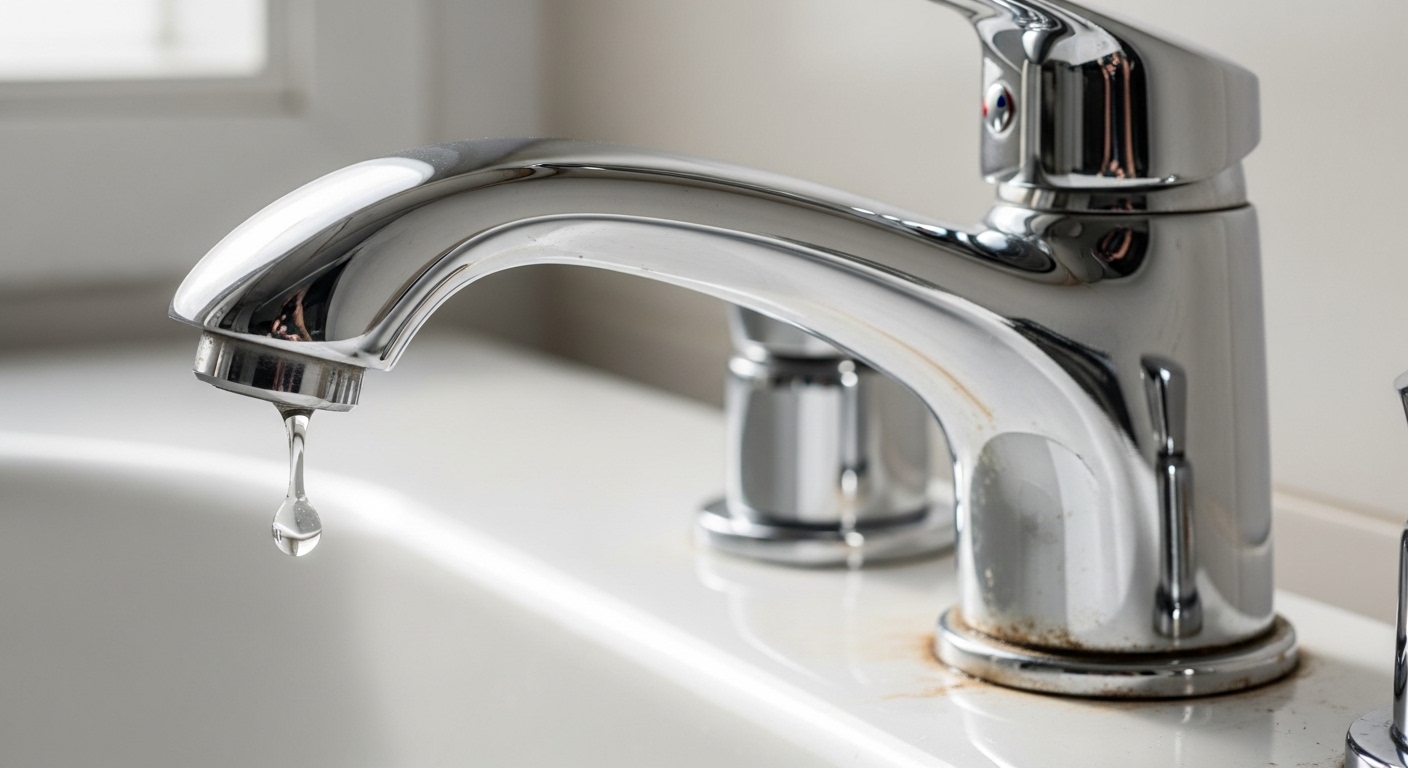
If you’ve got a leaking bathtub faucet single handle that drips long after you’ve shut the water off — or that won’t stop trickling from the tub spout no matter how hard you crank the lever — the good news is this is one of the most common and most fixable plumbing problems in any home. In the vast majority of cases the handle, the trim, and the spout are all fine. The culprit is a small worn part buried inside the valve body in your wall. Once you know which part to swap, this is a genuine weekend-DIY job, not a $250 plumber call-out.
This guide walks you through exactly why single-handle tub faucets leak, how to diagnose your specific type, what parts to buy, and the step-by-step repair — plus the few situations where you genuinely should call a pro. We’ll keep it concrete: real part names, real torque, real costs.
Why is my single-handle bathtub faucet leaking even when it’s turned off?
A single-handle tub faucet that drips when off is leaking because the internal cartridge (or, on older valves, the rubber seats and springs) no longer seals against water pressure. The handle moves a cartridge that lines up hot and cold ports; when the rubber or ceramic inside that cartridge wears, cracks, or gets crusted with mineral scale, water seeps past it and dribbles out the spout even in the “off” position.
Think of it this way: your handle isn’t a switch, it’s a precision valve. Behind that single lever sits one of three things — a cartridge (most common today), a ceramic disc, or an old-school ball assembly. Whichever you have, there’s a soft sealing surface that takes the constant push of household water pressure (typically 40–80 psi) every minute of every day. Rubber O-rings harden and shrink. Ceramic discs get scratched by grit. Mineral deposits — especially if you have hard water — build up and prevent a tight seal. The result is that telltale slow drip, drip, drip.
One important distinction for tub faucets specifically: if water is leaking from the tub spout while the shower is running, that’s usually a failed spout diverter, not the main valve. If it drips from the spout when everything is off, that’s the cartridge. Knowing which leak you have tells you which part to replace. If your setup uses a diverter spout, our guide to choosing a stainless steel tub spout with diverter explains how that mechanism works and when the spout itself is the part that’s worn out.
How do I know if it’s the cartridge, the seats, or the O-rings?
The fastest way to diagnose a leaking single-handle tub faucet is by the leak’s location and your faucet’s age: a drip from the spout points to the cartridge or seats/springs, while water weeping around the handle base points to worn O-rings or a loose retaining nut. Here’s how the three main valve types differ and what each one needs.
| Valve type | How to spot it | Common leak cause | Typical fix & part cost |
|---|---|---|---|
| Cartridge (Moen, Delta MultiChoice, Kohler) | Single lever moves up/down for volume, side to side for temp; smooth feel | Worn cartridge seals or cracked plastic body | Replace cartridge — $20–$45 |
| Compression / seats & springs (older Delta, Peerless) | Two small rubber seats and metal springs sit under a ball or cartridge | Flattened rubber seats, weak springs, mineral scale | Seat & spring kit — $8–$15 |
| Ceramic disc | Quarter-turn lever, very firm stop, premium feel | Scratched disc or failed inlet seals | Disc cartridge — $25–$60 |
To narrow it down at home, run this quick check:
- Drip from the spout, water fully off: cartridge worn (or seats & springs on Delta-style valves).
- Water seeping around the handle base when running: handle O-rings or a loose bonnet/retaining nut.
- Spout dribbles while the shower is on: diverter problem in the spout, not the valve.
- Squealing or hard-to-turn handle, then a leak: mineral-locked cartridge that’s failing.
- Handle feels loose or wobbly first, then drips: often just a set screw — and our walkthrough on a loose Delta faucet handle covers that exact fix before you tear into the cartridge.
What tools and parts do I need to fix a leaking single-handle tub faucet?
You need surprisingly little: a screwdriver set, an Allen/hex key, channel-lock pliers, plumber’s grease, and the correct replacement cartridge or seat kit for your exact faucet model. The single most important step is matching the part — a $30 cartridge in the wrong shape will not seal, and that’s the number-one reason DIY tub-faucet repairs fail.
Here’s the realistic shopping and tool list:
- Replacement cartridge or seat & spring kit — matched to your brand and model number. Moen 1222, Delta RP1991, and Kohler GP series are common, but confirm yours.
- Cartridge puller (optional but a lifesaver on stuck Moen cartridges) — $12–$20.
- Allen/hex key set — most single-lever handles use a hidden set screw.
- Phillips and flat screwdrivers.
- Channel-lock or tongue-and-groove pliers.
- Plumber’s grease (silicone) — for O-rings and cartridge stems, never petroleum jelly.
- White vinegar & an old toothbrush — to dissolve mineral scale in the valve body.
- A rag and a small bucket.
To find your exact part, look for a model number stamped on the trim plate, the back of the handle, or your original installation paperwork. No number? Snap a photo of the old cartridge once it’s out and take it to a plumbing-supply counter — they match by shape every day. If you’re shopping for a whole new fixture instead of a repair part, the bathroom faucets buying guide breaks down what to look for in a quality valve.
How do I replace the cartridge step by step?
To replace a leaking single-handle tub faucet cartridge: shut off the water, remove the handle and trim, pull the retaining clip and old cartridge, clean the valve body, then insert the new cartridge in the same orientation and reassemble. Plan on 30–60 minutes for a first-timer. Here’s the full sequence.
- Shut off the water. Use the dedicated tub shutoffs if you have an access panel behind the wall; otherwise close the main house valve. Open the faucet to drain the lines and confirm the water’s truly off.
- Cover the drain. Lay a rag over the tub drain so no tiny screws or clips disappear down it. This saves more repairs than you’d think.
- Remove the handle. Pop off the decorative cap, loosen the hidden set screw with your Allen key, and pull the handle straight off.
- Remove the trim and escutcheon. Unscrew the trim sleeve and wall plate to expose the valve body and the cartridge retaining clip or nut.
- Pull the retaining clip / nut. Use needle-nose pliers for the U-clip or channel locks for a threaded bonnet nut. Keep that clip — you’ll reuse it.
- Extract the old cartridge. Grip the stem and pull straight out. If it’s mineral-locked, a cartridge puller makes this painless. Note the orientation (there’s usually a hot/cold notch) before it’s all the way out.
- Clean the valve body. Scrub away scale with vinegar and a toothbrush. A clean bore is essential for the new seals to seat.
- Install the new cartridge. Lightly grease the O-rings with silicone plumber’s grease, then push it in with the same orientation as the old one. Reseat the retaining clip.
- Reassemble in reverse. Trim, escutcheon, handle, set screw, cap.
- Test slowly. Turn the water back on gradually, run hot and cold, and check for drips at the spout and around the handle. Let it sit “off” for ten minutes to confirm the drip is gone.
For Delta-style valves with seats and springs instead of a one-piece cartridge, the process is the same up to step 6 — but instead of a cartridge you’ll remove the ball or stem, then use a pencil or seat tool to pull the two rubber seats and their springs from the valve body, and drop in the new ones (spring narrow-end first). It’s an even cheaper fix.
Can I really fix a leaking tub faucet myself, or should I call a plumber?
Yes — most single-handle tub faucet leaks are firmly within DIY territory, especially cartridge swaps and seat-and-spring replacements, which need no soldering and no pipe work. You should call a plumber only when the leak is behind the wall, the valve body itself is cracked, or the old valve is corroded so badly the cartridge won’t budge.
Call in a pro if any of these apply:
- You see water staining the ceiling below the tub or the wall around the valve — that’s an in-wall leak, not a cartridge drip, and it can rot framing.
- The valve body is cracked or the threads are stripped — replacing the whole valve usually means opening the wall.
- You have no shutoffs and can’t locate your main — don’t start a job you can’t stop.
- The cartridge is fused in place after multiple attempts with a puller and penetrating cleaner.
That last category — replacing the actual valve in the wall — is a bigger job. If you’re weighing whether to upgrade the whole valve while you’re in there, our deep dive on a shower rough-in valve replacement lays out exactly how involved that is and whether it’s a DIY or a pro job.
How do I stop my bathtub faucet from leaking again?
To keep a single-handle tub faucet from leaking again, address the root cause: hard-water scale and worn rubber. Use silicone grease on every seal during the repair, flush the valve clean of mineral deposits, and — if you have hard water — consider a faucet body and trim built from corrosion-resistant materials. Cartridges in hard-water homes can wear out in 3–5 years versus 8–10 in soft-water homes.
A few habits genuinely extend the life of your repair:
- Don’t over-tighten the handle. Cranking a single-lever faucet hard into the off position crushes the seals faster. Firm is enough.
- Descale annually if you have hard water — a vinegar soak of the aerator and a clean valve bore go a long way.
- Replace O-rings, not just the cartridge, if your kit includes them.
- Choose quality materials. Brass valve bodies and ceramic-disc cartridges resist hard-water wear far better than budget plastic.
Material really does matter for longevity, especially in hard-water regions. Our comparison of the best bathroom faucet material for hard water explains why solid brass and certain finishes outlast cheaper builds — useful reading if you find yourself repairing the same faucet repeatedly and are ready to upgrade. And if you’re working on a jetted tub specifically, the brushed nickel Jacuzzi faucet guide covers fit and finish for that setup.
How much does it cost to fix a leaking single-handle tub faucet?
Fixing it yourself costs $8–$60 in parts — a seat-and-spring kit runs under $15, a cartridge $20–$45, a ceramic disc up to $60. Hiring a plumber typically runs $150–$350 depending on your area and whether the valve has to come out. So the DIY route saves you roughly $120–$300 on a job that takes most people under an hour.
That math is why this repair is so worth attempting before you reach for the phone. Even if you buy a cartridge puller and a fresh tube of silicone grease, you’re under $80 all-in — and you’ll have the tools for the next time.
FAQ
Why does my single-handle tub faucet drip only when the water is off?
Because the sealing surface inside the cartridge (or the rubber seats on a Delta-style valve) has worn out and can no longer hold back the standing water pressure in the supply lines. When the faucet is open, water flows normally and you don’t notice; when it’s closed, that worn seal lets a slow trickle past. Replacing the cartridge or the seats and springs stops it.
How long does a tub faucet cartridge last?
Typically 8–10 years in soft-water homes, but as little as 3–5 years where water is hard, because mineral scale grinds down the seals and O-rings. Annual descaling and using silicone grease during installation extends that lifespan noticeably.
Can I replace just the rubber seats and springs instead of the whole cartridge?
Yes, if you have a Delta or Peerless-style compression valve. Those use two small rubber seats backed by metal springs, and a replacement kit costs under $15. Cartridge-style valves (Moen, Kohler) don’t have separate seats — you replace the whole cartridge instead.
Do I have to turn off the main water to fix a leaking tub faucet?
You must turn off the water supply to that faucet, but not necessarily the whole house. Many tubs have dedicated shutoff valves behind an access panel near the plumbing. If yours doesn’t, then yes, shut off the main. Always open the faucet afterward to drain the lines and confirm the water is truly off before you start.
My new cartridge still leaks — what did I do wrong?
The two most common mistakes are installing the cartridge in the wrong orientation (hot/cold reversed or the notch misaligned) and buying a part that isn’t an exact match for your valve. Also check that you didn’t leave old mineral scale in the valve bore, which prevents the new O-rings from seating. Pull it back out, clean thoroughly, grease the seals, and reinstall in the correct orientation.
Is a dripping tub faucet actually a big deal if I just ignore it?
A slow drip can waste hundreds of gallons a month and stain the tub, and a leak that migrates into the wall can rot framing and grow mold. A $20 cartridge today is far cheaper than wall repair later. It’s one of the highest-return small fixes in the bathroom.
The bottom line
A leaking bathtub faucet single handle is, nine times out of ten, a tired cartridge or a flattened set of rubber seats — a $15–$45 part and an hour of your time, not a plumbing emergency. Diagnose by where the water comes from, match your replacement part exactly, clean the valve body, grease your seals, and reassemble carefully. Keep the pro on speed-dial only for in-wall leaks, cracked valve bodies, or seized cartridges that won’t surrender.
Author note: This guide was written by the avitashome fixtures team, drawing on hands-on repair experience across Moen, Delta, Kohler, and Peerless single-handle tub valves. avitashome specializes in faucets and bathroom fixtures, and our product recommendations favor solid-brass bodies and ceramic-disc cartridges that meet ASME A112.18.1 / NSF 61 standards for safe drinking-water contact and durability. Quality replacement valves from reputable brands typically carry limited lifetime warranties on the cartridge and finish — always register yours and keep the receipt, since warranty coverage is the cheapest insurance on a part that lives behind your wall.