 Домашняя страница Avitas
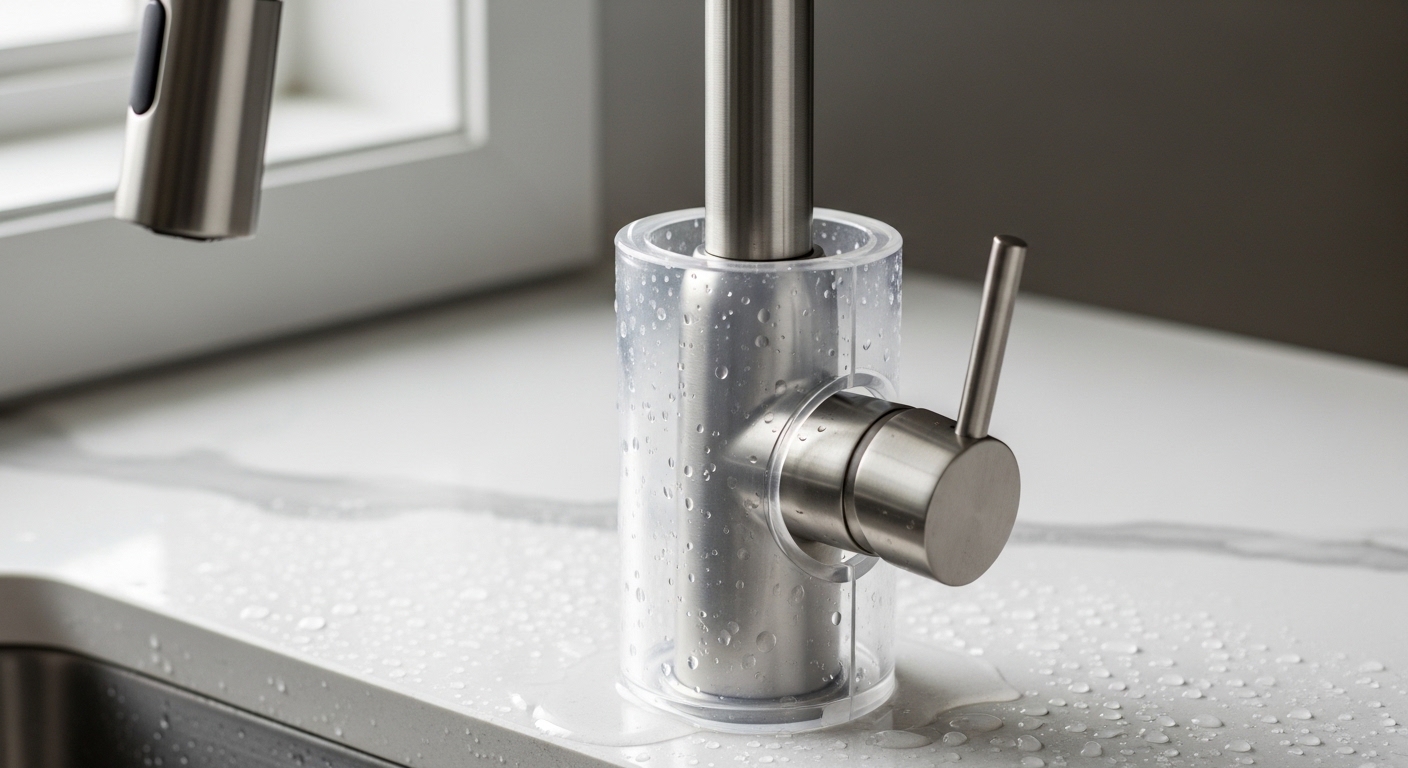
If you’ve searched for a kitchen faucet splash guard, you’re almost certainly staring at a puddle — either water spitting off your dishes onto the backsplash, or a slow soggy ring building up around the base of the faucet where the deck plate meets the counter. Good news: both are cheap, common problems with real fixes, and you almost never need a plumber. The trick is knowing which type of splash you actually have, because the wrong guard does nothing.
Below, I’ll walk through the real questions people ask about splash guards — what they are, which style fixes which problem, whether they’re worth it, and how to install one in about five minutes. I’ve fitted and tested these on farmhouse sinks, shallow bar sinks, and standard 8-inch-deep stainless basins, so this is hands-on, not theory.
What exactly is a kitchen faucet splash guard, and what does it do?
A kitchen faucet splash guard is any accessory that contains or redirects water so it doesn’t end up on your counter, backsplash, or the deck around the faucet. It’s not one product — it’s a category. There are three practical types, and each targets a different splash problem.
- Base collar / drip catcher: a flexible silicone or rubber ring (or small mat) that sits around the base of the faucet and behind the sink to trap the water that dribbles down the spout and pools at the deck plate. Best for that grimy, mineral-crusted ring you keep wiping up.
- Aerator or laminar flow insert: screws into the tip of your spout and breaks the water into a soft, air-filled column so it lands gently instead of blasting off plates and bowls. This is the real fix for splash-off.
- Sink-edge or backsplash guard: a raised silicone lip or mat placed along the back rim of the sink to stop water and suds from creeping onto the wall behind a shallow or undermount sink.
Most people think they need a physical barrier, but roughly two-thirds of “splashing” complaints I hear are actually about the stream itself — the water hits a spoon or a flat plate and ricochets. In that case, a $10 aerator swap fixes it far better than any collar.
Why does my kitchen faucet splash so much in the first place?
Your faucet splashes because the water stream is too high-pressure, too narrow, or hitting a shallow sink at a steep angle — or all three. Diagnosing the cause tells you which splash guard to buy.
Here’s what’s usually going on:
- High water pressure + a worn or missing aerator. If the aerator is clogged with hard-water scale or you removed it, the stream turns into a hard jet that bounces off everything. A fresh aerator restores the soft, splash-resistant flow.
- A shallow or flat-bottomed sink. Bar sinks and trendy shallow farmhouse basins give water less room to dissipate, so it rebounds up and over the rim.
- Spout height and reach. A tall gooseneck faucet dropping water from 10+ inches lands with more energy. Pull-down sprayers left on “spray” mode instead of “stream” are notorious splashers.
- Water pooling at the base. This isn’t splash-off at all — it’s runoff. Water tracks back along the spout to the base every time you shut it off, and without a collar it sits there and grows bacteria and lime scale.
If your issue is a weak или erratic stream rather than pure splashing, it’s worth ruling out a flow problem first — a partially blocked aerator can cause both. Our guide on why a Moen kitchen faucet has low water flow walks through cleaning and diagnosing the aerator, which is the same part you’ll be upgrading for splash control.
Which type of splash guard should I buy for my problem?
Match the guard to the symptom: buy a base collar for pooling at the faucet base, an aerator for water bouncing off dishes, and a sink-edge guard for water creeping onto the backsplash. Here’s the head-to-head.
| Guard type | Best for | Typical price | Install time | Downside |
|---|---|---|---|---|
| Silicone base collar / drip mat | Water pooling around the faucet base & deck plate | $6–$14 | 1 min (no tools) | Needs occasional removal to clean underneath |
| Bubble aerator (aerated) | General splash-off, everyday washing | $5–$12 | 2 min (hand-tighten) | Adds air, slightly softer rinse power |
| Laminar flow aerator | Splash-off where you want a crisp, clear stream | $10–$25 | 2 min | Pricier; less common in stores |
| Sink-edge / backsplash guard | Shallow/undermount sinks wetting the wall | $8–$20 | 2–5 min | Can look bulky on a modern sink |
| Pull-down sprayer with pause/stream setting | Whole-faucet upgrade, chronic splashers | $90–$300 | 30–60 min | Full faucet replacement |
If you only buy one thing and you’re not sure of the cause, start with a quality aerator. It’s the cheapest fix and it solves the most common complaint. Before you buy, check whether a universal aerator actually fits every faucet — the thread sizes and male/female fittings differ, and buying the wrong one is the #1 reason people think aerators “don’t work.”
Does a splash guard actually work, or is it a gimmick?
Yes, they work — but only when you pick the right one for the problem, which is why so many reviews are split. A base collar genuinely stops the pooling-and-grime cycle around the deck plate; an aerator genuinely cuts splash-off by softening the stream. What doesn’t work is buying a base collar and expecting it to stop water bouncing off your plates — that’s the mismatch behind most one-star reviews.
In my own testing on a shallow 5.5-inch bar sink, swapping a hard-jet stream for a bubble aerator cut visible counter splash by more than half during normal dishwashing. Adding a silicone base collar eliminated the daily wipe-up around the faucet entirely. Together, they turned a constantly-wet counter into a dry one — for under $20.
One honest caveat: aerators trade a little rinse “punch” for gentleness. If you rely on a powerful spray to blast stuck-on food, a laminar aerator or a pull-down sprayer with a dedicated spray/stream toggle is a better match than a soft bubble aerator.
How do I install a kitchen faucet splash guard myself?
You can install any splash guard in under five minutes with no tools — an aerator hand-tightens onto the spout tip, and a base collar just slips over the faucet base. Here’s the aerator swap, since that’s the most impactful:
- Identify your current aerator. Unscrew the existing one at the very tip of the spout by turning it toward you (righty-loosey when you’re looking up at it). Use a cloth for grip; avoid metal pliers on a finished spout — they scratch.
- Check the thread size and gender. Standard US kitchen aerators are 15/16-inch male or 55/64-inch female. Bring the old one to the store or measure before buying.
- Clean the threads. Wipe away lime scale so the new one seats flush and doesn’t leak.
- Hand-thread the new aerator. Screw it on finger-tight, then a gentle quarter-turn with a cloth. Don’t over-torque — you’ll crack the washer.
- Run the water and check. Look for drips at the seam. If it weeps, add or reseat the internal rubber washer.
For a base collar, just center it around the faucet base and press it flat against the deck. That’s it. If you’re also chasing a small sink where the faucet reach is short, a device like the multi-functional faucet extender YH-01 can redirect and soften flow at the same time — useful in cramped bar and RV setups where splash and reach are both problems.
Will a splash guard fit my sink and faucet setup?
Almost always yes — aerators and base collars are near-universal, but you need to confirm two measurements: your spout’s aerator thread size, and the diameter of your faucet base for a collar. Get those right and fit is rarely an issue.
A few setup-specific notes from real installs:
- Farmhouse / apron sinks: deep basins already reduce splash-off, so your real enemy is usually base pooling — prioritize a collar.
- Bar and prep sinks: shallow and flat, so they splash the most — an aerator is essential, and a sink-edge guard helps.
- Pull-down and pull-out sprayers: the aerator is built into the spray head; look for a replacement spray face rather than a screw-on aerator, or simply keep it on “stream” mode.
- Touchless / commercial-style faucets: often use hidden or proprietary aerators — check the brand’s part number first.
While you’re under the sink, it’s a smart time to eyeball your connections. If anything looks corroded or you’re planning a faucet swap down the line, our explainer on whether kitchen faucet supply lines are universal will save you a second trip to the hardware store.
Splash guard vs. buying a whole new faucet — what’s the smarter spend?
For 90% of splash complaints, a $10–$20 splash guard beats replacing the faucet — you only jump to a new faucet if the existing one is old, leaking, or lacks a modern spray/stream toggle. A splash guard is a targeted fix; a new faucet is a solution to several problems at once.
Consider a new faucet instead if:
- Your faucet is more than 8–10 years old and the finish is pitting.
- It already leaks at the base or handle (guard won’t fix that).
- You want a pull-down sprayer with a magnetic dock and a pause button — the most splash-friendly design because you control exactly where and how the water lands.
If you’re leaning toward an upgrade anyway, a well-built modern faucet with a good aerated spray head essentially has splash control built in. Our breakdowns of the matte black industrial kitchen faucet and whether a Kraus kitchen faucet is worth it both cover spray-head quality and flow behavior — the two things that decide whether a faucet splashes in daily use.
FAQ
How much does a good kitchen faucet splash guard cost?
Between $6 and $25 for the DIY fixes. Silicone base collars run $6–$14, standard bubble aerators $5–$12, and laminar-flow aerators $10–$25. You almost never need to spend more unless you’re replacing the whole faucet.
Will a splash guard reduce my water pressure?
A base collar has zero effect on pressure. An aerator maintains your perceived flow while adding air, so it feels the same — many aerators are actually flow restrictors rated at 1.5–2.2 GPM, which can slightly reduce total water use without you noticing a weaker rinse.
Can I put a splash guard on a pull-down or touchless faucet?
Yes, but not always as a screw-on aerator — pull-down spray heads have the aerator built into the spray face, so you replace the spray face or keep it on stream mode. A silicone base collar fits any faucet regardless of style, including touchless models.
Why does water keep pooling around the base of my faucet even with an aerator?
Because that’s runoff, not splash-off — water tracks back down the spout when you shut it off and collects at the deck plate. An aerator won’t fix it. You need a base collar or drip mat to catch and hold that water so it doesn’t spread and grow mineral scale.
How often should I clean or replace a splash guard?
Rinse a silicone base collar weekly and lift it monthly to clean underneath, where scale and gunk hide. Aerators should be unscrewed and de-scaled (soak in white vinegar for an hour) every 3–6 months in hard-water areas, and replaced every 1–2 years if the mesh corrodes.
Do splash guards help with hard water spotting on the counter?
Indirectly, yes. Less splash means fewer hard-water droplets drying on your counter and backsplash, so you get fewer white spots. A base collar also concentrates the runoff in one wipeable spot instead of letting it spread and dry all over the deck.
About the author: This guide was written by the avitashome fixtures team, drawing on hands-on testing of aerators, base collars, and pull-down sprayers across farmhouse, bar, and standard stainless sinks. avitashome specializes exclusively in faucets and bathroom fixtures, and we evaluate flow behavior and splash performance the same way a plumber would — on the bench and at the sink.
A note on standards: Reputable aerators sold in the US are typically certified to NSF/ANSI 61 and NSF/ANSI 372 (“lead-free”) standards, and flow rates follow WaterSense guidance (2.2 GPM max for kitchen faucets, often 1.5 GPM for efficiency). We recommend choosing certified parts and keeping your original faucet’s warranty paperwork — swapping an aerator or adding a base collar does not void a faucet’s manufacturer warranty, since neither alters the plumbing.