 Домашняя страница Avitas
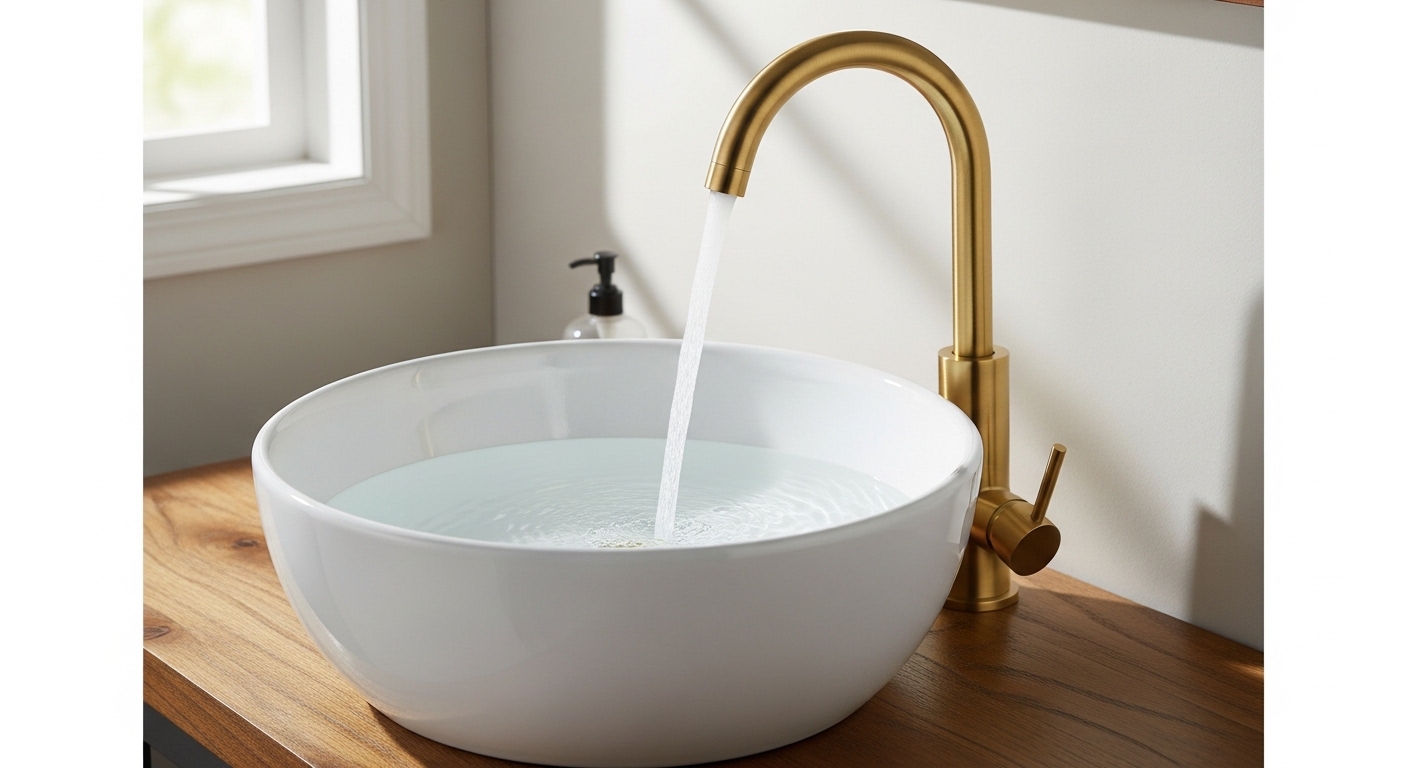
If you’ve been hunting for a vessel sink faucet sale, the tricky part isn’t finding a discount — those are everywhere — it’s making sure the discounted faucet is actually built for a vessel sink and not just a standard bathroom faucet marked down. A vessel sink sits on top of the counter instead of dropping into it, so the bowl rim usually sits 4–6 inches above the countertop. That changes everything about the faucet you need: the spout has to reach up and over the rim, the water has to land in the center of the bowl (not splash off the front lip), and the whole thing has to look good from every angle because the faucet body is fully exposed. Below is exactly how to shop a sale without getting burned, what specs matter, and what a fair price actually looks like in 2026.
What actually makes a faucet a “vessel” faucet — and why a cheap sale faucet often won’t fit?
A vessel faucet is simply a bathroom faucet tall enough to clear a raised bowl and pour cleanly into its center — most sit between 10 and 14 inches in total height, versus 5–8 inches for a standard faucet. That single spec, spout height, is the number one thing shoppers miss when a low price catches their eye.
Here’s the trap: because vessel faucets and bar/prep faucets are both often single-hole designs, retailers frequently lump them together, and a “clearance” bar faucet at 9 inches tall looks like a steal until it’s installed and the water hits the front rim of your bowl. To pour into the center, you generally want the spout outlet to sit at least 5–6 inches above the top rim of your specific bowl. Measure your bowl’s height, add roughly 5 inches, and that’s your minimum spout reach height — not the total faucet height quoted on the box.
The other differentiator is the base footprint. Vessel faucets almost always mount through a single hole with a slim escutcheon, because vanity tops drilled for vessel bowls usually have just one 1.35″–1.5″ hole. If you find a 3-hole widespread faucet “on sale,” it’s not the right category unless your top is pre-drilled for it.
What’s a fair price in a vessel sink faucet sale, and what’s just a fake markdown?
A fair sale price for a quality single-hole vessel faucet is roughly $70–$160; anything under $45 is almost always a thin zinc-alloy body with a rubber-seal cartridge that will drip within a year or two. The “was $299, now $59” listings are the ones to be skeptical of — that inflated original price is a common trick, and the real question is never the discount percentage, it’s the build.
Use these three tells to separate a real deal from theater:
- Body material: “Solid brass” или “lead-free brass” body is what you want. “Metal,” “alloy,” или “premium zinc” is code for pot metal that corrodes faster, especially in hard water.
- Cartridge: A ceramic-disc cartridge (ideally a recognizable one) lasts 500,000+ cycles. A cheap rubber-washer or no-name cartridge is the first thing to fail.
- Weight: A genuine brass vessel faucet feels heavy for its size — often 2.5–4 lbs. If the shipping weight is under a pound and a half, be suspicious.
When you spot a vessel sink faucet sale that keeps the brass body and ceramic cartridge and lands in that $70–$160 window, that’s the genuine deal — you’re getting the durable version at the price of the disposable one. If you also care about how the finish holds up long-term, the same logic that governs faucet longevity is covered well in our guide to the best bathroom faucet material for hard water.
Which finish should you buy on sale — matte black, brushed gold, chrome, or brushed nickel?
For a vessel sink, brushed finishes (brushed nickel, brushed gold, matte black) are the smartest sale buys because the faucet is fully exposed and brushed textures hide water spots and fingerprints far better than polished chrome. Chrome looks crisp but shows every hard-water droplet, which is unforgiving on a faucet you see from all sides.
Because a vessel faucet is a visual centerpiece, finish is half the purchase. Here’s how the popular options actually behave day to day:
| Finish | Best for | Hides spots? | Typical sale price | Watch out for |
|---|---|---|---|---|
| Brushed nickel | Warm, transitional baths | Yes — very forgiving | $70–$130 | Slight color variation between brands |
| Matte black | Modern / industrial looks | Yes, but shows dust & limescale film | $80–$150 | Cheap coatings can fade to gray |
| Brushed gold / champagne bronze | Luxe, boutique-hotel vibe | Yes | $90–$170 | Real PVD costs more; painted versions chip |
| Polished chrome | Bright, classic, budget | No — shows every drop | $50–$110 | Fingerprints and water spots constantly |
| Oil-rubbed bronze | Rustic / traditional | Yes | $70–$140 | “Living finish” darkens over time by design |
One durability note that applies to any finish on sale: look for “PVD” (physical vapor deposition) in the description. PVD finishes are bonded at the molecular level and resist scratching and tarnish for years, whereas electroplated or painted finishes on ultra-cheap faucets can chip at the base where hands and rings hit. A sale faucet with a PVD-coated brass body is the sweet spot of price and longevity.
How tall should a vessel sink faucet be for your specific bowl?
Match the faucet to your bowl height: for a standard 4–6 inch vessel bowl on a 32–34 inch vanity, a faucet 11–13 inches tall with the spout outlet 6–8 inches off the counter pours cleanly into the center. Too short and you splash; too tall and the stream may overshoot a shallow bowl.
Do this quick measurement before you buy anything on sale:
- Measure your bowl’s exterior height from countertop to top rim (e.g., 5.5 inches).
- Add 4–6 inches for comfortable hand clearance and a centered pour.
- That target — say, 9.5–11.5 inches to the spout outlet — is your ideal spout height, separate from the total faucet height.
- Check the product’s “spout height” spec, not just “overall height,” since the handle often makes the faucet look taller than its functional reach.
If your vanity is taller than average (a 36-inch “comfort height” counter) or your bowl is deep, lean toward the taller end. If you have a shallow, wide bowl, a very tall faucet can cause a hard, splashy stream — a mid-height model with an aerator that softens the flow is better. Speaking of which, flow matters: most quality vessel faucets ship with a 1.2 GPM aerator to meet WaterSense standards, and if yours ever runs weak, the fix is usually the aerator, exactly as we explain in our walkthrough on whether a bathroom faucet universal aerator fits every faucet.
Single-hole vs. wall-mount vessel faucet — which is the better buy on sale?
For most people, a deck-mounted single-hole vessel faucet is the better sale buy: it’s cheaper, installs in under an hour, and fits the single pre-drilled hole most vessel vanities already have. Wall-mount vessel faucets look stunning and free up counter space, but they require in-wall plumbing set at exactly the right height and spout projection, which usually means opening the wall.
Go wall-mount only if you’re already renovating and can rough in the valve, or if your vanity top has no faucet hole at all. The spout projection has to be dialed in during rough-in so the water lands in the bowl center — get that wrong and there’s no adjusting it later without cutting drywall. If a wall-mount faucet ever does start dripping, it’s a repairable job; our guide to the wall mount faucet repair kit covers what parts you’ll need. For the vast majority of sale shoppers upgrading an existing vanity, though, the single-hole deck faucet is the practical, budget-friendly winner.
Can you install a vessel sink faucet yourself to save on the sale price?
Yes — a single-hole vessel faucet is one of the most DIY-friendly plumbing jobs, typically 30–60 minutes with basic tools, so you rarely need to add a plumber’s fee to your sale-price savings. If your vanity already has a faucet hole and shutoff valves under the sink, no special skills are required.
The basic sequence: shut off the hot and cold supply valves, feed the faucet’s threaded shank and supply lines down through the single hole, secure it from below with the mounting nut and washer, connect the flexible supply lines to your shutoff valves (hand-tight plus a quarter turn with a wrench), then connect the pop-up drain assembly to the tailpiece. Turn the water back on and check every joint for drips. The most common leak point is an over- or under-tightened supply connection, and if you ever do get a drip at the base, it’s an easy fix — the same principles in our tutorial on how to fix a leaky faucet on a bathroom sink apply directly. One vessel-specific tip: make sure your supply lines are long enough, because vessel faucets sit higher and the shank is longer, so a too-short line can be under tension.
What accessories and specs should come with a vessel faucet sale bundle?
A worthwhile vessel faucet sale bundle should include a matching pop-up drain (with or without overflow to match your bowl), flexible braided supply lines, and the mounting hardware — if a “deal” makes you buy the drain separately, factor that $20–$40 back into the real price. The drain finish must match the faucet, and it must be the correct overflow type for your bowl, or water will pool.
Two details that quietly matter:
- Overflow vs. non-overflow drain: If your vessel bowl has a small overflow hole near the rim, you need an overflow-style drain. If it doesn’t, you need a non-overflow (grid or umbrella) drain. Mismatching them causes leaks or standing water.
- Warranty and standards: Look for a limited lifetime warranty on the faucet finish and cartridge, plus cUPC/NSF certification and WaterSense labeling. These aren’t marketing fluff — they’re your proof the faucet meets U.S. lead-free (NSF/ANSI 372) and flow standards.
A faucet that ships with a matching drain, meets cUPC and WaterSense standards, and carries a real warranty is worth paying a bit more for than a bare faucet with a rock-bottom price and no drain.
Author note & why trust this guide
This guide was written by the avitashome product team, which specializes exclusively in faucets, showers, and bathroom fixtures — not general home goods. We test spout height, flow rate, and finish durability on the vessel faucets we stock, and we cross-check every faucet’s certification against U.S. cUPC and NSF/ANSI 372 lead-free requirements before it goes on our site. Our recommendations here reflect real installation experience and the warranty and return data we see from customers, not spec sheets alone. avitashome sells at www.avitashome.com, and every faucet we list is chosen for the same build-quality-first standard described above.
FAQ
How tall should a vessel sink faucet be?
For a standard 4–6 inch bowl, choose a faucet with the spout outlet 6–8 inches above the counter, which usually means an overall faucet height of 11–13 inches. Measure your bowl, add 4–6 inches of clearance, and match that to the spout height spec — not the total height.
Are vessel sink faucets and regular bathroom faucets interchangeable?
No. A regular bathroom faucet is too short to clear a raised vessel bowl, so water splashes off the front rim instead of pouring into the center. Vessel faucets are specifically built taller (10–14 inches) with the spout positioned to reach over and into the bowl.
What’s a good price for a vessel sink faucet on sale?
A quality single-hole vessel faucet with a solid-brass body and ceramic-disc cartridge is fairly priced at $70–$160 on sale. Below about $45, you’re almost always buying a thin zinc-alloy faucet that tends to drip or corrode within a year or two.
Do vessel sink faucets come with a drain?
Some do and some don’t, so always check. The best sale bundles include a matching pop-up drain, but many bare faucets sell the drain separately for $20–$40. Make sure the drain matches your finish and the overflow type of your specific bowl.
Can I install a vessel sink faucet without a plumber?
Yes, in most cases. If your vanity already has a single faucet hole and working shutoff valves, a single-hole vessel faucet installs in 30–60 minutes with a wrench and basic tools. Wall-mount vessel faucets are the exception — they usually need in-wall rough-in plumbing.
What finish is easiest to keep clean on a vessel faucet?
Brushed finishes — brushed nickel, brushed gold, and matte black — hide water spots and fingerprints best, which matters because a vessel faucet is exposed on all sides. Polished chrome looks bright but shows every hard-water droplet and needs the most wiping.