
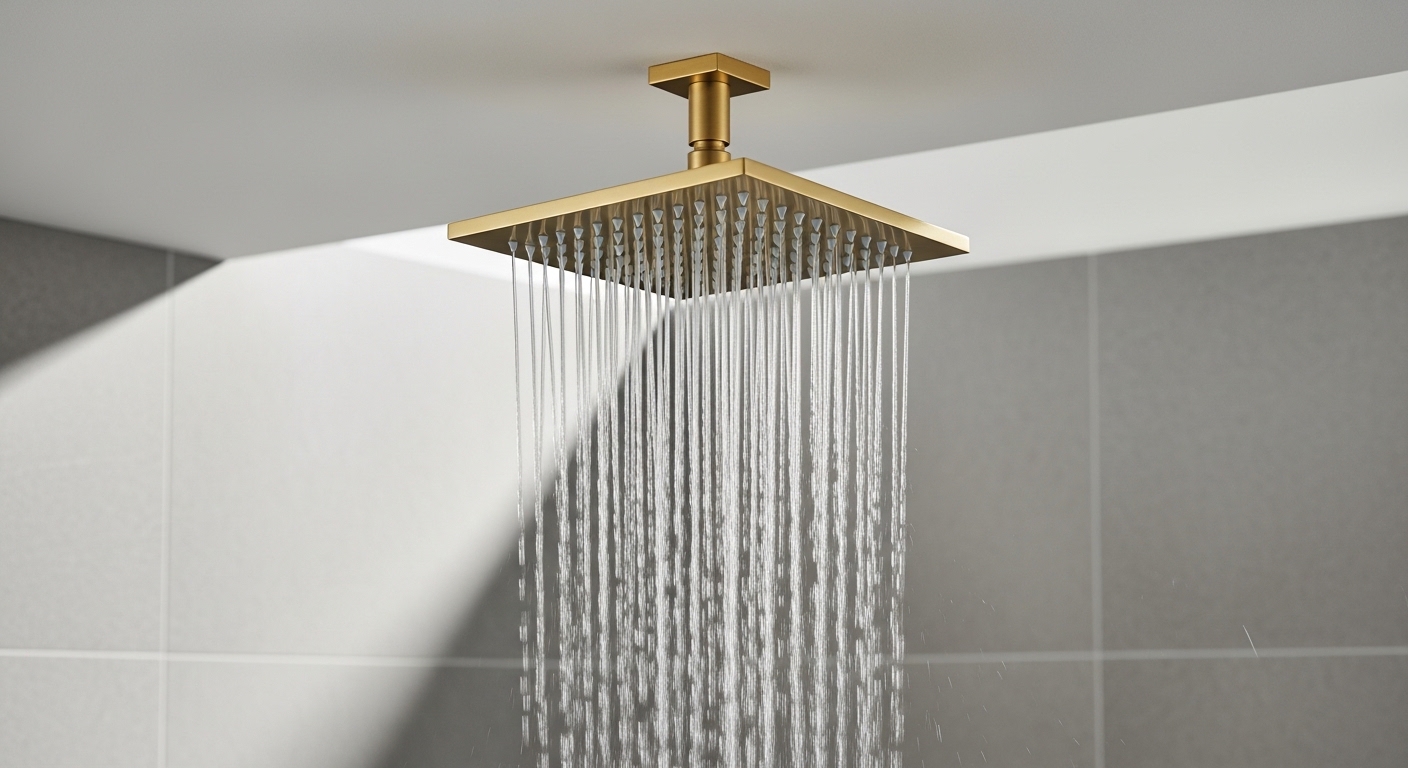
A rainfall shower head brass model is a large, ceiling- or wall-mounted overhead sprayer built from solid brass (or brass with a plated finish) that drenches you in a wide, soft, rain-like sheet of water instead of a narrow jet. People ask about the brass version specifically because they’ve been burned by cheap plastic heads that crack, clog, or yellow within a couple of years — and they want to know if paying more for metal actually pays off. Short answer: usually yes, with a few real caveats we’ll walk through below.
I’ve installed, tested, and torn apart a lot of shower heads, so this isn’t a spec-sheet regurgitation. Below you’ll get the honest trade-offs, real numbers, and how to tell “solid brass” from “brass-look plastic” before you buy.
Is a brass rainfall shower head actually better than a plastic one?
Yes — for durability, corrosion resistance, and feel, solid brass beats plastic in almost every way that matters over a 10-year span. The one place plastic wins is upfront price and weight (which matters for weak ceiling mounts). Everything else favors brass.
Here’s what actually happens over time. Plastic (usually ABS) shower heads are lightweight and cheap because the body is molded resin with a thin chrome coating. That coating flakes, the plastic gets brittle from hot water cycling, and the internal threads strip easily if you over-tighten. Brass, by contrast, is a dense copper-zinc alloy that handles constant hot/cold cycling, holds threads for a lifetime, and doesn’t get brittle. When you unscrew a brass head after five years, the threads look new.
The bigger deal is corrosion. In hard-water areas, mineral scale builds up around the nozzles. On a good brass head, those nozzles are usually soft silicone tips you can rub clean with a thumb. On cheap plastic, the whole faceplate can discolor and the internal waterway corrodes at the metal-to-plastic joints. If you’re already fighting hard water, this matters a lot — the same reason we tell people to weigh the metal carefully in our guide to the best bathroom faucet material for hard water.
- Lifespan: Solid brass 15–20+ years; quality plastic 3–7 years.
- Weight: Brass is heavy (1.5–4 lbs for a 10″ head) — a plus for stability, a minus for flimsy ceiling arms.
- Feel & temperature: Brass warms with the water and feels solid; plastic stays cheap-feeling.
- Repairability: Brass threads survive re-tightening; stripped plastic threads mean a full replacement.
How do I know if it’s real solid brass and not “brass-colored” plastic?
Weigh it and check the wording. Real solid brass feels dense and heavy for its size; “brass finish,” “brass tone,” or “brass PVD” almost always means a plastic or thin-zinc body with a coating. If the listing avoids the words “solid brass,” assume it isn’t.
This is the single most common way shoppers get fooled. A listing shows a warm golden shower head, calls it “brass,” and buries the word “ABS” in the specs. The finish name (brushed gold, champagne bronze, matte black) tells you nothing about the underlying metal — those are just coatings that can sit on top of brass, zinc, or plastic. Here’s how to verify before you commit:
- Read the material field, not the title. Look for “solid brass body.” “Brass” alone is a red flag; “brass finish” is a guarantee it’s coated something-else.
- Check the shipping weight. A 10-inch solid brass head ships around 2–4 lbs. If it’s under a pound, it’s plastic.
- Look at the connection collar. The 1/2″ NPT threaded inlet on a real brass head is machined metal, not a molded plastic ring painted silver.
- Beware “stainless steel face + brass” combos. Many good heads use a thin stainless faceplate on a brass body — that’s fine and common, just confirm the body is brass.
Which is better for my bathroom: brass, stainless steel, or plastic?
For a permanent, premium install, solid brass; for a lighter modern look at mid-price, stainless steel; for a rental or tight budget, quality ABS plastic. All three can deliver a great rainfall pattern — the difference is longevity, weight, and finish options.
| Feature | Solid Brass | Stainless Steel | ABS Plastic |
|---|---|---|---|
| Typical price (10″) | $80–$300 | $50–$150 | $25–$60 |
| Lifespan | 15–20+ yrs | 10–15 yrs | 3–7 yrs |
| Corrosion resistance | Excellent | Very good | Fair |
| Weight (10″ head) | Heavy (1.5–4 lb) | Medium (1–2 lb) | Light (<1 lb) |
| Finish variety | Widest (gold, bronze, black, chrome, nickel) | Good (brushed, polished) | Limited, coating flakes |
| Best for | Forever homes, hard water, luxury look | Modern minimalist baths | Rentals, quick upgrades |
One nuance people miss: finish availability. If you specifically want a warm brushed-gold or oil-rubbed bronze rain head, brass is where the best-looking, most durable options live, because those PVD and plated finishes bond beautifully to brass. If you love the cooler polished metal look instead, you may prefer the tone we break down in our polished nickel faucet and shower guide — the same finish logic applies to matching your rain head to your valve trim and handheld.
Will a heavy brass rainfall head kill my water pressure?
No — the material doesn’t reduce pressure; the flow rate (GPM) and your home’s PSI do. A brass rain head with a 2.5 GPM rating on 45+ PSI supply feels full and drenching. The “weak rainfall” complaint almost always comes from low household pressure or a flow restrictor, not from brass.
This trips a lot of people up, so let’s be precise. A rainfall head spreads the same volume of water over a much wider area than a standard head, so each individual stream is gentler by design — that’s the whole point of the “rain” feel. If your home delivers strong pressure (50–80 PSI), that spread feels luxurious. If your pressure is low (below 40 PSI), a big rain head can feel like a weak drizzle regardless of whether it’s brass or plastic.
Before blaming the shower head, check these:
- Measure your home pressure. A $10 gauge on an outdoor spigot tells you fast. Aim for 45–70 PSI.
- Find the flow restrictor. Most U.S. heads ship with a removable disc capping flow at 2.5 GPM (or 1.8 in California/Colorado). Cleaning or, where legal, removing it can help low-pressure homes.
- Size the head to your pressure. If your pressure is weak, an 8-inch rain head concentrates water better than a 12-inch one.
- Rule out the arm and valve. A clogged shower arm or an undersized rough-in valve chokes flow before water ever reaches the head.
If you’re already dealing with a weak trickle, our walkthrough on why an RV shower head has low pressure and how to fix it covers the same restrictor and flow-path diagnostics that apply to any home rainfall head. And if the culprit turns out to be the valve behind the wall, see our guide on shower rough-in valve replacement before you buy a bigger head expecting a miracle.
What size and mount should a brass rainfall shower head be?
For most bathrooms, an 8-to-10-inch head is the sweet spot; go 12-inch only if you have 55+ PSI and a large shower. Choose a ceiling mount for true straight-down rain, or a wall/gooseneck arm if you can’t run plumbing through the ceiling.
Size drives the experience more than any other spec. Bigger looks dramatic but demands more pressure to keep every nozzle firing evenly. Here’s the practical breakdown:
- 8 inch: Best all-rounder. Works on average pressure, fits standard showers, still feels like rain. Ideal if your PSI is uncertain.
- 10 inch: The luxury sweet spot for most remodels with good pressure. Full coverage without going overboard.
- 12 inch and up: Spa-level drench, but needs strong, steady pressure and a solid ceiling mount to hold the weight — remember brass is heavy.
On mounting: a ceiling-mounted brass head gives you water falling straight down onto your head and shoulders — the authentic rainfall feel. A wall-mounted head on a long gooseneck arm angles water forward, which is easier to retrofit (no ceiling work) but the “rain” hits at a slight angle. Because brass is dense, always confirm your shower arm and mounting point are rated for the head’s weight; a flimsy arm will droop over time under a 3-pound head.
How do I keep a brass rain head clean and clog-free in hard water?
Wipe the silicone nozzles regularly and soak the head in white vinegar every 2–3 months. Brass resists corrosion well, but mineral scale still builds on the nozzle tips — the good news is those tips are usually rubber and clean with a fingertip.
Hard water is the number-one enemy of any shower head’s spray pattern. Scale plugs individual nozzles, so your even sheet of rain turns into random misfiring streams. Maintenance is simple:
- Weekly: Rub the silicone nozzle tips with your thumb while the water runs — this pops loose scale before it hardens.
- Every 2–3 months: Unscrew the head (or bag-and-tie a vinegar-filled sandwich bag over it), soak in warm white vinegar for 30–60 minutes, then rinse and brush lightly.
- Avoid abrasives and harsh acids on plated finishes (gold, bronze, black) — they can dull the coating. Vinegar and a soft cloth are enough.
- Consider a water softener or inline filter if your area is very hard; it protects the head, the valve, and your fixtures across the whole bathroom.
This low-maintenance cleanability is a genuine advantage of buying quality brass with silicone nozzles — cheap plastic heads with molded-in metal-look nozzles can’t be cleaned this way and simply degrade.
What should I budget, and where’s the sweet spot?
Budget $100–$180 for a solid brass rainfall head that will genuinely last — that’s the sweet spot where you get real brass, silicone nozzles, and a quality plated finish without overpaying for a designer name. Below $80, verify it’s actually solid brass; above $250, you’re often paying for brand and styling, not better function.
A quick way to think about cost-per-year: a $150 brass head lasting 18 years costs about $8/year. A $40 plastic head replaced every 4 years costs $10/year — and you deal with cracking, discoloration, and reinstalls in between. Brass usually wins on total cost of ownership even before you factor in the nicer daily experience.
What to insist on in the $100–$180 range:
- Explicitly listed solid brass body (not “brass finish”).
- Silicone anti-clog nozzles you can wipe clean.
- A PVD or quality plated finish if you want gold, bronze, or black to stay put.
- Standard 1/2″ NPT connection so it fits your existing shower arm.
- A real warranty — 5 years or better, ideally lifetime on the finish.
FAQ
Does a brass rainfall shower head need a special shower arm?
Not a special one, but a sturdy one. Brass heads are heavy, so use a solid brass or stainless shower arm rated for the weight, and make sure the wall or ceiling drop is anchored well. The connection itself is the universal 1/2″ NPT thread, so it fits standard arms — you just don’t want a thin, flimsy arm sagging under a 3-pound head.
Is brass safe for drinking-quality water?
Modern plumbing-grade brass shower heads sold in the U.S. must meet low-lead standards (NSF/ANSI 372, the “lead-free” requirement of under 0.25% weighted lead). Reputable brands test to these standards, so a quality brass head is safe. Still, a shower head isn’t a drinking fixture — and buying from a seller that references NSF/ANSI compliance is the safest bet.
Will a brass rain head work with my existing shower valve?
Almost always yes, if you’re just swapping the head — it screws onto the same shower arm. The one thing to check is flow: if you’re pairing a big 12-inch rain head with an old, undersized rough-in valve, you may not get enough volume for full coverage. For a straight head swap, no valve change is needed.
Why does my new rainfall head drip after I turn the water off?
A little post-shower dripping is normal — a large rain head holds water in its wide body that drains out for a minute or two after shutoff. That’s not a leak. If it drips continuously for many minutes or leaks at the connection, re-wrap the threads with plumber’s tape and check that the head is seated square, not cross-threaded.
Can I install a brass rainfall shower head myself?
Yes, a wall-mounted swap is a 10-minute DIY job: unscrew the old head, clean the arm threads, wrap fresh plumber’s tape clockwise around them, and hand-tighten the new brass head plus a quarter-turn with a cloth-wrapped wrench. Ceiling-mounted installs that require running new plumbing through the ceiling are a bigger job and may call for a plumber.
Does finish color affect durability on a brass head?
The underlying brass drives durability; the finish drives appearance and scratch resistance. PVD finishes (common on brushed gold and black) are extremely hard and hold up for years. Electroplated chrome and nickel look great but can scratch more easily. Either way, on solid brass the metal underneath won’t corrode even if the finish eventually wears.
The bottom line
A rainfall shower head brass model is worth it for anyone building a bathroom they plan to keep — you’re trading a higher upfront cost for a fixture that outlasts three or four plastic heads, resists hard-water damage, and simply feels better every morning. Just make sure the listing says “solid brass,” match the head size to your water pressure, and pick a finish backed by a real warranty. Get those three things right and you’ll never think about your shower head again — which is exactly the point.
Author note: This guide was written by the avitashome fixtures team, drawing on hands-on installation and teardown testing of dozens of shower heads across chrome, nickel, bronze, and gold finishes. avitashome specializes in faucets and bathroom fixtures, and we cross-check every recommendation against real-world durability, U.S. flow-rate regulations (2.5 GPM standard), and low-lead plumbing standards (NSF/ANSI 372) so you can buy once and buy right.