 Avitas Inicio
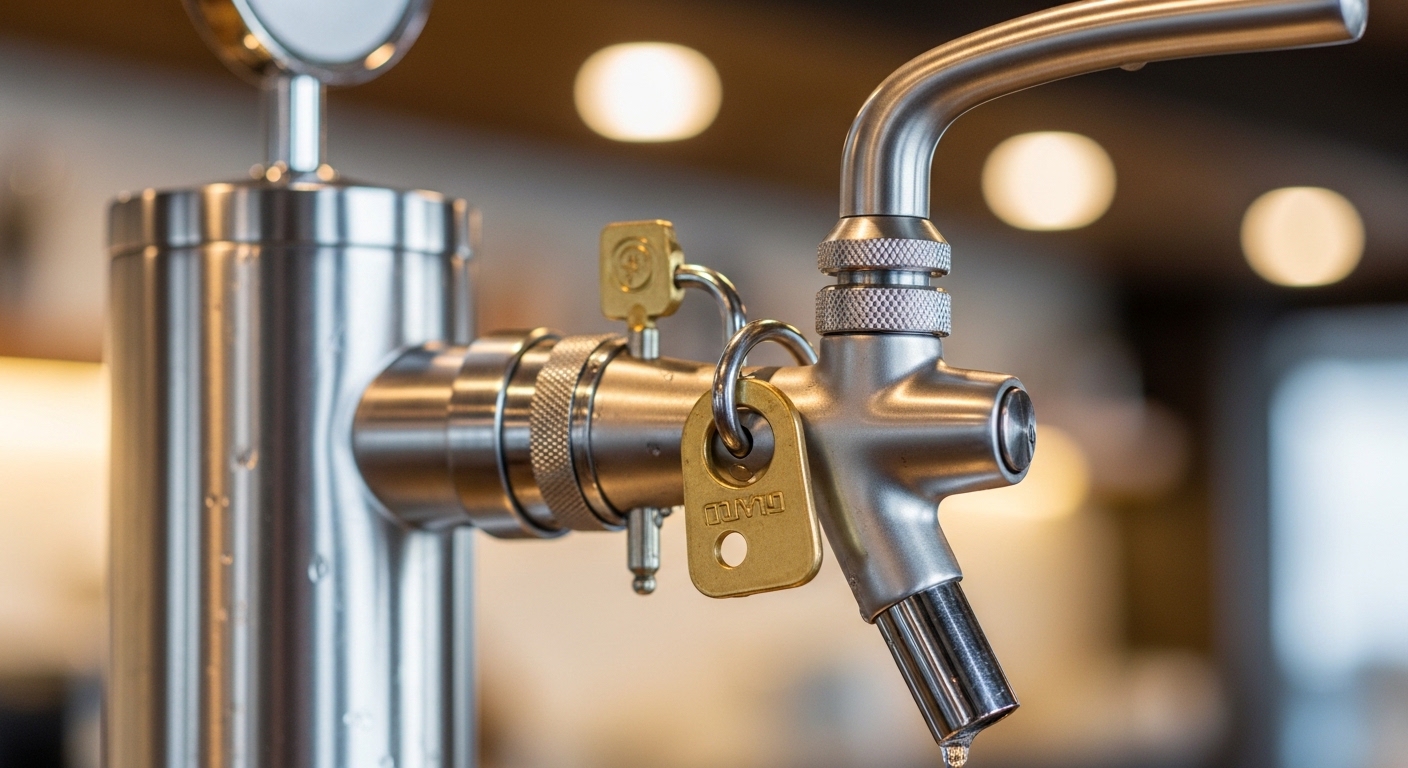
If you run a bar, restaurant, brewery taproom, or even a serious home kegerator, bar tap locks are the single most overlooked piece of inventory control you can buy. They don’t change how your beer tastes or how fast it pours — they just make sure that when nobody’s authorized to pour, nobody can. Below, I’ll walk through exactly what they are, the different types, how to choose the right one for your faucet, what they cost, and how to install one in under two minutes — the same way I’d explain it to a buddy opening his first taproom.
And yes, even though we’re a fixtures brand best known for kitchen and bathroom faucets, the engineering overlap is real: a beer faucet is still a faucet, with the same threads, levers, and wear points. The locking and fit principles here are the same ones we apply across our whole catalog.
What exactly is a bar tap lock and how does it work?
A bar tap lock is a device that immobilizes a draft beer faucet handle so it can’t be pulled forward (or pushed back) to dispense. Most work by gripping the faucet’s lever or the base collar and locking in place with a key, a combination dial, or a hex/security screw. Until it’s removed, the tap is dead — beer can’t flow.
Mechanically, almost all standard North American draft faucets use the same “perlick-style” o “standard” lever that pivots on a pin. A tap lock either:
- Caps the handle — a shroud slips over the faucet lever and locks at the collar, so the whole handle can’t move.
- Clamps the lever — a bracket grips the lever shaft and pins it against the faucet body.
- Replaces the handle entirely — a locking handle screws onto the standard 3/8″-16 handle thread and only turns/pulls with a key.
The takeaway: you’re not modifying the beer line or the keg coupler at all. You’re blocking the one moving part — the handle — which is why installation is tool-free on most models and completely reversible.
Do I actually need a bar tap lock, or is it overkill?
You need one if more than one person has physical access to your taps when you’re not watching them — which is basically every commercial bar and every shared home setup. The math is brutal: a single 1/2 barrel (15.5 gal) of craft beer yields roughly 124 pints. At $7 a pint that’s around $868 in retail value. If staff pour even five “free” or untracked pints a night, you’re bleeding well over $1,000 a month per tap line.
Here’s when a lock genuinely earns its keep:
- After-hours theft — cleaning crews, late-shift staff, or anyone with keys to the building helping themselves.
- Over-pouring and “buy-backs” — bartenders comping friends without ringing it in.
- Home kegerators — keeping kids, guests, or party crashers from self-serving.
- Multi-tenant or event spaces — when the bar is shared and you need taps dead between bookings.
- Trade shows and mobile bars — locking taps during transport so they don’t drip or get tampered with.
If you’re the only person with access and you trust everyone with a key completely, you can skip it. Everyone else: it’s cheap insurance.
What types of bar tap locks are there, and which is best for my setup?
There are four main types, and the right one depends on how many taps you have, how often you lock/unlock, and how much you care about looks. For a busy bar that locks every night, go keyed-alike. For a home kegerator, a combination lock is the most convenient. Here’s the full comparison:
| Lock Type | How It Secures | Best For | Typical Price | Watch Out For |
|---|---|---|---|---|
| Keyed cap lock | Shroud over handle, turns with a key | Commercial bars locking nightly | $15–$30 per tap | Keep spare keys; lost key means cutting it off |
| Keyed-alike set | One key opens all locks | Multi-tap bars (4+ lines) | $60–$120 per set | Less secure if that one key is copied |
| Combination lock | 3–4 digit dial | Home kegerators, no-key convenience | $12–$25 per tap | Codes get shared; dials can wear |
| Locking handle (key-turn) | Replaces handle; only pours with key | Premium/visible installs | $25–$50 per tap | Must match handle thread (3/8″-16) |
If you run a multi-tap wall, the keyed-alike set is the sanity-saver — one bartender, one key, ten taps. If security is paramount and you’ve had a key leak before, separate keyed locks per tap are slower but harder to defeat wholesale.
Will a bar tap lock fit my faucet? (The part everyone gets wrong)
Fit is the #1 reason tap locks get returned, so measure before you buy. Most standard U.S. draft faucets (Perlick-style, standard chrome-plated brass, and forward-sealing faucets) use a 3/8″-16 handle thread and a handle lever that’s roughly 5/8″–3/4″ in diameter at the base. The vast majority of cap and clamp locks are built for exactly that. But there are real exceptions.
Check these three things before ordering:
- Handle thread size — Standard is 3/8″-16. Unscrew your handle and look; if it threads differently, you need a matching locking handle.
- Faucet style — Standard vs. flow-control vs. European (Lindr/Celli) faucets have different collars. European taps often need a specific lock.
- Tap spacing — On crowded draft towers, a bulky cap lock on one tap can block the handle next to it. Measure center-to-center spacing (2″ is common); slim clamp locks are better for tight towers.
This is the same fit-first discipline we preach with every adapter and fitting we sell — the wrong thread pitch turns a five-minute job into a returns headache. If you’ve ever wrestled with mismatched threads on a sink sprayer, you already know the feeling; our deep dive on the faucet irrigation adapter and which one actually fits your sink walks through reading thread sizes the same way you’d check a tap handle.
How do I install a bar tap lock? (Step-by-step, under 2 minutes)
Installing a cap or clamp-style bar tap lock takes under two minutes and zero tools. You don’t touch the beer line, the keg, or the shank — you only work on the handle. Here’s the process for the most common keyed cap lock:
- Close the tap fully. Make sure the faucet lever is in the neutral (closed) position so no beer is flowing.
- Wipe the handle dry. Sticky residue can keep the lock from seating; a quick wipe helps it slide on clean.
- Slide the shroud over the handle. Lower the cap so it fully covers the lever and rests against the faucet collar.
- Seat it against the collar. The lock body should sit flush so the handle has no room to pivot.
- Turn the key to lock. Rotate the key a quarter turn until the internal cam catches the collar. Tug the handle to confirm it won’t budge.
- Remove and store the key. Keep a labeled spare somewhere only management can reach.
For a locking handle replacement, you’ll also unscrew the existing handle (turn it counterclockwise off the 3/8″-16 thread) and thread the locking handle on in its place before keying it. That’s the only version that requires a hand-tight swap. Combination locks follow the same slide-and-secure steps, just with a dial instead of a key.
If your faucet drips after you remove the lock, that’s a faucet seal issue, not a lock issue — the same kind of worn washer or seat problem we cover in our guide on how to fix a leaky kitchen faucet. The mechanism is different but the diagnosis (worn seal, debris on the seat) is identical.
How much do bar tap locks cost, and are the cheap ones worth it?
Expect to pay $12–$50 per tap depending on type, with keyed-alike commercial sets running $60–$120 for four-plus locks. The cheap combination locks ($12–$15) are genuinely fine for a home kegerator. For a commercial bar, spend the extra few dollars on a solid keyed lock with a hardened cam — the difference between a $14 lock and a $28 lock is usually the metal quality and how hard it is to pry off.
What actually drives the price:
- Material — die-cast zinc (budget) vs. stainless or solid brass (commercial-grade, corrosion-resistant in a wet bar environment).
- Keying — keyed-different, keyed-alike, or master-keyed systems cost more but scale better.
- Pick resistance — disc-detainer or tubular cylinders resist tampering far better than a basic wafer lock.
- Finish — chrome, black, and brushed finishes to match your tower hardware.
My honest take: don’t overspend for a home setup, but for a commercial bar, treat tap locks as a tool that protects four-figure monthly inventory, not as a disposable accessory. Corrosion matters more than people think — a bar is a wet, humid environment, and a rusted-up budget lock that won’t turn at close is its own kind of nightmare. (If you want a primer on why metal choice matters in constant-moisture settings, our breakdown of the best bathroom faucet material for hard water explains the same brass-vs-zinc-vs-stainless tradeoffs that apply to tap hardware.)
Do bar tap locks work on commercial draft systems and self-serve walls?
Yes — and on commercial self-pour walls, locks (or their electronic equivalents) are essentially mandatory. A traditional keyed cap lock works on any standard draft tower or wall-mount faucet. For high-end self-serve “pour-your-own” systems, you’ll usually see RFID or wristband-activated electronic shutoffs instead of a physical cap, but plenty of operators still add a mechanical lock as a hard backstop for after-hours.
For commercial installs, the same standards mindset applies as with any other fixture: look for locks made from corrosion-resistant materials (stainless or chrome-plated brass), check that the cylinder is rated for repeated daily use, and keep the manufacturer’s warranty paperwork. If you’re already thinking about commercial-grade durability and hygiene across your venue, it’s worth applying the same vetting we use for back-of-house fixtures — like our guide to the best touchless lavatory faucet for a commercial restroom, where build quality and warranty separate the gear that survives a busy venue from the gear that fails in six months.
What are the downsides or limitations of bar tap locks?
Bar tap locks stop casual and opportunistic pouring extremely well, but they’re not a total anti-theft system — a determined person with tools can still defeat a cheap lock, and locks do nothing about portion control while the bar is open. They’re a deterrent and an access control, not a vault.
Honest limitations to plan around:
- Lost keys — without a spare, you may have to cut the lock off. Always keep a master/spare offsite from the till.
- Doesn’t track open-hours pours — for that you need flow meters or a POS-integrated draft system.
- Wet-environment wear — budget locks can seize. Rinse and occasionally lubricate the cylinder.
- Tower crowding — bulky locks may not fit tight tap spacing; measure first.
Pair a physical lock with a simple keg-volume log or a flow meter and you’ve covered both after-hours theft and open-hours shrinkage — the two leaks that actually hurt.
FAQ
Are bar tap locks universal, or do I need a specific one for my faucet?
Most cap and clamp locks fit standard U.S. draft faucets with a 3/8″-16 handle thread, which covers the large majority of bars and kegerators. But European faucets (Lindr, Celli), flow-control faucets, and unusually shaped handles may need a model-specific lock. Always measure your handle thread and lever base before buying.
How do I remove a bar tap lock if I lose the key?
First, contact the manufacturer — many keyed-alike commercial locks let you order a replacement key by code. If that’s not possible, a keyed cap lock can usually be cut off with bolt cutters or a rotary tool without damaging the faucet, since the faucet body is much harder than the zinc shroud. This is exactly why you should always store a labeled spare key offsite from the register.
Will a tap lock damage my beer faucet?
No. A properly fitted lock only contacts the handle and collar, not the beer-wetted parts or the shank, and it’s fully reversible. The only damage risk comes from forcing a wrong-size lock onto a handle it wasn’t made for, or from corrosion on a cheap lock seizing onto the collar over months — both avoidable with correct sizing and occasional cleaning.
Can I use a bar tap lock on a home kegerator?
Absolutely — home kegerators are one of the most popular uses. A simple combination lock ($12–$25) is the most convenient choice for home because there’s no key to lose, and it keeps kids, guests, or party crashers from self-serving. Just confirm your kegerator faucet uses a standard handle thread, which most domestic units do.
Do bar tap locks prevent dripping or just unauthorized pouring?
Their job is to prevent unauthorized pouring, not dripping. If your faucet drips while closed, that’s a worn faucet seal or seat, not something a lock fixes — though locking the tap when closed does prevent accidental knocks that open it. For an actual drip, you’ll need to service or replace the faucet’s internal seal.
What’s the difference between a tap lock and an electronic draft control system?
A mechanical tap lock is a low-cost physical barrier (typically $15–$50) that stops the handle from moving. An electronic draft control system uses flow meters, RFID, or POS integration to track and authorize every pour in real time — far more capable for open-hours portion control, but hundreds to thousands of dollars. Many bars use both: electronic metering during service, mechanical locks after close.
The bottom line
Bar tap locks are the cheapest, fastest, most reversible way to control who pours from your taps. For a home kegerator, grab a combination lock and move on. For a commercial bar, invest in corrosion-resistant keyed locks (keyed-alike if you’ve got four-plus lines), keep spare keys offsite, and pair them with a basic volume log. Measure your handle thread first — 3/8″-16 is standard but not universal — and you’ll have the right lock on the first try.
About the author & avitashome: This guide was written by the avitashome product team, drawing on hands-on testing of draft and commercial faucet hardware. avitashome specializes in faucets and bathroom fixtures, and we apply the same fit, material, and durability standards across every product category we cover — from kitchen faucets to commercial tap hardware. We evaluate locks and fittings for corrosion resistance in wet environments, thread-fit accuracy, and cylinder durability under repeated daily use, and we recommend choosing hardware backed by a manufacturer warranty. For broader fixture selection guidance, see our latest faucets buying guide. Always follow the lock manufacturer’s instructions and local regulations for your venue.