 Avitas Inicio
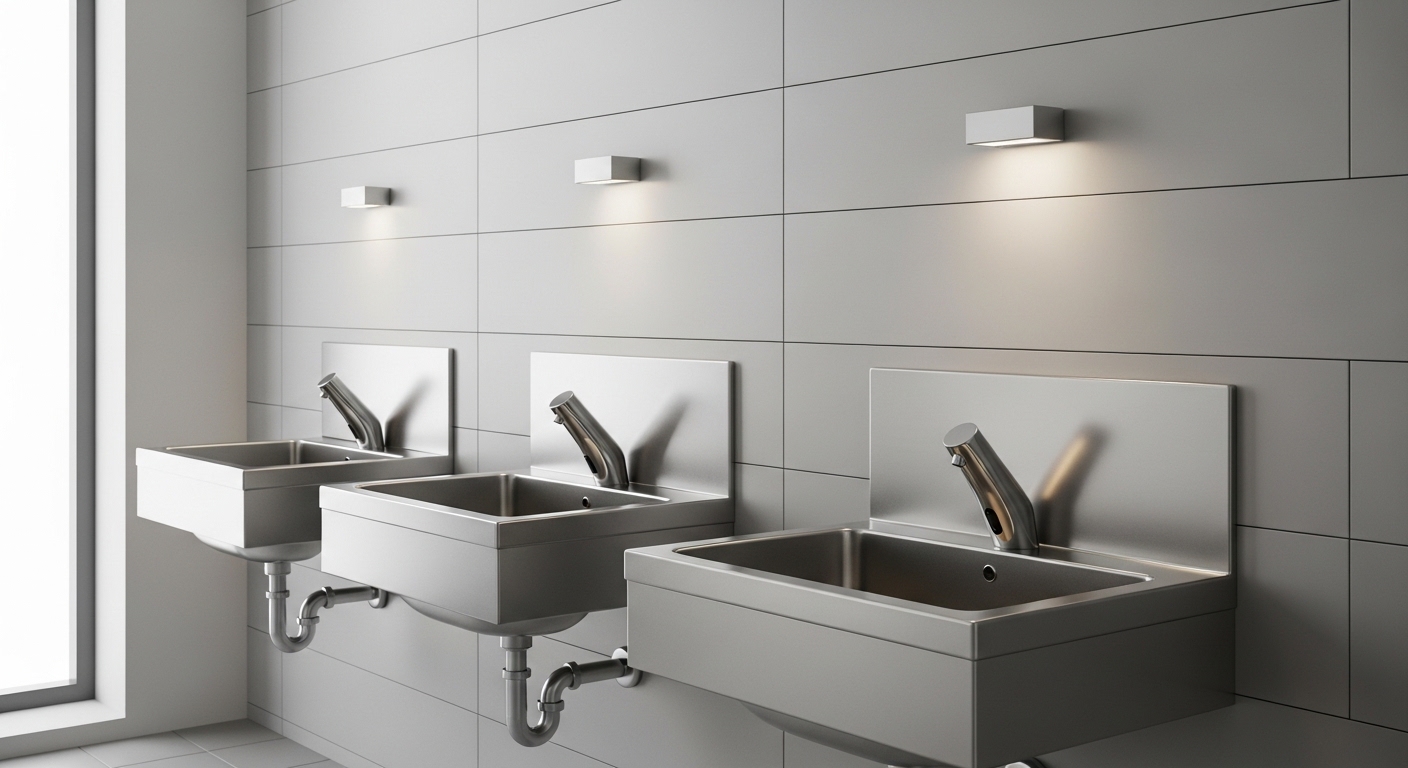
A commercial sink faucet bathroom setup is not just a heavier version of what you’d put in your master bath at home — it’s engineered for hundreds or thousands of daily uses, water-conservation codes, and hands that will yank, twist, and lean on it all day. If you run a restaurant, office, school, gym, medical office, or retail store, the faucet on your public lavatory is one of the hardest-working, most-abused pieces of hardware in the building. Choosing the wrong one means leaks, constant service calls, failed inspections, and a water bill that quietly bleeds you. This guide walks through exactly what to look for, what to spend, and which faucet type fits your specific restroom.
What actually makes a faucet “commercial” instead of residential?
A commercial bathroom faucet is built for high-cycle durability, code compliance, and abuse resistance — not decoration. The core differences are the valve, the flow rate, the mounting, and the materials. A residential faucet is rated for maybe 50,000–100,000 cycles; a true commercial faucet is rated for 500,000 cycles or more, uses a heavier ceramic-disc or metering cartridge, and is almost always solid brass under the finish rather than zinc or plastic.
Here’s what separates the two in plain terms:
- Flow rate: Commercial lavatory faucets are federally and locally capped — typically 0.5 GPM (gallons per minute) for public restrooms, versus 1.2–1.5 GPM for a home bathroom. Less water per use adds up fast across thousands of uses.
- Activation: Metering (self-closing push), sensor (touchless/infrared), or ADA single-lever — all designed so a distracted or careless user can’t leave the water running.
- Materials: Solid forged brass body, stainless trim, and vandal-resistant aerators that need a special key to remove so they don’t get stolen or vandalized.
- Serviceability: Standardized cartridges and parts you can swap in five minutes without replacing the whole fixture.
If you buy a pretty residential faucet for a public restroom to save $60, you’ll typically replace it within a year. The valve simply isn’t built for that cycle count.
Which type of commercial bathroom faucet is right for my restroom?
Match the faucet type to your traffic level and staffing: sensor faucets for the highest-traffic and most hygiene-sensitive restrooms, metering faucets for schools and public buildings that want water savings without electronics, and manual single-lever ADA faucets for lower-traffic offices or when budget is tight. There’s no single “best” — it depends on volume, hygiene priority, and whether you want electronics.
Sensor (touchless / hands-free) faucets
Best for medical offices, restaurants, airports, and any restroom where hygiene and hands-free operation matter most. Infrared sensors turn the water on when hands are detected and off when they leave, so there’s zero chance of water running unattended and no shared touchpoint spreading germs. They run on either batteries (usually 4 AA or a lithium pack lasting 2–4 years) or a hardwired AC transformer. Downsides: higher upfront cost, more electronics to eventually service, and occasional sensor recalibration.
Metering / self-closing (push) faucets
Best for schools, parks, stadiums, and public buildings that want guaranteed water savings with no electronics. You press the top, water flows for a preset 10–15 seconds, then it shuts itself off. Nothing to break, no batteries, extremely vandal-resistant. The trade-off is that users sometimes have to press twice for a longer wash, and the timing cartridge needs occasional replacement.
Manual single-lever and dual-handle ADA faucets
Best for offices, small retail, and lower-traffic restrooms where staff can keep an eye on things and budget is the priority. A wrist-blade or single-lever handle meets ADA requirements (operable with a closed fist, no tight grasping or twisting). They’re the cheapest and simplest, but they rely on users to actually shut the water off.
How much should a commercial sink faucet for a bathroom cost in 2026?
Budget $120–$450 per faucet for a quality commercial-grade fixture, with sensor models at the top of that range and simple metering or manual faucets at the bottom. Going below about $100 usually means a zinc body or a lightweight cartridge that won’t survive commercial cycling. Going above $450 buys you premium finishes, integrated thermostatic mixing, and longer warranties — worth it in flagship or high-end hospitality restrooms, overkill for a warehouse break room.
| Faucet Type | Typical Price (each) | Flow Rate | Best For | Water/Hygiene Savings |
|---|---|---|---|---|
| Sensor / Touchless | $180–$450 | 0.35–0.5 GPM | Medical, food service, airports | Highest — hands-free + auto shutoff |
| Metering / Self-closing | $110–$250 | 0.5 GPM | Schools, parks, stadiums | High — timed shutoff, no electronics |
| Manual Single-Lever ADA | $90–$220 | 0.5–1.0 GPM | Offices, small retail | Moderate — depends on user |
| Wall-Mount Commercial | $130–$400 | 0.5 GPM | Trough sinks, industrial restrooms | Moderate–High |
Remember the real cost isn’t the sticker — it’s the total cost of ownership. A $200 sensor faucet that cuts water use and eliminates “left it running” waste often pays for itself against a $90 manual faucet within a couple of years in a busy restroom. And a cheap faucet that fails inspection or floods a floor costs far more than the difference. When you’re pricing parts, our guide on the most common faucet supply line size helps you order the right connectors so installs go smoothly across a whole building.
Do commercial bathroom faucets need to be ADA and code compliant?
Yes — public commercial restrooms in the U.S. must meet ADA operability rules and federal/local water-efficiency codes, and inspectors do check. The two big ones are ADA (Americans with Disabilities Act) and the plumbing/water-conservation code your jurisdiction adopts. Getting this wrong can fail a build-out inspection and delay your opening.
The key compliance points to verify before you buy:
- ADA operation: The faucet must be operable with one hand, without tight grasping, pinching, or twisting, and with no more than 5 lbs of force. Sensor, metering, and wrist-blade lever faucets all satisfy this; round knob handles generally do not.
- Flow rate: Federal maximum for public lavatory faucets is 0.5 GPM at 60 psi. Some states (California’s CALGreen, for example) and green-building programs push this even lower.
- Run time: Metering faucets must deliver water for a limited cycle (ADA requires at least 10 seconds of flow once activated).
- Certification marks: Look for NSF/ANSI, ASME A112.18.1/CSA B125.1, and a “lead-free” designation compliant with the Safe Drinking Water Act (≤0.25% weighted lead content on wetted surfaces).
Reputable manufacturers list these certifications right on the spec sheet. If a listing doesn’t mention them, treat it as a red flag for a public installation.
What finish and mounting hold up best in a public restroom?
Polished or brushed chrome on a solid-brass body is the workhorse choice for commercial restrooms — it hides water spots reasonably well, resists corrosion, and cleans up with any standard disinfectant. For mounting, deck-mount single-hole faucets are the most common and easiest to service, while wall-mount faucets are ideal for trough sinks and vandal-prone spaces because there’s nothing on the counter to grab or splash around.
A few finish and mounting realities from the field:
- Chrome is the default for a reason: cheap to replace, disinfectant-safe, and every plumber stocks parts for it.
- Brushed/satin nickel and stainless hide fingerprints and hard-water spotting better — great for upscale or hospitality restrooms, slightly pricier.
- Matte black and specialty PVD finishes look sharp but show mineral scale and cleaning chemical residue faster; only choose them if staff will wipe them regularly.
- Wall-mount keeps counters clear and is the go-to for industrial and high-vandalism settings; if you go this route, keep a wall mount faucet repair kit on hand so a worn cartridge never means an out-of-order sink.
Hard water is the silent killer of commercial faucets — scale clogs aerators and gums up sensor valves. If your building is on hard water, plan on cleaning or swapping aerators quarterly, and keep spares. On the design side, if you’re outfitting a modern-industrial space and want the look to carry through, our take on the matte black industrial kitchen faucet covers how those tougher finishes behave under heavy use.
How do I install and maintain a commercial bathroom faucet?
Most deck-mount commercial faucets install through a standard single hole or 4-inch/8-inch centerset in under 30 minutes with basic tools, and the biggest ongoing maintenance job is cleaning aerators and replacing cartridges. You don’t need to be a licensed plumber to swap a like-for-like faucet, but new construction and gang installs across a building are worth handing to a pro for warranty and code sign-off.
Basic install and upkeep steps:
- Shut off the angle-stop valves under the sink and open the faucet to relieve pressure.
- Disconnect the supply lines and remove the old faucet’s mounting nut from below.
- Set the new faucet with its gasket, tighten the mounting hardware, and reconnect supply lines — replacing old braided lines while you’re in there.
- For sensor models, install batteries or connect the transformer, then wave-test the sensor range and adjust if needed.
- Run the water, check every connection for drips, and clean the aerator.
For maintenance, the two things that keep commercial faucets alive are clean aerators and fresh cartridges. Mineral buildup is the number-one cause of weak flow and dripping. If you’re already noticing weak output, our walkthroughs on how to fix a leaky bathroom sink faucet and diagnosing low water flow apply directly to lavatory faucets too — the cartridge and aerator fixes are nearly identical. Keeping a small parts kit (spare cartridges, aerators, batteries, O-rings) on-site means most restroom faucet issues become a five-minute fix instead of a service call.
Buying checklist: what to confirm before you order
Before you place a bulk order for a building, confirm these specs on the product page so you don’t get surprised on delivery day:
- Solid brass body, not zinc or plastic — check the weight and material spec.
- 0.5 GPM vandal-resistant aerator (with removal key).
- ADA-compliant activation (sensor, metering, or lever).
- NSF/ANSI + ASME A112.18.1 certification and lead-free compliance.
- Ceramic-disc or metering cartridge rated for 500,000+ cycles.
- Power source you can support (battery vs. hardwired) for sensor models.
- Commercial warranty of at least 5 years on the valve/body.
- Standard mounting (single-hole or 4″/8″ centerset) that fits your existing sinks.
Match the faucet to the sink and the traffic, confirm the certifications, and buy one extra unit and a parts kit per restroom bank so you’re never stuck with an out-of-order sink during business hours.
FAQ
What GPM flow rate is required for a commercial bathroom faucet?
The federal maximum for public lavatory (bathroom) faucets is 0.5 GPM measured at 60 psi. Some states and green-building programs require lower, and kitchen or utility faucets have different limits, but for a public restroom sink, 0.5 GPM is the standard you should buy to.
Are touchless sensor faucets worth the extra cost in a commercial bathroom?
In high-traffic and hygiene-sensitive restrooms — restaurants, medical offices, airports — yes, because they eliminate a shared touchpoint and cut water waste from faucets left running. In a small, low-traffic office restroom, a metering or manual ADA faucet at half the price is usually the smarter buy.
Can I put a residential faucet in a commercial bathroom?
You shouldn’t. Residential faucets often fail to meet the 0.5 GPM public-restroom flow limit and aren’t rated for commercial cycle counts, so they wear out fast and can fail inspection. Codes for public restrooms require commercial-grade, certified fixtures.
How long do commercial bathroom faucets last?
A quality solid-brass commercial faucet lasts 10–20 years on the body, though you’ll replace wear parts along the way — cartridges every few years and aerators as they scale up. Sensor electronics and batteries are the shortest-lived components, typically needing service or battery swaps every 2–4 years.
What’s the difference between a metering faucet and a sensor faucet?
A metering faucet is mechanical — you push the top and water runs for a fixed 10–15 seconds, then shuts off, with no electronics or batteries. A sensor faucet is touchless — infrared detects your hands and runs water only while they’re present. Sensor faucets are more hygienic and convenient; metering faucets are simpler, cheaper to maintain, and nearly impossible to vandalize.
Do commercial bathroom faucets come with a warranty?
Reputable commercial faucets carry a warranty of 5 years or more on the valve and finish, and many premium models offer limited lifetime coverage on the body with shorter terms on electronic components. Always confirm the warranty length and what it covers before a bulk purchase — it’s a strong signal of how the manufacturer expects the fixture to hold up.
Where does avitashome fit in?
At avitashome, we specialize in faucets and bathroom fixtures for both homes and commercial spaces, and every commercial-grade faucet we list is spec’d for the certifications, flow rates, and cycle ratings public restrooms actually require. We test fixtures against ASME A112.18.1/CSA B125.1 and NSF/ANSI standards, publish real flow rates and warranty terms on every product page, and stock the replacement cartridges and aerators so your restrooms stay in service for years — not months.
Author note: This guide was written by the avitashome fixtures team, drawing on hands-on experience specifying and installing commercial lavatory faucets across restaurants, offices, and public buildings. We update our commercial-faucet guidance annually to reflect current plumbing codes, ADA requirements, and water-efficiency standards. Always confirm your local jurisdiction’s plumbing code before finalizing a commercial installation.