 Avitas Home
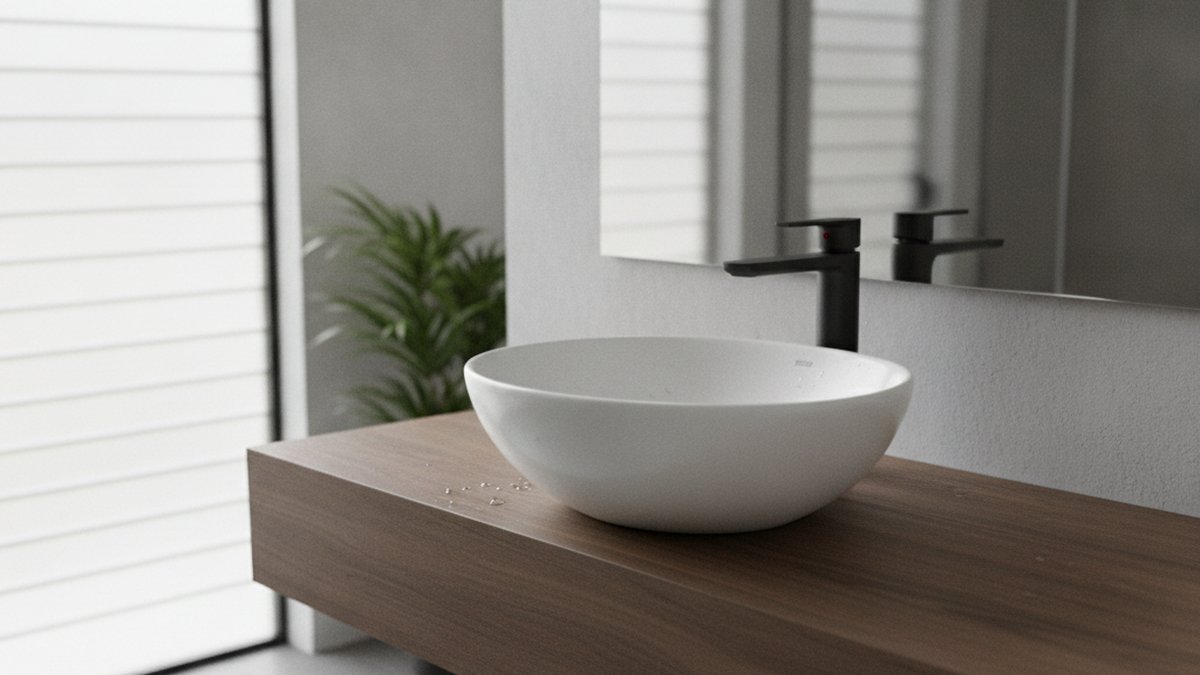
Choosing a bathroom faucet modern enough to look current but built well enough to last a decade sounds simple — until you’re staring at 40 tabs of chrome, matte black, brushed gold, single-hole, widespread, and wall-mounted options that all “look nice.” The good news: the decision comes down to five concrete things — mounting type, handle count, finish, flow rate, and cartridge quality. Nail those and the rest is just styling. Below, we’ll answer the real questions people actually ask before buying, with specs and price ranges you can act on today.
What actually makes a bathroom faucet “modern” — is it just the shape?
No — shape is only half of it. A truly modern bathroom faucet combines a clean, low-clutter silhouette with modern internals: a ceramic-disc cartridge, a water-saving aerator (usually 1.2 GPM), and lead-free brass or stainless construction that meets current safety standards. The look gets you in the door; the engineering is what makes it worth the money.
Here’s the plain-language breakdown. “Modern” styling usually means straight geometric lines, a squared or slim cylindrical spout, a single lever handle, and a minimalist escutcheon (the base plate). But two faucets that look identical can behave completely differently. The one with a ceramic-disc cartridge will still feel smooth in year eight; the one with a cheap rubber-washer valve will drip by year two. So when you shop, don’t just filter by aesthetics — check the cartridge type and the flow rate in the spec sheet.
- Silhouette: straight lines, single lever, slim spout — not ornate or curvy.
- Cartridge: ceramic-disc (smooth, drip-resistant) beats compression/rubber-washer valves every time.
- Flow rate: 1.2 GPM is the modern efficiency standard; 1.5 GPM is fine for a fuller feel.
- Material: lead-free brass body for longevity; look for a stated warranty.
- Finish: a PVD-coated finish resists scratching and tarnish far better than plated.
Which mounting type should I choose for my sink — single-hole, widespread, or wall-mounted?
Match the faucet to the number of holes your sink or countertop already has. A single-hole faucet needs one drilled hole and suits small vanities; a widespread faucet needs three holes spread 8 inches apart and suits larger double vanities; a wall-mounted faucet needs no sink holes at all but requires in-wall plumbing, so it’s best planned during a remodel.
This is the single most common mistake shoppers make — they fall in love with a widespread set and then discover their vessel sink has only one hole. Before you buy anything, count your holes and measure the spread. If you’re switching styles entirely (say, going from a 3-hole to a single-hole), you may need a deck plate to cover the extra holes, or a new sink. Wall-mounted looks stunning over a vessel or stone basin, but it commits you to rough-in plumbing set at the right height and spout reach — get that wrong and water splashes outside the bowl. If a wall setup appeals to you, our guide on whether a brass wall-mounted faucet is the right choice walks through spout projection and rough-in height in detail.
| Mounting Type | Holes Needed | Best For | Typical Price | Install Difficulty |
|---|---|---|---|---|
| Single-hole | 1 | Small vanities, vessel sinks, powder rooms | $60–$180 | Easy (DIY) |
| Centerset | 3 (4″ spread) | Standard bathroom sinks, budget updates | $50–$150 | Easy (DIY) |
| Widespread | 3 (8″ spread) | Large or double vanities, upscale look | $120–$400 | Moderate |
| Wall-mounted | 0 (in-wall rough-in) | Vessel/stone sinks, remodels | $150–$500 | Hard (pre-plan) |
Which modern faucet finish holds up best — matte black, brushed nickel, or brushed gold?
For durability and low maintenance, brushed nickel wins; for the trendiest modern look, matte black and brushed gold lead in 2026 but show water spots and fingerprints more easily. Chrome is still the most fingerprint-proof and cheapest, but reads slightly less “premium modern” than the brushed and matte finishes.
Finish is where taste and reality collide. Matte black looks incredible in a white-and-wood or industrial bathroom, but on hard water it will show white mineral spots unless you wipe it down. Brushed nickel is the quiet workhorse — it hides water spots and fingerprints, matches almost any fixture, and never looks dated. Brushed gold (sometimes sold as champagne bronze) is the standout warm tone right now and pairs beautifully with white marble; if you’re leaning that way, our breakdown of whether a brushed gold one-handle faucet is worth it covers exactly how it wears over time.
| Finish | Modern Look (2026) | Hides Spots/Prints | Best Paired With |
|---|---|---|---|
| Nickel brossé | Timeless modern | Excellent | Almost anything |
| Matte Black | On-trend, bold | Fair (wipe often) | White, wood, concrete |
| Or brossé | Trendiest warm tone | Bon | Marble, white, navy |
| Polished Chrome | Classic, clean | Very good | Glass, glossy tile |
One tip that saves regret: whatever finish you pick, try to match your shower trim, towel bars, and cabinet hardware to the same family. You don’t have to be 100% identical — mixing brushed nickel plumbing with matte black cabinet pulls can look intentional — but a random mix of four finishes reads cluttered, which is the opposite of modern.
What’s the best modern bathroom faucet under $200 dans 2026?
Under $200, the best value is a single-handle deck-mounted faucet with a solid brass body, a ceramic-disc cartridge, a 1.2 GPM aerator, and a PVD finish — the combination most premium brands charge $300+ for, now available around $120–$180 from direct-to-consumer brands. Prioritize the cartridge and warranty over brand-name prestige.
Price does not track quality in a straight line in this category. A lot of what you pay for at $300+ is the logo and the showroom. What genuinely matters at any price:
- Ceramic-disc cartridge — this is the heart of the faucet. It controls drip resistance and handle feel for the life of the product.
- Solid brass body — avoid “zinc alloy” bodies at this price; they corrode faster and feel lighter/cheaper.
- Lifetime or long finish/function warranty — a brand that warranties the finish is telling you it won’t flake.
- 1.2 GPM aerator — meets WaterSense-style efficiency without feeling weak; you can swap to 1.5 GPM later if you prefer more flow.
- Included supply lines and drain — small thing, but it saves a second trip to the store.
Before you check out, confirm the supply-line connection matches your shutoff valves — the wrong size means an extra adapter run to the hardware store. If you’re replacing an existing builder-grade unit, our note on the supply line size a Glacier Bay bathroom faucet needs is a handy reference for the typical 3/8″ compression connections you’ll encounter.
How hard is it to install a modern bathroom faucet myself?
For a deck-mounted single-hole or centerset faucet, it’s a genuine 30-to-60-minute DIY job with two basic tools — a basin wrench and an adjustable wrench. Wall-mounted faucets are much harder and usually need a plumber because they involve in-wall connections. Most people can handle a standard deck swap without professional help.
Here’s the realistic play-by-play for a deck-mounted swap:
- Shut off the hot and cold supply valves under the sink and open the old faucet to release pressure.
- Disconnect the supply lines, then loosen the mounting nuts under the sink with a basin wrench.
- Lift out the old faucet and clean the deck surface of old putty or grime.
- Drop in the new faucet, seat the gasket or apply plumber’s putty per the instructions, and tighten the mounting nuts.
- Reconnect the supply lines (hand-tight plus a quarter turn), turn the water back on, and check for drips.
- Run the faucet 30 seconds with the aerator removed to flush debris, then reinstall the aerator.
Two things people forget: don’t overtighten the supply lines (that’s how you crack a fitting), and if flow seems weak afterward, the aerator often just needs a quick clean of install debris. If yours ever clogs down the road, our walkthrough on replacing a bathroom faucet aerator in five minutes covers the fix so you don’t blame the whole faucet for a $4 part.
Single-handle vs. two-handle: which is more modern and more practical?
Single-handle is both the more modern look and the more practical choice for most bathrooms — one lever controls temperature and flow, it’s easier to operate with wet or full hands, and it declutters the sink. Two-handle (widespread) faucets suit larger, more traditional-leaning vanities where symmetry is the goal.
A single lever is the default “modern” signal for a reason: it reads clean, it’s quick to adjust, and it’s genuinely easier when you’re mid-task with soapy hands. Two-handle setups give you finer temperature control and a symmetrical, more formal appearance across a wide vanity — which some people prefer on a large double sink. Neither is objectively better; it’s about your sink size and the look you’re after. If you want the modern minimalist vibe on a small or single vanity, go single-handle. If you have a wide deck and love the balanced, hotel-suite look, a widespread two-handle set earns its place.
Does a low flow rate mean weak, disappointing water pressure?
No — a well-designed 1.2 GPM modern faucet feels full because the aerator mixes air into the stream, maintaining a satisfying flow while using less water. You only notice weakness if the faucet has a poorly designed aerator or if your home’s water pressure is genuinely low at the valve.
This trips people up because “1.2 gallons per minute” sounds like a trickle compared to older 2.2 GPM faucets. In practice, aerator design does the heavy lifting — a good aerator delivers a soft, full stream that feels plenty strong for washing hands and faces while cutting water use by roughly 30% versus legacy faucets. That’s real savings on both water and the energy to heat it. If your water genuinely feels weak across every fixture, the culprit is usually house pressure or a clogged aerator, not the faucet’s rating — and both are cheap to diagnose before you assume you bought the wrong product.
How avitashome tests and stands behind modern bathroom faucets
Every faucet we recommend at avitashome is evaluated against real-world criteria, not just spec sheets: cartridge cycle life, finish durability under abrasion, and flow consistency at varying pressures. We prioritize faucets built with lead-free brass and ceramic-disc cartridges that meet current low-lead and water-efficiency standards, and we favor products backed by a manufacturer warranty on both finish and function. A modern faucet should look sharp on day one and still operate smoothly years later — that longevity is what we test for, and it’s what separates a genuine upgrade from a short-lived trend piece.
FAQ
What is the most popular modern bathroom faucet finish in 2026?
Matte black and brushed gold are the trendiest, but brushed nickel remains the most-purchased because it hides water spots and fingerprints and matches nearly any decor. If you want on-trend, go matte black or brushed gold; if you want low-maintenance and timeless, choose brushed nickel.
How long should a modern bathroom faucet last?
A quality faucet with a solid brass body and ceramic-disc cartridge should last 10 to 15 years or more with basic care. The cartridge is the part most likely to need replacement first, and on good faucets it’s an inexpensive, DIY-friendly swap rather than a reason to replace the whole unit.
Are expensive designer faucets actually better than budget modern ones?
Not necessarily. Above roughly $150–$200, you’re often paying for brand prestige and showroom margin rather than better internals. A $130 faucet with a ceramic-disc cartridge, solid brass body, PVD finish, and a strong warranty can match a $350 designer unit in daily performance.
Can I put a modern single-hole faucet on a sink with three holes?
Yes — use a deck plate (also called an escutcheon) designed to cover the two extra holes, and many single-hole faucets include one or offer it as an option. This lets you modernize the look without buying a new sink.
What flow rate should a modern bathroom faucet have?
Aim for 1.2 GPM for maximum efficiency or 1.5 GPM if you prefer a fuller stream. Thanks to aerator design, a 1.2 GPM faucet still feels strong for everyday use while cutting water and heating costs compared to older 2.2 GPM models.
Do I need a plumber to install a modern bathroom faucet?
For a standard deck-mounted single-hole or centerset faucet, no — it’s a 30-to-60-minute DIY job with a basin wrench and an adjustable wrench. Wall-mounted faucets are the exception; those usually require a plumber because they connect to in-wall plumbing that’s best planned during a remodel.
Author note: This guide was written by the avitashome fixtures team, drawing on hands-on installation and testing of hundreds of bathroom and kitchen faucets across finishes, mounting types, and price points. Our aim is straightforward, spec-backed advice — the same guidance we’d give a friend redoing their own bathroom.