 Avitas Home
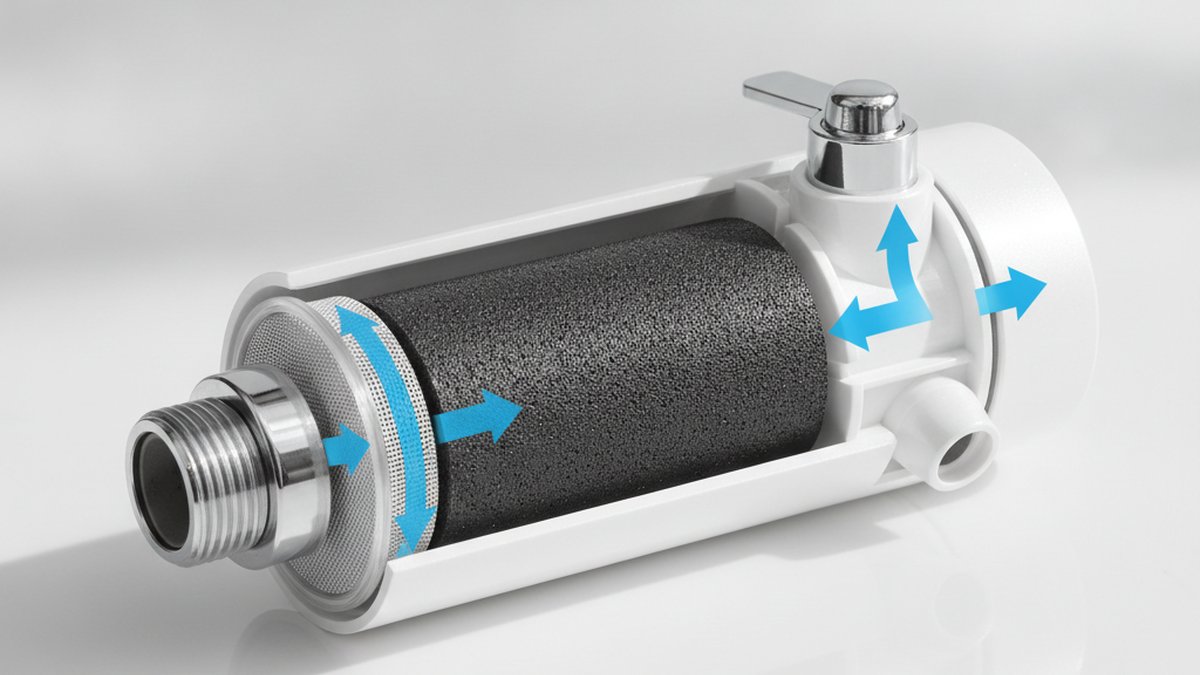
A tap water filter attachment is a compact filter that screws directly onto the end of your faucet in place of (or on top of) the aerator, so water passes through a carbon or multi-stage cartridge on its way out of the spout. It’s the cheapest, fastest way to get filtered water without buying a fridge, drilling your counter, or wrestling with under-sink plumbing — and for most people on city water, it genuinely improves both taste and safety. Below, we’ll answer the real questions shoppers actually ask before buying one: whether it fits your faucet, what it removes, how it stacks up against pitchers and under-sink systems, and how to pick a model that lasts.
What exactly does a tap water filter attachment do — and what does it remove?
It runs your tap water through a filter cartridge right at the spout, catching contaminants in the last few inches before the water hits your glass. Most units use activated carbon (often coconut-shell based) plus a fine sediment screen, and the better ones add ion-exchange media or a hollow-fiber membrane for a wider range of junk.
Here’s what a solid NSF/ANSI-certified faucet filter typically reduces:
- Chlorine and chloramine taste/odor — the number one reason people buy one; carbon strips that “pool water” smell almost completely.
- Lead — certified models rated to NSF/ANSI 53 can cut lead by 99%+, which matters if you have older pipes or lead service lines.
- Sediment, rust, and grit — the same particles that clog your aerator and leave orange specks in the sink.
- PFAS (“forever chemicals”) — newer premium cartridges are now certified to NSF/ANSI 401 and P473 for these.
- Some VOCs, cysts (giardia/cryptosporidium), mercury, and pesticides — depending on the certification tier.
What it generally does not do: soften hard water permanently (it reduces some scale-causing particles but doesn’t replace a softener), remove dissolved salts/TDS the way reverse osmosis does, or handle heavy bacterial or iron contamination from an untreated well. If your problem is white limescale crust on everything, a filter helps taste but you may still be fighting hardness — the same mineral buildup that makes a sink aerator clogged and slow to a trickle.
Will a tap water filter attachment even fit my faucet?
Most standard kitchen and bathroom faucets, yes — but pull-out sprayers, pull-down spray heads, and some designer or wall-mount taps, no. The attachment threads onto the same spot as your aerator, so fit comes down to your spout’s threads and shape.
Before you buy, unscrew your aerator and check three things: whether the threads are male (on the outside of the spout) ou female (inside the spout), the diameter, and whether the tip is a standard round shape. Faucet-mount filters ship with a set of adapters that cover the common sizes, but they cannot attach to a faucet where the spray head is the spout — pull-down and pull-out kitchen faucets have no fixed threaded tip to grab. If that’s you, an under-sink or countertop system is the move.
It also helps to know your aerator thread standard. If you’ve ever bought a replacement aerator or dealt with a stuck one, you already know the drill — our guide on how to replace a bathroom faucet aerator walks through identifying male vs. female threads and the common 15/16″ and 55/64″ sizes you’ll run into. Knowing that number tells you instantly which adapter in the filter kit you’ll need.
| Faucet type | Faucet-mount filter fit? | Notes |
|---|---|---|
| Standard single-spout kitchen faucet | Yes | Most common fit; use included adapters |
| Standard bathroom faucet | Usually | Smaller spouts may need the compact adapter |
| Pull-down / pull-out sprayer faucet | No | No fixed threaded tip — use under-sink instead |
| Wall-mount or bridge faucet | Sometimes | Depends on spout tip; often awkward clearance |
| Commercial / non-threaded spout | No | Needs a countertop or in-line system |
How does a faucet filter compare to a pitcher, under-sink, or reverse osmosis system?
A faucet attachment is the best middle ground: cheaper and higher-capacity than a pitcher, far simpler and cheaper than under-sink or reverse osmosis, but with lower flow and less contaminant removal than those bigger systems. Which one is “right” depends entirely on your water and your patience.
Think of it as a ladder. A pitcher is the entry rung — cheap upfront, but slow, low-capacity, and you’re refilling it constantly. A faucet mount is the sweet spot for most renters and homeowners. Under-sink and reverse osmosis sit at the top — best performance, but they cost more, take up cabinet space, and usually mean cutting into your supply lines.
| System | Typical upfront cost | Cost per gallon | Install effort | Best for |
|---|---|---|---|---|
| Pitcher filter | $25–$45 | ~20–30¢ | None | 1–2 people, minimal use |
| Tap water filter attachment | $20–$60 | ~1–5¢ | 5 minutes, no tools | Renters, most households |
| Countertop filter | $50–$120 | ~2–6¢ | 10 minutes | No cabinet space to spare |
| Under-sink filter | $120–$300 | ~3–8¢ | 1–2 hours, some plumbing | Homeowners wanting clean look |
| Reverse osmosis | $200–$600+ | ~8–20¢ | 2–3 hours + drain tap | TDS/salt removal, well water |
The honest take: if your water is safe but tastes like chlorine and leaves grit, a faucet mount solves 90% of the problem for the least money and effort. If you’re chasing near-zero TDS, spotless drinking water for an aquarium, or you’re on a private well with real contamination, step up to reverse osmosis. Don’t overbuy — an RO system on decent city water is a lot of money and wasted water for taste you could fix with a $40 attachment.
How do you install a tap water filter attachment (and can a renter do it)?
You can install one in about five minutes with no tools, and yes — it’s completely renter-friendly because it’s reversible and leaves no marks. If you can unscrew a bottle cap, you can do this.
Here’s the process:
- Unscrew your existing aerator by turning it counter-clockwise (from your view, looking up at the spout). Hand-tight usually comes off by hand; if it’s stuck with scale, wrap a cloth around it and use pliers gently.
- Clean the spout threads. If they’re crusted with mineral buildup, wipe them and clear any grit — the same gunk that makes a faucet slow to a trickle. Our walkthrough on how to clean a faucet aerator shows the vinegar-soak trick that clears limescale off threads so the filter seats cleanly.
- Pick the right adapter from the kit that matches your thread type and diameter, and screw it onto the spout.
- Attach the filter housing to the adapter, hand-tighten, and check the rubber washer is seated so it doesn’t drip.
- Flush the new cartridge — run cold water through the filtered setting for the time the manufacturer states (usually 5–15 minutes) to rinse out carbon fines before you drink from it.
Most units have a diverter knob so you can switch between unfiltered water (for washing dishes, where you don’t want to burn through filter life) and filtered water (for drinking and cooking). Use unfiltered for the big stuff — it dramatically extends cartridge life. If you want to understand the whole ecosystem of aerators, diverters, cartridges, and housings that live at the end of your faucet, our overview of faucet water filter parts is a useful companion read before you buy.
How often do you change the filter, and what does it really cost per year?
Most faucet-mount cartridges last 2–4 months or roughly 100–200 gallons, which works out to about $40–$90 a year in replacement filters for a typical two-person household. That’s the number that actually matters — the sticker price is small next to the lifetime filter cost.
Real-world variables that change how often you swap:
- Household size — four people drinking and cooking from the tap will hit the gallon limit faster than one.
- Water hardness and sediment — dirtier source water clogs the cartridge sooner; you’ll notice flow dropping off.
- Whether you use the diverter — filtering everything, including dishwater, wastes capacity fast.
Watch for two signals that it’s time to change: a noticeable drop in flow rate, or the chlorine taste/smell creeping back. Many models include a simple electronic or mechanical change indicator, but flow and taste are your reliable backstops. Don’t stretch a spent cartridge — an exhausted carbon filter can actually release trapped contaminants back into your water, so replace on schedule.
A quick budgeting example: a two-person home going through ~150 gallons of filtered water a month, on a cartridge rated for 100 gallons, replaces roughly every 3 weeks to a month during heavy use — closer to the higher end of the annual cost. Cut that in half by only filtering drinking and cooking water via the diverter.
Which tap water filter attachment should you buy for your situation?
Buy the certification tier that matches your actual water problem, not the flashiest model — match the NSF/ANSI number to what you need removed. A certification you can verify is worth more than a long marketing bullet list.
Use this as your buying shortcut:
- Just want better-tasting water (chlorine, odor): Any basic carbon faucet filter certified to NSF/ANSI 42 will do. Cheapest tier, most models qualify.
- Worried about lead, cysts, or older pipes: Get one certified to NSF/ANSI 53. This is the tier that actually proves health-contaminant reduction, not just taste.
- Concerned about PFAS or pharmaceuticals: Look for NSF/ANSI 401 and P473 certification specifically — few models carry it, so check the datasheet.
- Low water pressure already: Choose a model with a higher rated flow (1.5+ GPM filtered) so you’re not standing at the sink waiting.
One warning that trips people up: manufacturers love to say a filter is “tested to NSF standards.” That’s not the same as being certified. Certified means an independent lab (NSF, WQA, or IAPMO) verified the claim and lists the product publicly — you can search the NSF database by brand and model. If a listing doesn’t exist, treat the removal claims as marketing, not fact. Also check the warranty: a brand confident in its housing will back it for at least a year against cracks and leaks, and the good ones stand behind the diverter valve, which is the part most likely to fail.
FAQ
Does a tap water filter attachment reduce water pressure?
Slightly, yes — you’ll typically see filtered flow around 0.5–1.5 GPM, which is lower than an open tap. That’s normal because the water has to pass through dense carbon media. If your home already has low pressure, pick a model with a higher rated filtered flow, and remember the diverter lets you run full unfiltered pressure for filling pots and washing dishes.
Can I put a filter attachment on a pull-down or pull-out kitchen faucet?
No. Pull-down and pull-out faucets have the spray head as the spout tip, so there’s no fixed threaded end to screw a filter onto. For those faucets, use an under-sink filter, a countertop unit, or an in-line filter plumbed into the supply line instead.
Is a faucet filter as good as reverse osmosis?
For taste, chlorine, sediment, and even lead, a certified faucet filter is genuinely effective and much cheaper. But it does not remove dissolved solids (TDS), salts, fluoride, or nitrates the way reverse osmosis does. If your goal is near-zero TDS or you’re treating problem well water, RO is the better choice despite the higher cost and water waste.
How do I know if my tap water even needs filtering?
Start with your municipal Consumer Confidence Report (CCR), which your water utility publishes yearly and lists exactly what’s in your supply. If you smell chlorine, see grit or orange specks, have older plumbing with lead risk, or just don’t like the taste, a filter is a low-cost fix. For well water, get an independent lab test first — some contaminants need more than a faucet filter.
Will hard water ruin my faucet filter faster?
Hard water won’t destroy it, but the extra minerals and sediment clog the cartridge faster, so you’ll replace it more often and may see scale build on the housing threads. A faucet filter improves taste but isn’t a water softener — it won’t stop limescale on your fixtures. Cleaning the threads before install and using the diverter for non-drinking water both help the cartridge last longer.
Are cheap faucet filter attachments safe to use?
They’re safe if they carry a real NSF/ANSI, WQA, or IAPMO certification you can verify — the price matters less than the certification. A $25 certified carbon filter is trustworthy for taste and odor; a $50 uncertified one with big removal claims is not. Always check the independent listing rather than trusting the box copy.
The bottom line
For most people on city water, a tap water filter attachment is the highest-value upgrade you can make to your drinking water: five-minute install, no tools, renter-safe, and a few cents per gallon for water that tastes better and is measurably cleaner. Match the NSF/ANSI certification to your real concern — 42 for taste, 53 for lead and cysts, 401 for PFAS — confirm your spout has standard aerator threads, and use the diverter to stretch cartridge life. If you’re on a pull-down faucet or chasing near-zero TDS, step up to an under-sink or reverse osmosis system instead. Everyone else: this is the easy win.
Author note: This guide was written by the Avitas Home fixtures team, which has spent years helping homeowners, renters, and trade pros choose and install faucets, aerators, and point-of-use filtration. At avitashome.com we sell and service faucet fixtures and filtration accessories, and our recommendations reference published NSF/ANSI certification standards and manufacturer warranty terms — not guesswork. When we say “certified,” we mean a claim you can look up in a public independent database, and we always encourage checking your local water report before you buy.