 Pagina iniziale di Avitas
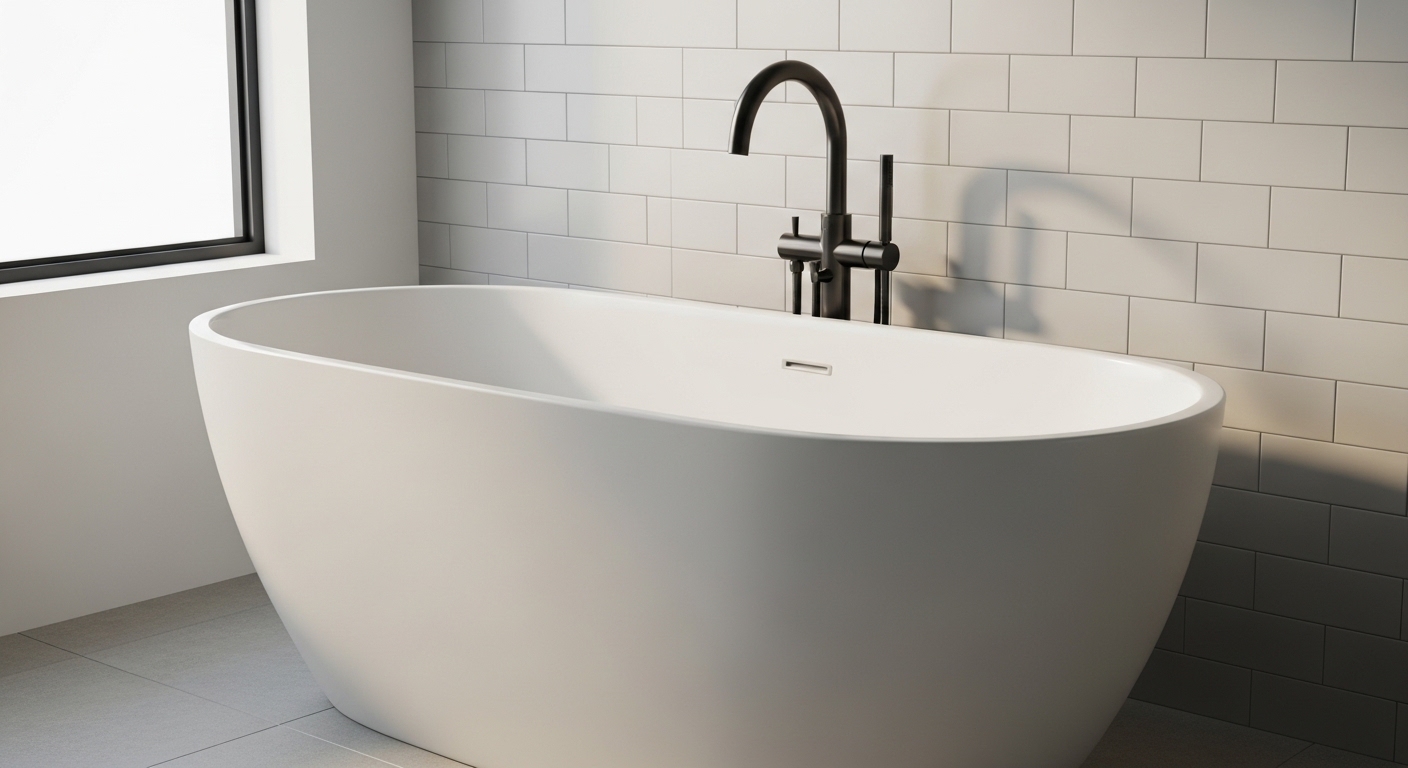
If you’ve been searching for a free standing tub faucet wall mount Delta setup, you’re actually asking two questions at once: does Delta make a wall-mounted filler that suits a freestanding tub, and will it physically work in your bathroom? The honest answer is that “wall mount” and “freestanding tub” aren’t automatically a matched pair — they only work together when the tub is positioned near a wall and your water lines come out of that wall at the right height. Get that relationship right and a wall-mount Delta filler is one of the cleanest, easiest-to-clean, and most budget-friendly ways to fill a soaking tub. Get it wrong and you’ll be staring at a spout that either can’t reach the tub or dumps water over the edge.
Below, we’ll walk through when a wall-mount setup is the right call, how Delta’s relevant faucet lines actually perform, the exact measurements that make or break the install, and how it compares to the floor-mounted freestanding filler most people assume they need. This is the stuff a good plumber tells you before you buy — not after.
Does a wall-mount Delta faucet actually work with a freestanding tub?
It works when the tub is placed against or near a wall and your supply lines are roughed into that wall. A wall-mount tub filler has no floor supply — everything runs behind the drywall, and the spout cantilevers out over the tub. So the tub has to be within reach of that spout.
This is the single biggest misunderstanding people have. A “freestanding tub” just means the tub isn’t built into a surround — it stands on its own feet or a solid base and is finished on all four sides. It does not mean the faucet has to come up out of the floor. Plenty of freestanding tubs are pushed up against a wall precisely so the owner can use a wall-mount filler, which is cheaper to buy, cheaper to rough in, and far easier to clean around than a floor-mounted tower.
The catch: the tub rim has to sit close enough to the wall that the spout clears the edge and pours inside the tub, not onto the rim or the floor. For most Delta wall-mount tub spouts, that means the tub’s outer edge lands somewhere around 3 to 7 inches from the finished wall. Closer than that and a long spout overshoots; farther and a short spout can’t reach.
When should you NOT use a wall-mount setup?
Skip the wall-mount idea entirely if your tub sits in the middle of the room or more than about 8 inches off the wall, or if your rough-in plumbing already comes up through the floor. In those cases you want a freestanding (floor-mounted) tub filler, which is a tall floor tower with the valve and handles built into the riser.
Trying to force a wall-mount filler onto a mid-room tub means either moving the tub (rarely practical) or rerouting plumbing into the wall (expensive). If your slab or joist bays are already committed to a floor rough-in, don’t fight it — buy the floor-mount filler and save yourself a demolition project.
What’s the difference between a wall-mount and floor-mount freestanding tub filler?
The core difference is where the water comes from and how much it costs. A wall-mount filler hides all plumbing in the wall and typically runs $150–$450; a floor-mount freestanding filler is a visible floor tower with an exposed riser and usually costs $350–$1,200+ because it uses far more metal and a more complex valve body.
Here’s how the two stack up on the things that actually matter when you’re standing in the aisle deciding:
| Factor | Wall-Mount Delta Filler | Floor-Mount Freestanding Filler |
|---|---|---|
| Where plumbing runs | Inside the wall | Up through the floor |
| Tub position required | Near a wall (3–7 in.) | Anywhere, incl. mid-room |
| Typical price | $150–$450 | $350–$1,200+ |
| Rough-in difficulty | Easier if wall is open | Harder; floor penetration + bracing |
| Cleaning around it | Easy — nothing on the floor | Harder — dust/hair collect at the base |
| Handheld sprayer option | Common | Common |
| Best for | Tubs against a wall, remodels with open walls | Statement tubs floating in the room |
Neither is “better” in the abstract — they solve different layouts. If your tub hugs a wall, the wall-mount route is almost always the smarter, cheaper choice. If your tub is the centerpiece of a large bathroom, the floor tower is the only thing that reaches it. Before you commit to either, it’s worth understanding the different tub spout connection types so you order a filler that matches your rough-in valve rather than one you’ll have to return.
Which Delta faucet lines fit a freestanding tub against a wall?
Delta’s wall-mount tub filler options mostly come from its Trinsic, Compel, Dryden, and Ashlyn collections, plus the versatile Delta wall-mount Roman tub trims that pair with a rough-in valve body. For a freestanding tub against a wall, you want a wall-mount tub spout (with or without an integrated handheld) matched to the correct in-wall Delta rough-in.
A key thing to understand about Delta specifically: most of their tub fillers are sold as a trim kit plus a separate rough-in valve. The trim is the pretty part you see — spout, handles, finish. The rough-in (often a Delta MultiChoice or dedicated tub valve body) is the brass guts buried in the wall. You buy both. This two-part system is actually a long-term advantage: you can swap finishes or upgrade the trim years later without opening the wall, because the valve stays put.
- Delta Trinsic — sleek, minimalist cylindrical spout; great for modern freestanding tubs; available in Matte Black, Champagne Bronze, Cromo, and Stainless.
- Delta Dryden — angular, geometric styling; transitional bathrooms.
- Delta Ashlyn — softer curves; works with traditional-leaning freestanding tubs.
- Delta Compel — bold, architectural; pairs well with a stand-alone slipper or double-ended tub.
- Wall-mount Roman tub trim + handheld — the most flexible for a tub-against-wall layout, since the spout, controls, and hand shower can be spaced to fit your tub’s exact position.
Whatever line you pick, confirm two specs before ordering: the spout reach (how far it projects from the wall) and the spout height above the tub rim. Delta publishes both in the spec sheet. Match those to your tub’s distance-from-wall and rim height and you’re golden.
What finish holds up best in a bathroom?
For durability and cleaning, Delta’s Matte Black and Champagne Bronze (both use Delta’s brilliance/lumicoat-style finishes) resist water spots noticeably better than polished chrome. Chrome is the cheapest and easiest to source; matte black hides the least fingerprints but shows hard-water film if you never wipe it.
If your home has hard water, finish matters more than people expect — mineral scale is what dulls a spout over time. A matte or brushed finish disguises early scale far better than a mirror polish. If you love the look of a dark filler but worry about upkeep, the same logic that applies to a matte black tub faucet applies here: wipe it dry after long soaks and it’ll look new for years.
What measurements do I need before buying a wall-mount tub filler?
You need four numbers: (1) the height of your tub rim off the finished floor, (2) the horizontal distance from the finished wall to the tub’s near edge, (3) the spout’s required height above the rim, and (4) the spout reach. Get these before you buy, not after the wall is closed.
Here’s the practical sequence most installers follow:
- Set the tub’s final position first. Know exactly where the tub will live — dry-fit it. Everything keys off this.
- Measure rim height. Freestanding tubs commonly sit 22–26 inches tall. Your spout should clear the rim by a couple of inches so it pours cleanly inside.
- Measure wall-to-tub distance. This has to be within the spout’s reach. If your spout reaches 7 inches and the tub edge is 5 inches out, water lands 2 inches inside the rim — perfect.
- Rough in the valve at the right height. Work backward from rim height plus spout clearance. This is the number people get wrong.
- Leave an access point if possible. An access panel behind the wall makes future service painless.
One overlooked detail: air gap and overflow. Building codes (and common sense) want the spout outlet above the tub’s flood-level rim so dirty water can never siphon back into your supply. A wall-mount spout naturally sits above the rim, which makes this easy — but double-check the height rather than assuming.
Is a wall-mount Delta tub filler hard to install yourself?
If the wall is already open and the rough-in valve is set at the correct height, installing the trim is a genuinely doable DIY job — usually an hour or two with basic tools. The hard part is the rough-in plumbing inside the wall, which most people should leave to a plumber unless they’re comfortable with soldering or PEX connections and pressure-testing.
The realistic DIY line is this: trim installation is DIY-friendly; rough-in plumbing usually isn’t. Setting the valve body, running supply lines, bracing everything so it doesn’t shift, and pressure-testing before you close the wall — that’s plumber territory for most homeowners, and it’s cheap insurance against a leak behind finished tile. Once the valve is in and tested, mounting the Delta trim is mostly screwing on the escutcheon, spout, and handles and checking for drips.
If you’re the hands-on type who already tackles projects like learning how to change a faucet in a bathtub, the trim-out step will feel familiar. And if a drip ever shows up down the road, a wall-mount valve is serviceable — you can usually fix it with the right wall mount faucet repair kit instead of replacing the whole assembly.
How much water flow should a tub filler have?
For filling a tub quickly, you want a high-flow filler — ideally 12–20+ gallons per minute at typical household pressure, far more than a regular bathroom faucet. Delta tub fillers are built for volume so a deep soaker doesn’t take 20 minutes to fill.
This is why you don’t use a standard lavatory faucet on a tub. A bathroom sink faucet is flow-restricted to around 1.2–1.5 gpm; a deep freestanding soaker holds 60–80 gallons. Do the math and a low-flow faucet would leave you shivering while the tub creeps full. Tub fillers deliberately skip the aerator restriction and use larger internal passages. When you compare Delta models, note the gpm rating — a higher number means a faster, warmer fill.
What does a wall-mount Delta tub filler cost, and is it worth it?
Expect roughly $150–$450 for the trim plus another $40–$120 for the Delta rough-in valve, so most complete wall-mount setups land between $200 and $550 before labor. Compared with $350–$1,200+ for a floor-mounted freestanding filler, the wall-mount route saves real money — often enough to upgrade your tub or finish.
Is it worth it? For a tub against a wall, almost always yes. You spend less on the faucet, less on rough-in, and you get a bathroom that’s dramatically easier to clean because nothing stands on the floor collecting hair and dust. The main “cost” is flexibility: once the valve is in the wall, the tub’s position is locked. So the value hinges entirely on committing to the layout up front.
If your tub genuinely needs to float in the middle of the room, don’t buy a wall-mount filler just to save money — you’ll end up with a spout that can’t reach the water. Buy the right tool for your layout.
FAQ
Can any freestanding tub use a wall-mount faucet?
No. Only freestanding tubs positioned near a wall (roughly within 3–7 inches, depending on spout reach) can use a wall-mount filler. A tub sitting mid-room or far from the wall needs a floor-mounted freestanding filler because a wall spout physically can’t reach the water.
Does Delta make a dedicated freestanding tub filler?
Yes — Delta makes both floor-mounted freestanding tub fillers (tall floor towers for mid-room tubs) and wall-mount tub spouts/Roman trims for tubs against a wall. For a “free standing tub faucet wall mount Delta” setup specifically, you want the wall-mount spout or Roman tub trim paired with the correct Delta in-wall rough-in valve.
How high above the tub rim should the wall-mount spout sit?
Position the spout so its outlet clears the tub’s flood-level rim by a couple of inches — enough to pour cleanly inside the tub and to keep the outlet above the rim for backflow protection. Set this height during rough-in based on your specific tub’s rim height, which is usually 22–26 inches off the floor.
Do Delta tub fillers come with a warranty?
Delta backs most of its faucets, including tub fillers, with a limited lifetime warranty on the finish and function for residential use, and its valves are tested to industry standards (ASME/NSF) for durability and safe drinking-water contact. Keep your proof of purchase and register the product to make any future claim simple.
Can I convert a floor rough-in to a wall-mount filler?
Technically yes, but it means opening the wall and rerouting supply lines up into it, which is a real plumbing project. Unless the wall is already open for a remodel, it’s usually cheaper and simpler to buy a floor-mounted freestanding filler that matches the rough-in you already have.
What’s the biggest mistake people make with a wall-mount tub filler?
Roughing in the valve before finalizing the tub’s exact position and rim height. If the spout ends up too low, too high, or unable to reach over the rim, you’re stuck opening the wall again. Dry-fit the tub, take all four key measurements, then rough in.
Author note: This guide was written by the fixtures team at avitashome, drawing on years of helping homeowners match tub fillers to real bathroom layouts. We handle these questions daily — from “will this reach my tub?” to “which finish survives hard water?” — and we’ve written it to answer them the way we’d answer a friend standing in their half-finished bathroom.
About avitashome: avitashome (www.avitashome.com) specializes in faucets, tub fillers, shower systems, and bathroom fixtures, curating models that meet U.S. plumbing standards and pairing every product with plain-language buying guidance. We only recommend fixtures we’d install in our own homes, and we prioritize brands like Delta that back their products with strong warranties and tested, code-compliant valves.