 Pagina iniziale di Avitas
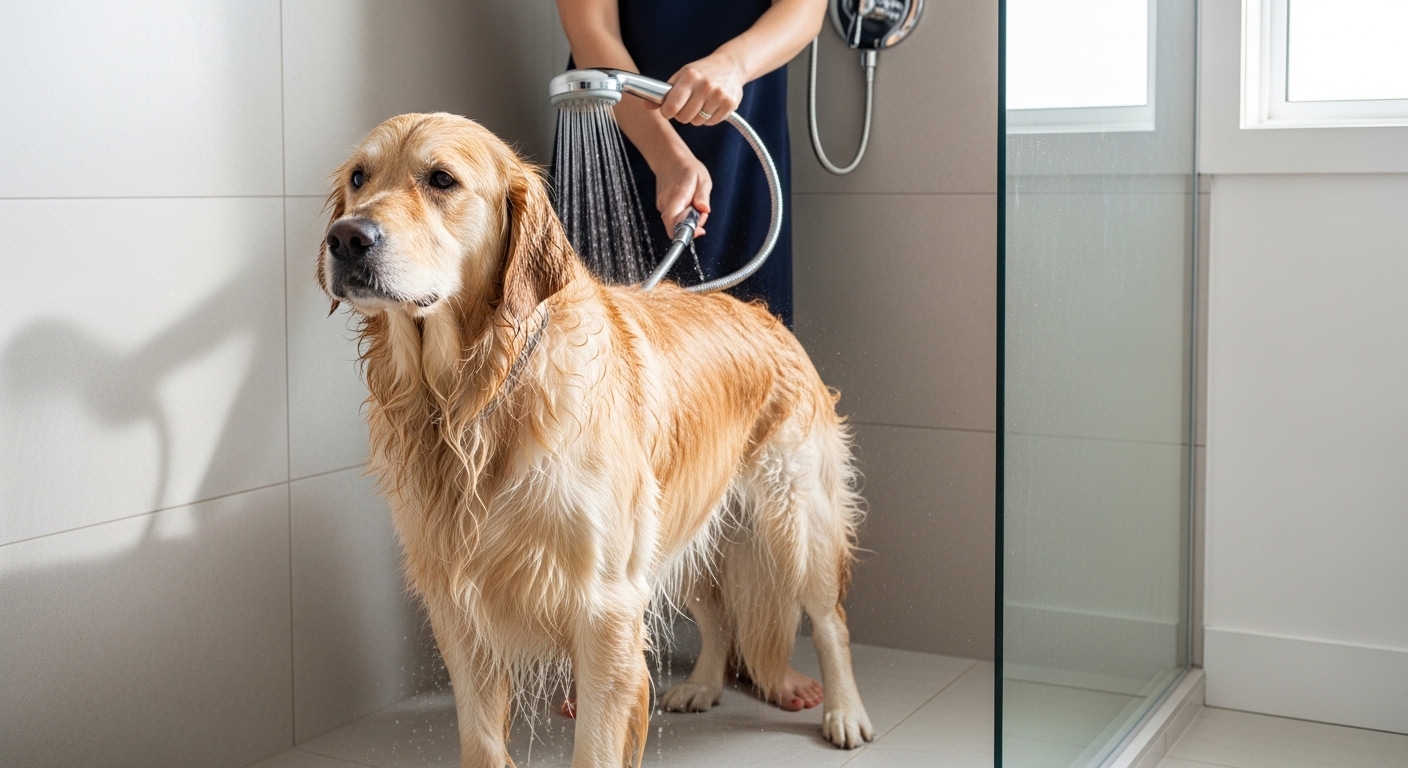
A good handheld shower head for dog wash turns bath time from a wrestling match into a five-minute job. The difference between a generic shower head and one that’s actually good for dogs comes down to three things: a long enough hose to reach a wet, nervous dog standing in the corner of the tub, a pause/trickle button so you can stop the water while you soap up without losing your settings, and a spray pattern soft enough that it doesn’t startle your dog but strong enough to rinse shampoo out of a double coat. Get those three right and everything else is detail.
I’ve bathed enough Labradors, doodles, and one very offended cat to know that the fixture matters more than the shampoo. Below is a straight-talking guide to what to buy, what to skip, and how to set it up — whether you’re rinsing a muddy terrier in a walk-in shower or a senior dog who can’t take cold water.
What makes a handheld shower head good for washing a dog specifically?
A dog-friendly handheld needs a soft full-coverage spray, a long flexible hose, a pause button, and a finish that resists hard-water buildup. Dogs aren’t people — they don’t want a needling massage jet, and they panic at sudden bursts. The goal is gentle, even water that penetrates fur to the skin and rinses fast, because the longer the bath, the more your dog wants out.
Here’s what each feature actually does for you during a real dog bath:
- Hose length (5–6 ft minimum): A dog won’t hold still in the center of the tub. You need slack to reach the belly, the back legs, and that one spot behind the ears without yanking the dog toward the wall.
- Pause / trickle button: The single most underrated feature. You stop the flow to lather, then resume at the exact same temperature and pressure. No re-fiddling the valve, no cold-water shock when you restart.
- Soft “rinse” o “full” spray mode: A wide, aerated pattern covers more dog per second and feels like rain, not a pressure washer. Skip anything whose softest setting is still a focused massage jet.
- Decent pressure with coverage: Sounds contradictory, but you want enough force to drive water through a thick undercoat — just spread across a wide spray so it stays gentle on the skin.
- Easy-clean nozzle: Rubber or silicone spray tips that you can rub clean. Dog washing means shampoo residue and, if you have hard water, mineral scale that clogs jets fast.
- A dock or bracket: Hands-free holding so you can scrub with both hands while warm water keeps running over your dog.
One thing people overlook: the connection material. A solid brass or stainless steel hose fitting survives years of being dropped on a tub floor and tugged by a 70-pound dog mid-shake. Cheap all-plastic connectors crack at the threads, which is exactly where leaks start. If you care about long-term durability, the same logic applies as choosing any fixture — see our breakdown of the best bathroom faucet material for hard water, because the metals that resist corrosion and scale on a faucet are the same ones you want on a shower hose you’ll soak daily.
What’s the right water pressure and spray setting so I don’t scare my dog?
Use the widest, softest spray your head offers and keep water pressure moderate — around 40–60 PSI is plenty. Most household water sits in the 45–60 PSI range, which is fine. The mistake isn’t pressure, it’s the pattern: a narrow jet at any pressure feels harsh to a dog, while a wide rain or “full body” spray at the same pressure feels soothing.
Start water on your own forearm to confirm temperature — lukewarm, around 95–100°F, matching a dog’s body heat. Never start the spray on the head or face. Begin at the shoulders and chest, let the dog feel the water there first, then work down the back, legs, and last the rump and tail. Save the head for a damp cloth or the gentlest trickle, aiming water back and away from the eyes and ears.
If your handheld has a flow restrictor and your home pressure is genuinely low, you can sometimes remove the restrictor washer to boost flow — but for dogs you rarely need to. More flow means faster rinsing, which dogs appreciate, but it also means more water on the floor when they shake.
Handheld shower head for dog wash vs. a dedicated dog sprayer: which should I buy?
If you bathe your dog in a tub or shower you also use, buy a quality dual-purpose handheld shower head — it’s more useful, better built, and looks normal in your bathroom. Buy a dedicated dog-wash sprayer only if you have a separate utility sink, garage station, or outdoor setup where a clip-on diverter sprayer makes sense.
Here’s the honest comparison:
| Option | Best for | Pros | Cons | Typical price |
|---|---|---|---|---|
| Quality handheld shower head | Shared tub/shower, indoor bathing | Long hose, multiple modes, pause button, looks good, doubles as your daily shower | You share the head with the dog (clean it after) | $30–$90 |
| Clip-on dog-wash sprayer wand | Utility sink, garage, low budget | Cheap, sometimes has a soap reservoir, soft rubber tips | Short hose, flimsy plastic, weak pressure, not a real shower | $15–$35 |
| Faucet-diverter sprayer | Laundry/utility faucets | Taps into an existing faucet, no shower needed | Needs the right adapter, limited reach, not for the bathtub | $20–$40 |
| Full pet-grooming station | Frequent bathers, multiple dogs, breeders | Tall, dog-height, built-in restraint, pro spray | Expensive, needs dedicated space and plumbing | $200–$800+ |
For the vast majority of dog owners, a well-chosen handheld in the existing bathroom wins. If you’re going the faucet-diverter route on a utility sink instead, you’ll need to match the threads — our guide to the faucet irrigation adapter and which one actually fits your sink walks through getting that connection right so you’re not standing in the pet store guessing at adapter sizes.
Will a dog-wash handheld fit my existing shower, or do I need a plumber?
In almost every case it’s a five-minute DIY swap with no plumber and no tools beyond your hands and maybe some plumber’s tape. Standard shower arms in the U.S. use a universal 1/2-inch NPT thread, and virtually every handheld kit screws onto that same thread. You unscrew your old fixed head or holder, wrap a couple turns of PTFE (plumber’s) tape on the threads, hand-tighten the new bracket, and connect the hose.
You’ll run into a fork in the road depending on your setup:
- You already have a fixed shower head: Replace it entirely with a handheld-on-a-bracket combo, or add a diverter that lets you switch between the fixed head and the handheld. Easiest upgrade there is.
- You have a tub spout but no shower: You can add a tub-spout diverter or a slip-on handheld that attaches to the tub faucet — handy for bathing dogs who can’t be lifted into a high shower stall.
- You’re bathing in a utility/laundry area: Use a faucet diverter or a dedicated sprayer rather than tapping shower plumbing.
If your water comes out weak, sputters, or the temperature swings while you’re rinsing, the problem is usually upstream of the head — a worn cartridge or valve, not the new handheld. That’s a different (but still doable) job; our walkthrough on how hard a shower rough-in valve replacement really is tells you honestly whether it’s a DIY afternoon or a call to the pros before you blame the shower head.
What finish and material hold up to daily dog baths and hard water?
Choose a brushed nickel or chrome finish over a solid brass or stainless core — those finishes hide water spots, resist corrosion, and wipe clean of shampoo film easily. Polished finishes look great but show every mineral spot, which means more wiping if you have hard water. Matte and brushed finishes are far more forgiving for a fixture that gets soaked and splashed constantly.
Hard water is the real enemy of any shower head, and dog washing accelerates the problem because you’re running the head longer and more often. Mineral scale builds up inside the nozzles and slowly chokes the spray into weak, uneven dribbles. Two defenses: pick rubber/silicone spray tips you can rub the scale off by hand, and soak the head in a 50/50 white vinegar and water solution once a month. If you’re remodeling and want a finish that genuinely lasts, a properly plated handheld pays off — see our look at whether a polished nickel faucet and shower setup is worth it for how finish quality affects longevity in a wet, hard-water bathroom.
Quick finish cheat sheet for dog owners
- Brushed/satin nickel: Best all-rounder. Hides spots, easy to clean, warm tone.
- Cromo: Cheapest durable option, bright, slightly more spot-prone than brushed.
- Matte black: Stylish but shows hard-water residue and soap film clearly — more upkeep.
- Stainless steel hose: The most chew- and tug-resistant hose material; worth it for big or anxious dogs.
How do I actually wash my dog with a handheld, step by step?
Wet, lather, rinse, repeat on the head last — but the order and a few tricks make all the difference. Here’s the routine that keeps dogs calm and gets them genuinely clean:
- Prep: Put a non-slip mat in the tub. Brush out loose fur and mats before water — wet mats tighten and hurt. Have shampoo within reach.
- Set temperature: Test lukewarm water (95–100°F) on your forearm first.
- Wet from the shoulders down: Use the soft wide spray. Start at the chest/shoulders, never the face. Soak the coat to the skin.
- Hit pause and lather: Tap the pause button, set the head in its dock, and massage shampoo in with both hands. Work it down to the skin on double coats.
- Rinse thoroughly: Resume water — same temp, no shock. Rinse until the water runs completely clear. Leftover shampoo is the #1 cause of post-bath itching.
- Face last, gently: Lowest trickle or a damp cloth, water aimed away from eyes and ears.
- Clean the head: Rinse fur and shampoo off the nozzle so it doesn’t clog before next time.
A tip that saves your bathroom: keep the head low and close to the dog’s body the whole time. Spraying from a distance flings water everywhere and triggers the dreaded full-body shake. Close and low keeps the water on the dog and off your ceiling.
How much should I spend on a handheld shower head for dog washing?
You can get an excellent dog-capable handheld for $30–$60; you don’t need to spend more unless you want premium finishes or a stainless hose. Below about $25 you start hitting all-plastic fittings and weak two-mode heads that clog fast. Above $90 you’re paying for designer finishes and brand name, not better dog-washing performance.
Spend your money on the things that matter for dogs: a real pause button, a 6-foot hose, a metal connection, and a soft full-spray mode. Spend less worrying about the number of spray patterns — dogs use exactly one (the soft wide one), and you’ll use maybe two. For broader fixture shopping context, our bathroom faucets buying guide covers how to read finish ratings and warranty terms that apply to handhelds too.
The bottom line
A handheld shower head for dog wash is one of the cheapest, highest-impact upgrades you can make if you bathe a dog at home. Get a quality dual-purpose handheld with a long hose, a pause button, a soft wide spray, and a brass or stainless connection, and you’ve solved 95% of bath-time misery. Add a monthly vinegar soak to fight hard-water clog, keep the spray low and close, and rinse the head after each bath. Your dog gets cleaner faster, you stay drier, and the fixture still works as a perfectly normal shower for you.
FAQ
Can I use my regular shower head to wash my dog instead of buying a handheld?
You can, but it’s frustrating. A fixed overhead spray can’t reach a dog’s belly, legs, or underside, and you can’t direct it precisely, so rinsing takes longer and water goes everywhere. A handheld with a long hose lets you target shampoo out of the coat and rinse the hard-to-reach spots — it’s the single biggest improvement to home dog bathing.
What hose length do I actually need for washing a dog?
Aim for at least 5 feet, and 6 feet is better. A longer hose lets you reach a dog standing anywhere in the tub or shower without pulling it toward you, which matters a lot for nervous or large dogs. Many quality handhelds come with a 5–6 foot stainless or reinforced hose standard.
Will the water pressure hurt or scare my dog?
Not if you use the soft, wide spray mode and keep water lukewarm. Dogs react to harsh, narrow jets and sudden bursts, not to pressure itself. Use the gentlest full-coverage setting, start at the shoulders rather than the face, and keep the head close to the body so the water feels like warm rain.
How do I keep the shower head from clogging if I have hard water?
Pick a head with rubber or silicone spray tips you can rub clean by hand, and soak the head in a 50/50 white vinegar and water solution for an hour about once a month. Dog washing runs the head longer than normal showering, so mineral scale builds faster — regular descaling keeps the spray strong and even.
Is it hygienic to use the same handheld on my dog and on myself?
Yes, as long as you rinse the head after each dog bath. Water and shampoo flow through and out the same nozzles; there’s no internal cross-contamination of concern for a healthy household. Just rinse loose fur and soap off the head when you’re done, and clean it monthly like you would any shower fixture.
Do I need a plumber to install a dog-wash handheld shower head?
Almost never. U.S. shower arms use a universal 1/2-inch thread, so most handheld kits hand-tighten on in about five minutes with a wrap of plumber’s tape — no tools or plumber required. You’d only need professional help if the underlying valve or cartridge is faulty, which is a separate issue from the shower head itself.
About the author: This guide was written by the avitashome fixtures team, drawing on hands-on testing of handheld shower heads across real home bathrooms — including plenty of muddy dogs. We evaluate spray patterns, hose durability, and hard-water resistance the same way we test every shower and faucet we recommend.
About avitashome: avitashome (www.avitashome.com) specializes in faucets, shower systems, and bathroom fixtures. Our recommendations prioritize fixtures that meet recognized plumbing and flow standards (such as ANSI/ASME spray and WaterSense flow benchmarks), use corrosion-resistant brass and stainless components, and carry manufacturer warranties — because a shower head you use on a dog needs to survive years of daily tugging, splashing, and scrubbing.