 Pagina iniziale di Avitas
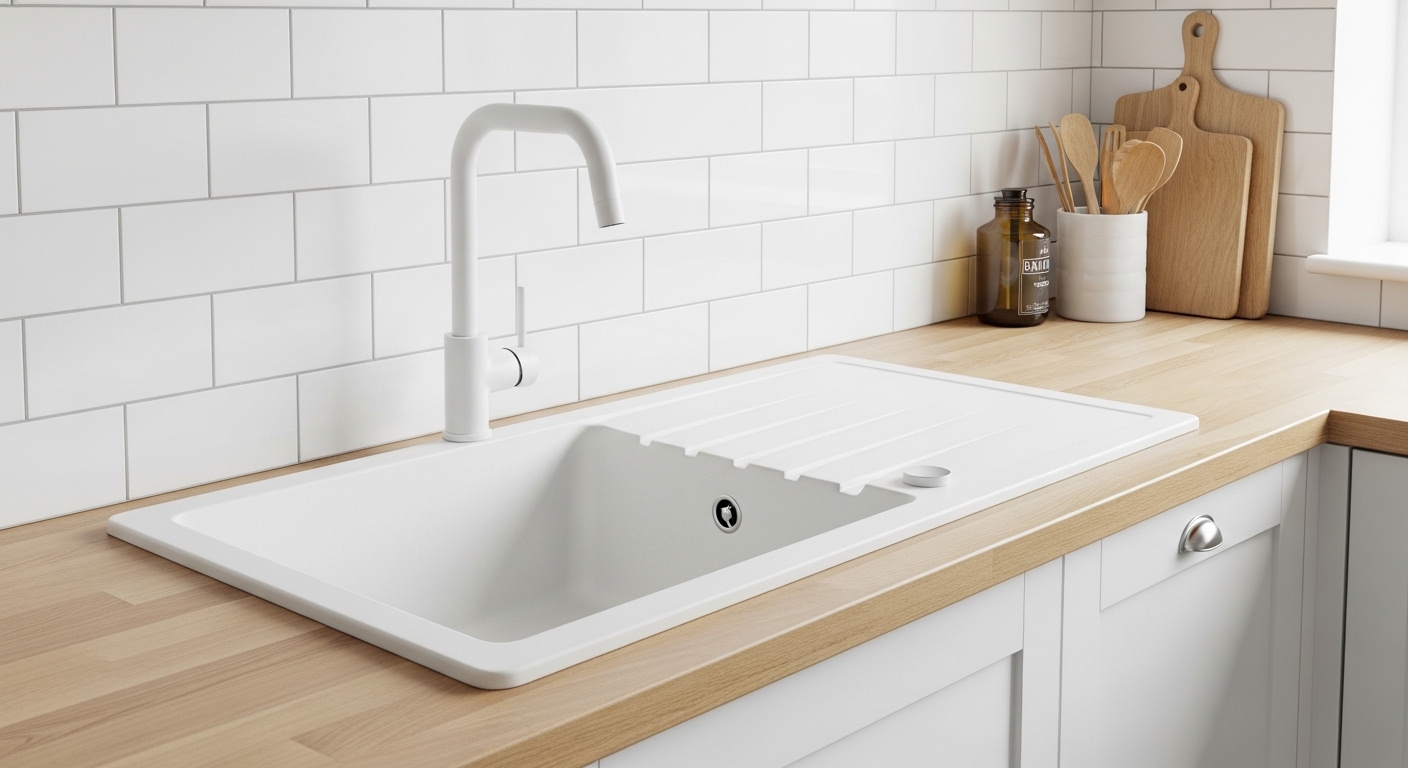
Choosing a white kitchen tap and sink together is one of the most popular kitchen updates we see at avitashome, and for good reason: a matched white set looks crisp, brightens a small kitchen, and pairs with almost any countertop from butcher block to black granite. But “white” hides a lot of important detail — the material under that white surface decides whether your sink still looks new in five years or shows scratches and tea stains by next spring. This guide walks you through exactly what to buy, what to avoid, and how to match the tap to the sink so the two actually look like they belong together.
Below we answer the real questions people ask before buying: which white material lasts, whether white taps stain, how to match the finishes, what it costs, and how to keep the whole thing looking clean. Let’s get into it.
Do white kitchen sinks stain easily, or is that a myth?
White kitchen sinks do not automatically stain — staining depends entirely on the material, not the color. A good fireclay or quartz-composite white sink resists coffee, wine, and turmeric stains very well; it’s the cheap acrylic and “porcelain-look” painted sinks that discolor and scratch. So the fear of staining is half-myth: pick the right material and a white sink stays white for a decade or more with basic care.
Here’s the honest breakdown. White comes in four common sink materials, and they are not remotely equal:
- Fireclay — ceramic clay fired at very high heat with a glazed surface. Extremely stain- and scratch-resistant, heat-tolerant, and the most classic “farmhouse white.” Heavy and rigid, so it can chip if you drop a cast-iron pan directly on the edge.
- Quartz/granite composite — crushed stone bound in resin, with the white color running through the whole material. Hides water spots, resists scratches and stains, and is more forgiving of impacts than fireclay. The most practical white sink for a busy family kitchen.
- Enameled cast iron — heavy iron coated in baked porcelain enamel. Beautiful glossy white and very durable, but the enamel can chip down to the iron, which then rusts. Best for gentle households.
- Acrylic / painted finishes — the budget option. Lightweight and cheap, but scratches easily, scorches under hot pans, and can yellow over time. We generally steer buyers away from these for a long-term install.
The takeaway: if you want white that stays white, your real choice is fireclay versus quartz composite. Both are easy to keep clean — a daily wipe and an occasional baking-soda scrub handle 95% of marks.
Which white kitchen tap material holds up best with hard water?
For hard water, choose a white tap with a solid brass or stainless body underneath the finish, and prefer a matte-white powder coat or PVD-coated white over cheap painted brass. Solid-brass-bodied taps resist the internal corrosion and mineral pitting that destroy zinc-alloy bargain taps within a couple of years, and a quality matte coating wipes free of limescale instead of staining around the spout.
Hard water is the silent killer of kitchen taps. Those white mineral crusts you see around an aerator are calcium and magnesium deposits, and on a poorly made tap they work into the finish and the internal cartridge. A few specifics worth knowing before you buy:
- Look for a ceramic-disc cartridge. Ceramic discs shrug off grit and mineral content far better than rubber washers and are the difference between a drip-free tap and an annual repair.
- Pick a removable, rubber-tipped aerator or spray face. Silicone nozzles let you rub limescale off with a thumb; a fixed metal screen will clog.
- Favor matte white over glossy white in hard-water areas. Matte hides the faint cloudiness that mineral residue leaves behind, so it looks cleaner between deep cleans.
If your home has genuinely hard water, it’s worth reading our deeper dive on the best faucet material for hard water — the same material logic applies to kitchen taps, and it explains why brass and stainless beat zinc alloy every time. Getting the body material right matters more than the color.
Should the tap match the sink exactly, or is contrast better?
You don’t need a perfect color match — and a slight mismatch usually looks worse than a deliberate contrast. The two cleanest looks are: (1) a fully matched all-white tap and sink for a seamless, calm aesthetic, o (2) a white sink paired with a chrome, brushed-nickel, or matte-black tap for an intentional, designer-style contrast. The thing to avoid is two almost-but-not-quite whites sitting side by side.
Whites vary — warm cream, cool bright white, off-white “biscuit.” If your white sink leans warm and you buy a cool bright-white tap, the eye reads it as a mistake. So either commit to one matched white set (easiest when you buy them together), or break the rule on purpose with a different finish entirely. Here’s how the common pairings actually read in a real kitchen:
| Pairing | Look & feel | Best for | Watch-out |
|---|---|---|---|
| White sink + matte white tap | Seamless, soft, modern minimal | Small or all-white kitchens | Match the white tone exactly |
| White sink + chrome tap | Clean, classic, bright | Most kitchens; safest bet | Shows water spots on the tap |
| White sink + brushed nickel tap | Warm, forgiving, low-maintenance | Busy family kitchens | Slightly less “crisp” than chrome |
| White sink + matte black tap | Bold, high-contrast, on-trend | Modern & farmhouse styles | Black can feel dated faster |
One pro tip: pull your cabinet hardware into the decision. If your handles are matte black, a matte-black tap on a white sink ties the room together instantly. Coordinating the tap finish with hardware is a more reliable design move than chasing an exact white-on-white match.
How much should a quality white kitchen tap and sink cost in 2026?
Budget roughly $250–$700 for a quality matched white kitchen tap and sink set in 2026. A durable quartz-composite or fireclay white sink runs about $200–$450 on its own, and a solid-brass-bodied white or contrast tap with a ceramic cartridge adds about $120–$300. Spending under ~$150 for the pair almost always means painted zinc and acrylic — fine for a rental flip, risky for a forever kitchen.
Where the money actually goes:
- Sink material — the single biggest cost driver. Fireclay and thick quartz composite cost more because they last decades.
- Tap internals — a ceramic-disc cartridge and a solid metal body are worth paying for; they prevent drips and finish failure.
- Spray functionality — pull-down sprayers, dual-spray modes, and magnetic docking add convenience and cost.
- Finish quality — a PVD or baked powder-coat white costs more than spray paint but won’t chip or yellow.
If you’re weighing well-known brands at the higher end, our honest breakdowns of the Kraus kitchen faucet lineup and the Moen Doherty kitchen faucet are useful reference points — both brands offer white and contrast finishes, and seeing how their cartridges and warranties compare helps you judge what a fair price looks like.
What size and configuration should I get for my sink setup?
Match the sink to your cabinet width and the tap to your sink layout: a standard 33-inch base cabinet fits most single- and double-bowl sinks, and a tall high-arc pull-down tap suits deep single bowls while a lower-profile tap works better under a window. For most modern kitchens, a deep single-bowl white sink (so big pots fit flat) plus a high-arc pull-down white tap is the most flexible combo.
A few practical sizing rules before you commit:
- Measure cabinet width first. Your sink can’t be wider than your base cabinet interior — a 30″ cabinet generally caps you around a 27″–28″ sink.
- Check tap height against upper cabinets and windows. High-arc taps look great but can hit a windowsill behind the sink; measure the clearance.
- Count your mounting holes. Many white taps are single-hole; if your sink or counter is pre-drilled for three holes, buy a matching white deck plate (escutcheon) to cover the extras.
- Decide undermount vs. top-mount. Undermount white sinks give a sleek, wipe-crumbs-straight-in look but need a solid-surface counter; drop-in white sinks suit laminate and are easier to DIY.
Can I install a white kitchen tap and sink myself?
Yes — a confident DIYer can install a white kitchen tap and sink in an afternoon with basic tools, especially a drop-in sink and a single-hole tap. The job is mostly disconnecting old supply lines, dropping in and sealing the new sink, mounting the tap, and reconnecting water and the drain. Undermount sinks and garbage-disposal hookups are the trickier parts and are where many people call a plumber.
The general sequence is: shut off the water, disconnect and remove the old fixtures, dry-fit the new sink, run a bead of silicone, set the sink, mount the tap from below, connect the flexible supply lines (hot and cold), reconnect the drain assembly, then turn the water back on and check every joint for leaks. Take your time with the seal and the supply-line connections — overtightening is the most common cause of a slow leak or a cracked nut.
If your sink ties into a disposal unit, that adds a few steps. Our full walkthrough on how to install a kitchen faucet and garbage disposal covers that combination start to finish, including the drain plumbing that trips people up. Read it before you start so you’re not making a hardware-store run mid-install.
How do I keep a white tap and sink looking clean long-term?
Keeping white fixtures clean is simple but it has to be consistent: wipe the sink dry after heavy use, do a weekly baking-soda-and-water scrub, and clear limescale from the tap aerator monthly. Avoid abrasive steel-wool pads and harsh bleach on composite and coated surfaces — they dull the finish. White shows everything, which is actually a feature: you see grime early and clean it before it sets.
A realistic maintenance routine:
- Daily: rinse and quick-wipe the sink; a 10-second pass prevents coffee and tea rings.
- Weekly: sprinkle baking soda, add a little water to make a paste, scrub gently with a soft sponge, rinse. This lifts most stains from fireclay and composite without scratching.
- Monthly: unscrew the tap aerator and soak it in white vinegar to dissolve limescale; wipe the spout with a vinegar-damp cloth (not on matte black for long periods).
- As needed: for stubborn marks on white composite, a 50/50 vinegar-water spray left for a few minutes usually does it. Skip bleach on colored composite and on any matte coating.
Stay away from “magic eraser”-type melamine pads on glossy enamel and on matte taps — they’re mildly abrasive and can leave a worn patch you’ll notice precisely because the surface is white.
Quick buyer’s checklist before you click “add to cart”
Before you commit to a white kitchen tap and sink set, confirm these five things: the sink material is fireclay or quartz composite (not acrylic), the tap body is solid brass or stainless with a ceramic-disc cartridge, the white tones genuinely match (or you’ve chosen a deliberate contrast finish), the sink fits your cabinet width, and the set carries a real warranty. Tick all five and you’ll have a combo that still looks sharp years from now.
FAQ
Is a white kitchen tap and sink hard to keep clean?
No harder than any other finish, and arguably easier to maintain well because white shows grime early so you catch it before it sets. A daily wipe plus a weekly baking-soda scrub keeps a quality fireclay or composite white sink looking new. The main rule is to avoid abrasive pads and harsh bleach on coated and composite surfaces.
What’s the most durable white kitchen sink material?
Fireclay and quartz/granite composite are the two most durable white sink materials. Fireclay offers the classic glazed farmhouse look with excellent stain and heat resistance, while quartz composite has the color running all the way through and handles impacts and scratches a bit more forgivingly. Both comfortably outlast acrylic or painted sinks.
Do white taps turn yellow over time?
Quality white taps with a PVD or baked powder-coat finish over a brass or stainless body do not yellow. Yellowing is a problem with cheap spray-painted finishes over zinc alloy, which break down with UV exposure and hot water. Buying a tap with a proper coating and a solid metal body is what prevents discoloration.
Can I pair a white sink with a chrome or black tap?
Absolutely — a white sink with a chrome, brushed-nickel, or matte-black tap is one of the most reliable looks because the contrast is intentional rather than an almost-match. Chrome reads clean and classic, brushed nickel hides water spots best, and matte black makes a bold modern statement. Coordinate the tap with your cabinet hardware for a pulled-together result.
What size kitchen tap fits a standard white sink?
Most white sinks accept a standard single-hole or three-hole tap; check how many pre-drilled holes your sink has before buying. A high-arc pull-down tap suits deep single-bowl white sinks, while a lower-profile tap is better if there’s a window or shelf behind the sink. If your sink has extra holes, a matching white deck plate covers them.
Is a matched white set better than buying the tap and sink separately?
Buying a matched set is the safest way to guarantee the white tones agree, which is the most common mismatch problem. If you buy separately, either confirm both pieces use the same white tone or deliberately choose a different tap finish for contrast. The worst outcome is two slightly different whites sitting next to each other.
About the author & why trust avitashome
Author note: This guide was written by the avitashome fixtures team, drawing on years of hands-on testing of kitchen taps and sinks across real installations and hard-water households. We’ve installed, stress-tested, and lived with white fixtures in everything from compact apartment kitchens to busy family homes, so the advice here reflects what actually holds up — not just spec sheets.
avitashome specializes exclusively in faucets, sinks, showers, and bathroom fixtures, which is why we can get this specific. Every product we recommend is evaluated against industry standards for cartridge durability and finish adhesion, and we favor taps and sinks backed by genuine manufacturer warranties — many quality white taps carry limited lifetime warranties on the finish and ceramic cartridge, and reputable fireclay and composite sinks are tested for heat, stain, and impact resistance before they reach your kitchen. When you’re investing in a fixture you’ll touch every single day, that testing and warranty backing is what separates a smart buy from a quick regret.