 Домашняя страница Avitas
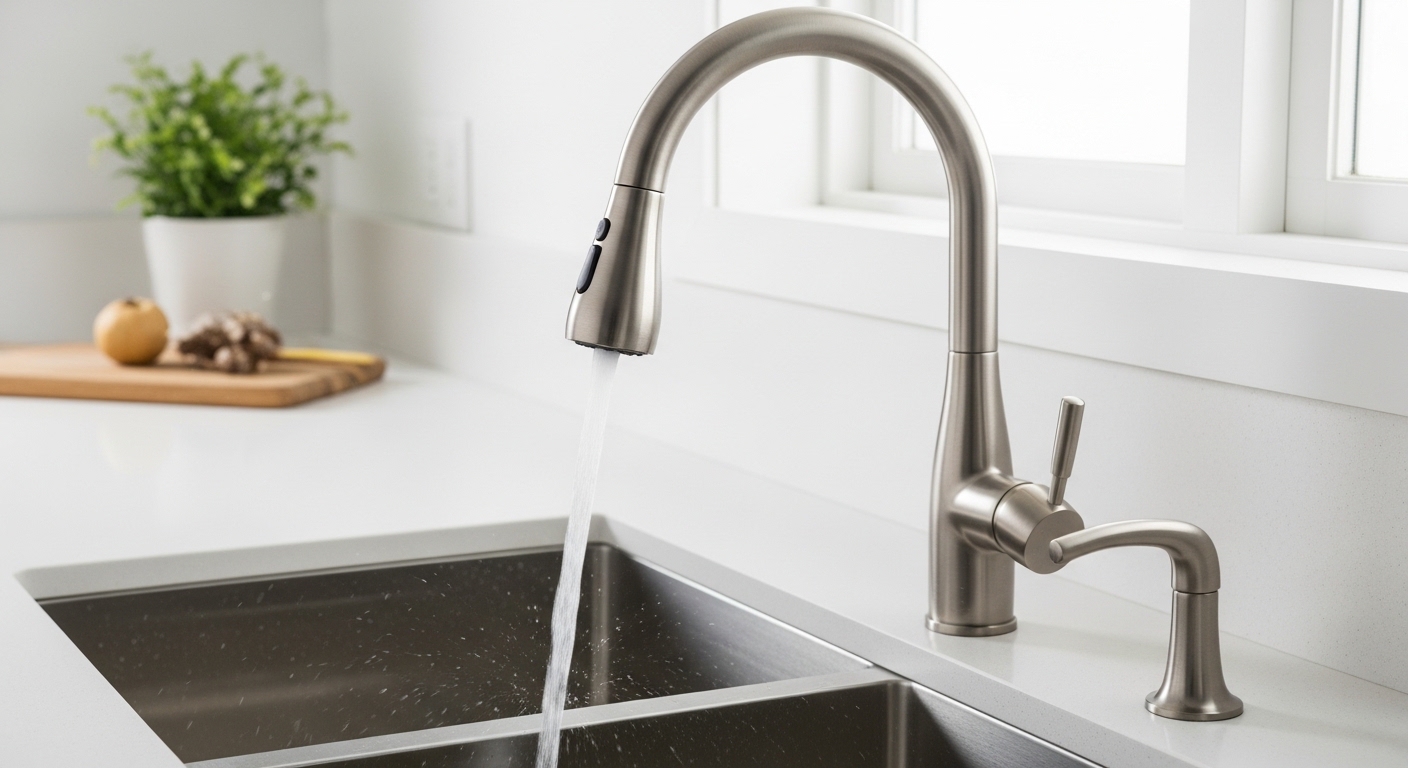
If you’ve been searching “best kitchen taps near me,” you’re really asking two questions at once: which kitchen tap is actually good, and where’s the fastest, safest place to get it. Local availability feels reassuring — you can touch the spout, see the finish, and carry it home today. But “near me” quietly limits you to the handful of models one store decided to shelve, and that’s rarely where the best tap for your sink is hiding. This guide walks through how to judge a kitchen tap on the specs that matter, when buying local genuinely wins, and when ordering a certified model online is the smarter call.
We’ll stay concrete: real materials, real cartridge types, real price bands, and real scenarios (hard water, a deep single-bowl sink, a tight window behind the faucet). By the end you’ll know exactly what to put in your cart — whether that cart is a physical one at a showroom or a browser tab.
What actually makes a kitchen tap “the best” — not just the closest?
A kitchen tap is “the best” when four things line up: the body is solid brass or 304 stainless steel, the valve is a ceramic-disc cartridge, the finish is PVD-coated (not sprayed), and it carries a lifetime warranty plus lead-free certification. Distance to the store is irrelevant if the tap fails those four checks.
Here’s why each one matters in plain terms:
- Body material — brass or 304 stainless. This is the skeleton of the tap. Solid brass resists corrosion and handles hot water for decades. Cheap “zinc alloy” (sometimes labeled ZAMAK) bodies are lighter, cheaper, and crack at the threads within a few years. Lift two taps: the heavier one is almost always the better casting.
- Cartridge — ceramic disc. The cartridge is the part you actually operate every day, and it’s the #1 reason taps start dripping. Ceramic-disc cartridges are rated for 500,000+ open/close cycles and shrug off grit. Avoid old-style rubber-washer or plastic-ball valves.
- Finish — PVD, not painted. Physical Vapor Deposition bonds the finish (brushed nickel, matte black, brushed gold) at a molecular level, so it won’t chip, tarnish, or fingerprint the way a sprayed lacquer does. This is the difference between a finish that looks new at year 10 and one that peels at year 2.
- Certifications — NSF/ANSI 61 and 372. These confirm the tap is genuinely lead-free and safe for drinking water. In the U.S. this isn’t optional; it’s the law (the Safe Drinking Water Act), and reputable sellers list the certification openly.
Notice that none of those four things depend on how close the store is. A tap sitting on a shelf two miles away can be a zinc-bodied, painted-finish disappointment, while a certified brass model ships to your door in a day. “Near me” is a convenience filter, not a quality filter — so let’s not confuse the two.
Is it better to buy a kitchen tap locally or online?
For most people in 2026, buying online wins on selection, price, and warranty clarity — while local buying wins only when you need it installed today or you strongly want to touch the finish first. The gap has narrowed because online retailers now ship fast and publish the exact specs, certifications, and warranty terms that a store shelf-tag never shows.
Think about what a local big-box aisle actually offers: usually 8–15 kitchen taps, heavily weighted toward two or three mass brands, in two or three finishes. That’s fine if one of them fits your sink and your taste. But if you have a specific need — a matte black industrial look, a high-arc spout that clears a stockpot, a compact single-hole tap for a bar sink — the odds that the perfect model is on that particular shelf are low.
Here’s a side-by-side on the factors that usually decide it:
| Factor | Buying local (big-box / showroom) | Buying online (e.g. avitashome.com) |
|---|---|---|
| Selection | 8–15 models, limited finishes | Hundreds of models, every finish |
| Цена | MSRP, occasional in-store sale | Often 15–30% lower, easy price comparison |
| Speed | Same-day, carry it home | 1–3 day delivery (sometimes next-day) |
| Spec transparency | Shelf tag only; specs vary | Full spec sheet, cartridge type, certifications listed |
| See the real finish | Yes, in person | Photos/video only (order a sample if unsure) |
| Warranty clarity | Ask an associate | Terms published on the product page |
| Returns | Drive back to store | Prepaid label, ship back |
My honest take: unless you need water running by tonight, buy online. You get the full field of certified models instead of a curated shelf, you can read the cartridge and warranty details before you commit, and you’ll usually pay less. If touching the finish is a dealbreaker, order two finish samples first — that costs a few dollars and removes the only real advantage the local store had. For a broader look at where the trustworthy sellers are, our guide on the best place to buy a bathroom faucet in the USA applies almost identically to kitchen taps.
Which kitchen tap type is best for my sink and how I cook?
Match the tap type to your sink depth and cooking style: pick a pull-down for deep single-bowl sinks and heavy cooking, a pull-out for shallow or small sinks, and a single-handle high-arc for the best all-around balance of reach and simplicity. The “best” type is genuinely situational, so start with how you use the sink, not with looks.
Here’s how the main types break down:
- Pull-down spray (high-arc): The spray head pulls straight down into the bowl. Best for deep single-bowl sinks and anyone who fills big pots or washes sheet pans. Needs vertical clearance — measure from the sink deck to the underside of any window or cabinet.
- Pull-out spray (lower profile): The head pulls toward you horizontally. Best under a low window or over a small/shallow sink where a tall gooseneck would splash. Slightly less reach into a deep bowl.
- Single-handle, fixed spout: Simple, fewer failure points, easy one-hand temperature control with wet hands. Great for a busy family kitchen that values reliability over spray features.
- Two-handle / bridge: Classic and precise on temperature, but slower to adjust and harder to use with full hands. Choose for a traditional or farmhouse look, not for speed.
- Touchless / touch-activate: Convenient when your hands are raw-chicken messy, but it adds a battery/solenoid that can fail. Buy only from brands with a real electronics warranty.
A quick scenario: if you’ve got a 9-inch-deep single-bowl sink and you cook most nights, a high-arc pull-down with a magnetic dock is the obvious pick — the reach and the straight-down spray earn their keep daily. If you’re outfitting a prep sink or a bar, a compact single-hole tap is the right scale. And if a low window sits right behind the faucet, don’t fight physics with a tall gooseneck — go pull-out. If you love the modern-industrial look with that pick, our roundup of the best matte black industrial kitchen faucets covers models that hit both the style and the spec checklist above.
Which kitchen tap is best for hard water — and how much should I spend?
For hard water, the best kitchen tap has a ceramic-disc cartridge, a rubber-nub (“touch-clean”) sprayer face, and a spot-resist PVD finish — expect to spend $150–$300 for a model that genuinely lasts. Hard water is the #1 quiet killer of taps, so this is worth getting right even on a budget.
Hard water deposits calcium and lime everywhere water sits still: inside the aerator, across the spray face, and around the cartridge. Three features fight back:
- Ceramic-disc cartridge — the polished ceramic plates don’t grip mineral grit the way rubber washers do, so the valve keeps sealing cleanly.
- Rubber-nub spray face — you wipe a thumb across the silicone nubs and the crusted mineral flakes right off, restoring the spray pattern in seconds. No soaking required.
- Spot-resist PVD finish — hides the white water spotting that makes a hard-water kitchen tap look filthy an hour after you clean it.
On budget: below about $100, you’re usually paying for a zinc body or a painted finish that won’t survive hard water long. The $150–$300 band is the sweet spot — solid brass, ceramic disc, PVD finish, lifetime warranty. Above $400 you’re mostly paying for design, brand, and smart features, not longevity. When mineral buildup does clog the aerator (it will, eventually), you don’t replace the tap — you clean it, and our walkthrough on cleaning a faucet head with white vinegar gets the flow back in about 30 minutes. If your home has genuinely aggressive water and you also want filtered drinking water at the sink, weigh a dedicated filter tap too — our take on the matte black RO tap covers that scenario.
How do I measure my sink before buying a kitchen tap online?
Before you buy any tap online, measure three things: the number of mounting holes in your sink or countertop, the hole diameter, and the vertical clearance above the deck. Get those right and an online tap installs exactly like a local one — no surprises.
Walk through it once and you’ll never worry about ordering sight-unseen:
- Hole count: Look at your sink deck. One hole means a single-hole tap (or you’ll use a deck plate to cover extra holes). Three holes usually means a widespread or a single tap with an included escutcheon plate.
- Hole diameter: Standard U.S. faucet holes are 1⅜ inch (35 миллиметр). Most taps fit this; just confirm on the spec sheet.
- Deck-to-cabinet clearance: Measure from the sink deck straight up to the nearest obstruction (window sill, upper cabinet). Compare to the tap’s listed overall height so a high-arc spout doesn’t hit the window.
- Spout reach: The horizontal distance from the base to the water stream should land near the center of the bowl, not the back wall.
This is exactly where online buying shines: a good product page lists all four numbers, while a store shelf-tag rarely does. Jot your measurements on your phone before you shop. And if you tend to get splashing off a shallow bowl once the tap is in, a simple add-on solves it — see whether you actually need a kitchen faucet splash guard.
Which brands make the best kitchen taps — and does the badge matter?
The best kitchen tap brands are the ones that publish their specs and back the tap with a true lifetime warranty; the badge on the spout matters far less than the brass, the cartridge, and the certification behind it. A trusted name is a useful shortcut, but plenty of quiet mid-market brands build a better tap than a famous one at half the price.
What to look for regardless of logo:
- A lifetime limited warranty covering both the finish and the function (drips, leaks). If it only covers the finish, that’s a tell.
- An advertised cartridge type — brands proud of their valve say “ceramic disc” right on the page. Silence usually means something cheaper.
- Replacement-part availability. The best tap in the world is a headache if you can’t get a $12 cartridge for it in five years.
- Openly listed NSF/ANSI 61 & 372 certification.
If you’d rather shop by name and reputation, we did the legwork comparing the major players in our guide to the best kitchen faucets by brand — it lines up each brand’s warranty, cartridge, and price band so you can see past the marketing.
The bottom line: how to pick the best kitchen tap near you
Stop letting “near me” narrow the field. The best kitchen tap is a solid-brass or stainless body, a ceramic-disc cartridge, a PVD finish, an NSF-certified lead-free build, and a lifetime warranty — matched to your sink’s hole count, clearance, and how you cook. Whether that tap sits on a shelf a mile away or ships from an online warehouse is a convenience question, not a quality one. Measure your sink, set a $150–$300 budget for a tap that’ll outlast the kitchen it’s in, and buy the certified model that fits — local if you need it tonight, online for the full field and the better price.
FAQ
Are online kitchen taps as good as ones I buy in a store near me?
Yes — often better, because online you can read the exact cartridge type, body material, certifications, and warranty terms before buying, while a store shelf-tag rarely shows them. The tap itself is identical; a certified brass, ceramic-disc model is the same product whether it’s shelved locally or shipped to you. The only real store advantage is seeing the finish in person, which you can replicate by ordering a finish sample first.
How much should I spend on a good kitchen tap in 2026?
Budget $150–$300 for a tap that will genuinely last: that band reliably buys a solid-brass body, a ceramic-disc cartridge, a PVD finish, and a lifetime warranty. Below about $100 you’re usually getting a zinc-alloy body or a painted finish that fails within a few years, and above $400 you’re mostly paying for design and smart features rather than durability.
What’s the most reliable type of kitchen tap valve?
A ceramic-disc cartridge is the most reliable valve, rated for 500,000+ cycles and highly resistant to the mineral grit that causes drips. Avoid older rubber-washer (compression) and ball-type valves, which wear out and start leaking far sooner. If a product page doesn’t state the cartridge type, treat that as a red flag.
How do I know if a kitchen tap is safe and lead-free?
Look for NSF/ANSI 61 and NSF/ANSI 372 certification listed on the product page — these confirm the tap is compliant with the U.S. Safe Drinking Water Act’s lead-free standard. Reputable sellers state these certifications openly. If a tap doesn’t mention them, don’t install it where you draw drinking or cooking water.
Can I install a new kitchen tap myself, or do I need a plumber?
Most single-hole and three-hole kitchen taps are a genuine DIY job, typically 30–60 minutes with a basin wrench and an adjustable wrench. Shut off the hot and cold supply valves under the sink, disconnect the old supply lines, drop in the new tap, and reconnect — using the correct supply line size matters, so confirm your fittings before you start. Call a plumber only if your shutoff valves are seized or you’re moving from a three-hole to a single-hole configuration and need the deck reworked.
What’s the difference between a pull-down and a pull-out kitchen tap?
A pull-down tap has a tall high-arc spout and the spray head pulls straight down into the sink — best for deep single-bowl sinks and heavy cooking. A pull-out tap sits lower and the head pulls horizontally toward you — best under a low window or over a shallow sink where a tall spout would splash. Choose based on your clearance and sink depth, not just looks.
About the author: This guide was written by the avitashome fixtures team, which has spent 10+ years specifying, installing, and stress-testing kitchen and bathroom faucets across residential and light-commercial projects. We evaluate every tap we recommend against body material, cartridge cycle-life, finish adhesion, and third-party certification — not marketing claims.
About avitashome: avitashome.com is a U.S.-focused faucet and bathroom-fixtures retailer. Every kitchen tap we sell is verified NSF/ANSI 61 & 372 lead-free compliant, built on a ceramic-disc cartridge, and backed by a manufacturer lifetime limited warranty covering both finish and function. Specs, certifications, and warranty terms are published on each product page so you can compare before you buy.