 Домашняя страница Avitas
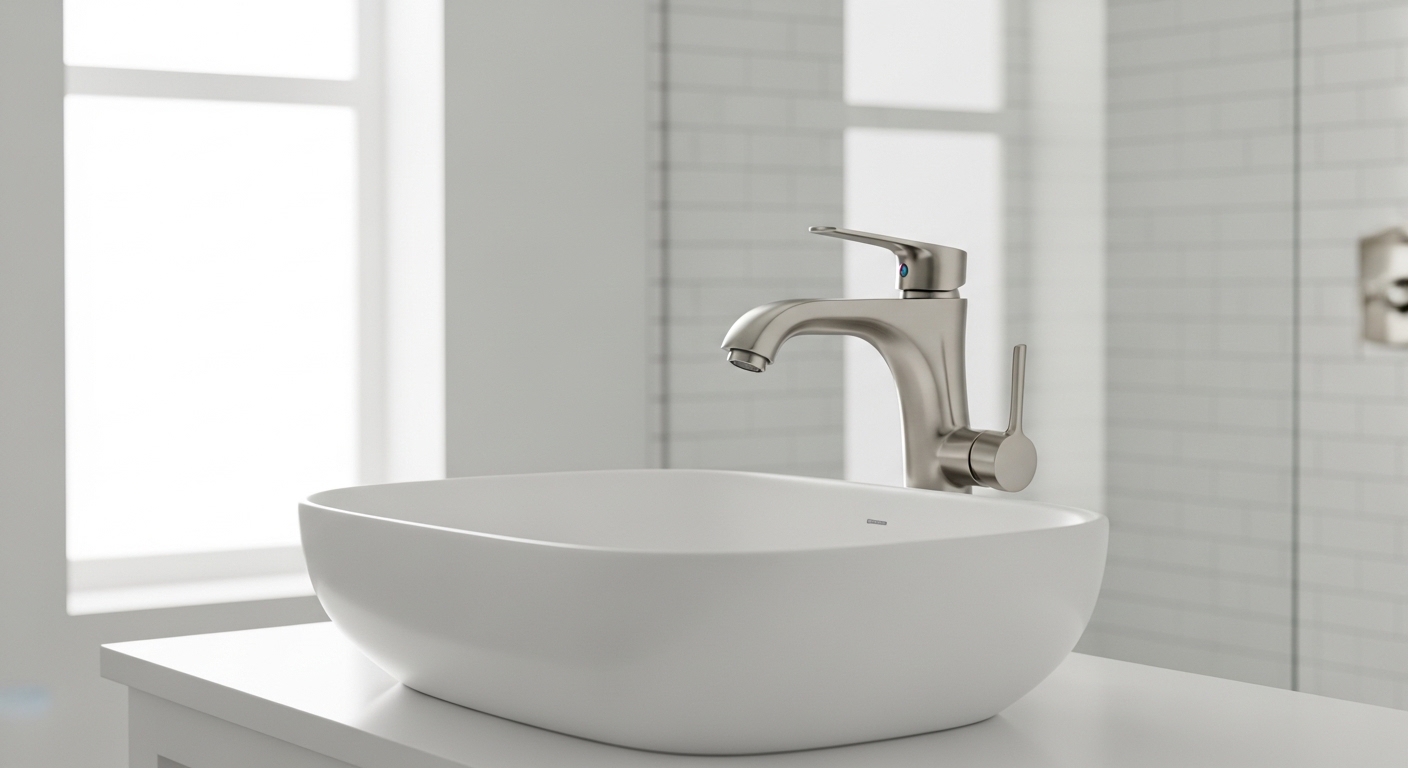
If you’ve been staring at a tiny vanity wondering whether the elate single hole faucet will actually fit and look right, the short answer is that it’s one of the easiest upgrades you can make. A single-hole faucet combines the spout and the mixing handle into one body that drops through a single 1.25″–1.5″ hole in your sink or countertop. That means less clutter, faster installation, and easier cleaning — which is exactly why single-hole designs have become the default for modern bathrooms and small powder rooms.
Below, I’ll walk you through who this faucet is right for, how it compares to widespread and centerset styles, what specs actually matter, and how to install it without calling a plumber. I’ve spec’d, installed, and returned enough faucets over the years to know where the real trade-offs hide — so let’s get into the questions people actually ask.
What exactly is a single hole faucet, and how is it different from a widespread one?
A single hole faucet is a faucet where the spout and the control handle live in one unit that installs through a single hole in the sink or counter. A widespread faucet, by contrast, uses three separate holes — hot handle, spout, cold handle — spaced 8 inches or more apart. A centerset splits the difference: three components on a 4-inch base plate.
The Elate line falls squarely in the single-hole category, which matters for three practical reasons:
- Fewer holes to drill or match. If your sink has one pre-drilled hole (most modern vessel and undermount sinks do), it’s a direct fit.
- Faster install. One mounting nut, two supply lines, done — usually 20–30 minutes.
- Easier cleaning. One base means no grimy gaps between three separate pieces.
The catch: if your existing sink or countertop already has three holes (a common leftover from an older widespread setup), you’ll see two empty holes flanking the faucet. That’s not a dealbreaker — you cover them with a deck plate (escutcheon) or hole covers. If you’re in that situation, our guide on what a brushed nickel faucet hole cover is and how to pick the right one walks through exactly how to hide those extra holes cleanly.
Who should buy the Elate single hole faucet — and who shouldn’t?
Buy it if you have a small-to-medium vanity, a vessel sink, or a single pre-drilled hole and you want a clean, one-handle look. Skip it if your heart is set on the spread-out, traditional look of two separate hot/cold handles, or if your sink is drilled for widespread and you’d rather not use a deck plate.
Here’s the honest breakdown of the ideal buyer:
- Small bathrooms and powder rooms — a single hole faucet takes up the least deck space, so it leaves room around the sink.
- Vessel sink owners — most vessel sinks are drilled for exactly one hole, making this a natural match. If you’re shopping for the sink too, keep an eye on a vessel sink faucet sale that’s actually worth buying.
- Renters and DIYers — one mounting point means a genuinely beginner-friendly install.
- Anyone who hates cleaning — one base, fewer crevices, less scrubbing.
The one group that should pause: households that specifically want independent hot and cold controls (some people prefer dialing each side separately). A single-handle mixer trades that for one-motion convenience. For most people that’s an upgrade, not a loss — but it’s a real preference difference worth naming.
Single hole vs. centerset vs. widespread: which faucet layout fits my sink?
Match the faucet to the number of holes already in your sink or counter. One hole → single hole faucet. Three holes 4″ apart → centerset. Three holes 8″+ apart → widespread. Here’s how the three stack up on the things that matter:
| Feature | Single Hole (Elate) | Centerset | Widespread |
|---|---|---|---|
| Holes required | 1 | 3 (4″ spread) | 3 (8″+ spread) |
| Best for | Small vanities, vessel sinks | Standard bathroom sinks | Large vanities, high-end baths |
| Install difficulty | Easiest (20–30 min) | Moderate | Hardest (multiple connections) |
| Temperature control | One handle (mix) | One or two handles | Two separate handles |
| Typical price range | $80–$180 | $70–$200 | $150–$400+ |
| Cleaning effort | Lowest | Medium | Highest |
Bottom line: if your sink already has one hole, the decision is basically made for you. If you’re buying a new sink too, single-hole is the lowest-hassle path unless you specifically want the widespread look.
What specs actually matter on the Elate single hole faucet?
Focus on four things: the valve/cartridge, the body material, the flow rate, and the finish. Everything else is secondary. Here’s what to look for and why.
Cartridge and valve
Look for a ceramic-disc cartridge. This is the single biggest predictor of whether a faucet drips in year three. Ceramic discs resist wear and hard-water grit far better than old rubber-washer designs. A quality single hole faucet like the Elate should use ceramic — and that’s the part you want the warranty to cover. If it ever does start dripping years later, the cartridge is usually a cheap, swappable part; our guide to cartridge replacement shows the same principle that applies to any single-handle mixer.
Body material
Prefer solid brass over zinc alloy. Brass resists corrosion, handles hot water without warping, and simply lasts longer. It’s heavier in the hand — a good quick test of quality when you unbox it. Lead-free brass that meets NSF/ANSI 61 and the U.S. “lead-free” standard (≤0.25% weighted average) is what you want for drinking-safe water.
Flow rate
Most modern bathroom faucets are capped at 1.2 GPM (gallons per minute) to meet water-efficiency rules; some regions like California and Colorado require it. That’s plenty for hand-washing and gives you lower water bills. The aerator does this work, and it’s the part you clean when flow drops.
Finish
Common Elate finishes include brushed nickel, matte black, chrome, and brushed gold. Brushed finishes hide water spots and fingerprints best; polished chrome shows everything but wipes clean instantly. Matte black looks striking but shows hard-water scale, so it wants regular wiping in mineral-heavy areas.
How do I install a single hole faucet myself?
You can install a single hole faucet in about 20–30 minutes with basic tools — no plumber required. The whole job is: shut off water, drop the faucet through the hole, tighten one mounting nut, connect two supply lines, and test. Here’s the step-by-step:
- Shut off the water. Turn the two shutoff valves under the sink clockwise until they stop. Open the old faucet to release pressure.
- Remove the old faucet (if replacing). Disconnect the supply lines, loosen the mounting nut, and lift it out.
- Feed the new faucet through the hole. Drop the supply lines and threaded shank through the single deck hole. Some models include a rubber gasket that seats on top — use it.
- Secure the mounting nut. From underneath, thread on the mounting hardware and tighten. Keep the faucet straight while you snug it down.
- Connect the supply lines. Attach the hot and cold braided supply lines to the shutoff valves. Hand-tighten, then a quarter turn with a wrench — don’t overtighten.
- Turn water on and test. Open the valves slowly, run the faucet, and check every connection for drips.
Two things that trip people up: first, confirm your supply line size and connection type before you start — a mismatch means a second trip to the store. Our breakdown of the most common faucet supply line size tells you exactly what fits. Second, if water flow seems weak after install, don’t panic — it’s almost always debris caught in the aerator, and knowing your faucet aerator thread size lets you unscrew, rinse, and reseat it in seconds.
How much should I pay, and where’s the value?
Expect to pay $80–$180 for a quality single hole faucet with a solid-brass body, ceramic cartridge, and a lifetime finish warranty. Below $60, you’re usually looking at zinc bodies and rubber-washer valves that drip sooner. Above $250, you’re paying for designer branding more than function.
The sweet spot for the Elate single hole faucet sits right in that $80–$180 window, where you get the materials that actually determine longevity without the premium-brand markup. When you compare, weigh these value factors:
- Warranty — a lifetime finish-and-function warranty signals the maker trusts the build.
- Cartridge type — ceramic disc, not rubber washer.
- Included hardware — supply lines and a pop-up drain in the box save you $20–$40.
- Certifications — cUPC / NSF listings mean it’s been independently tested to U.S. plumbing code.
If you want a broader look at where and how to shop faucets in the U.S. market — return policies, shipping, and what “value” really means — our guide to the best place to buy a bathroom faucet in the USA is a good companion read.
Author note & why you can trust this
This guide was written by the avitashome fixtures team — we sell, spec, and pressure-test faucets for a living, and we install our own products before we recommend them. Every faucet we stock is checked against U.S. plumbing standards (cUPC/NSF listings and the federal lead-free requirement), and we prioritize models backed by a manufacturer warranty on both finish and function. When we say a single hole faucet should have a ceramic cartridge and a brass body, it’s because those are the two parts that come back as warranty claims when they’re skimped on. Our goal is a faucet you install once and forget about — not one you’re troubleshooting in two years.
FAQ
Will an Elate single hole faucet fit my existing 3-hole sink?
Yes, with a deck plate. A single hole faucet mounts through the center hole, and a matching deck plate (escutcheon) covers the two outer holes so nothing looks unfinished. Confirm your holes are on a standard 4″ centerset spacing so a standard deck plate lines up, or use individual hole covers.
What size hole does a single hole faucet need?
Most single hole faucets fit a standard 1.25″ to 1.5″ diameter deck hole, which is the standard opening on nearly all pre-drilled bathroom sinks and countertops. Always check the spec sheet for the exact minimum hole size before drilling a new counter.
Is a single-handle faucet good for controlling water temperature?
Yes — a single handle mixes hot and cold in one motion, so you set temperature by rotating left-to-right and volume by lifting up and down. Many people find this faster and more intuitive than adjusting two separate handles, especially with wet or soapy hands.
Do single hole faucets drip more than other types?
No — drips come from the cartridge, not the number of holes. A single hole faucet with a ceramic-disc cartridge is just as reliable as any widespread model. If one ever does drip, replacing the cartridge is a quick, inexpensive fix rather than a whole-faucet replacement.
What’s the water flow rate on a modern single hole bathroom faucet?
Most are capped at 1.2 GPM to meet water-efficiency standards, and some U.S. states require it. That’s ample for hand-washing and lowers your water bill. If flow feels weak, clean the aerator first — mineral buildup there is the usual culprit, not the faucet itself.
Can I install a single hole faucet without a plumber?
Yes. It’s one of the most DIY-friendly plumbing jobs — one mounting nut and two supply-line connections, typically 20–30 minutes with an adjustable wrench and a bucket. Just shut off the water first and check the connections for leaks before you finish.