 Pagina iniziale di Avitas
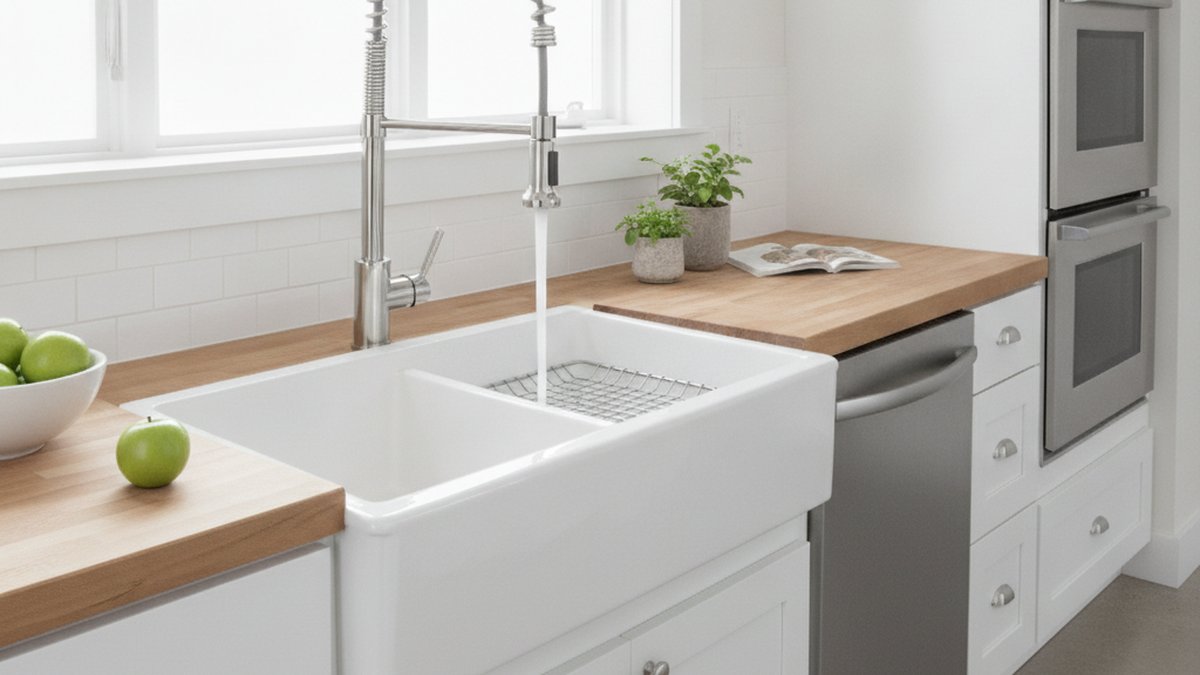
A commercial kitchen faucet delta setup usually means one of two things: a real foodservice-rated faucet for a working kitchen, or the tall “pro-style” spring-coil faucet everyone loves in a home kitchen because it looks like a restaurant line. Delta makes both, and picking the wrong category is the most common (and most expensive) mistake people make. This guide sorts out exactly which one you actually need, what the specs mean, and which model fits your sink, your water pressure, and your budget.
What does “commercial kitchen faucet” actually mean when it’s a Delta?
It means one of two very different things, so pin this down first. A true commercial Delta faucet is engineered for a working foodservice kitchen — it meets NSF/ANSI 61 for potable water contact, often ADA lever compliance, has a heavy exposed spring spout, a high-arc pre-rinse spray, and mounting for a deck or wall in a stainless prep station. A commercial-style Delta faucet (Delta calls these “Pro” models) borrows that industrial look for the home: the spring coil, the tall gooseneck, the powerful spray — but it installs on a standard residential sink deck with 3/8″ supply lines.
Why it matters: if you’re outfitting a café, a church kitchen, or a licensed home bakery, an inspector may require NSF-certified fixtures. If you just want that chef-y look over your island, a residential Pro model is cheaper, quieter, and far easier to install. Delta covers both, but they are not interchangeable.
- True commercial: NSF/ANSI 61 + 372 (lead-free), often ADA, exposed spring, 1.5–2.2 GPM foodservice flow, built for constant use.
- Commercial-style (Pro): spring-coil looks, residential 1.8 GPM flow, MagnaTite dock, DIAMOND Seal or ceramic valve, lifetime home warranty.
Which Delta commercial-style kitchen faucet is best for a home kitchen under $400?
For a home kitchen under about $400, the Delta Trinsic Pro and Delta Cassidy Pro are the two to shortlist — both give you the spring-coil pre-rinse silhouette with Delta’s MagnaTite magnetic docking and a lifetime finish-and-function warranty. Trinsic reads modern and minimalist; Cassidy reads transitional with a bridge-y, industrial detail. If you want a workhorse without the tall spring, the Delta Emmeline or Leland Pro pull-downs also land in this range.
The spring-coil “pro” spout isn’t just looks. That exposed coil lets the spray head swing and pull far more freely than a hidden-hose pull-down, which is exactly why real kitchens use them — you can blast a stockpot in the corner of a deep sink without fighting the hose. The trade-off is height: many of these clear 24–28 inches, so check your upper-cabinet and window clearance before buying.
If you’re cross-shopping brands before committing to Delta, it’s worth reading our rundown of the best kitchen faucets by brand so you know where Delta’s Pro line sits against Kohler, Moen, and the foodservice specialists. And if a hidden-hose pull-down suits your kitchen better than a tall spring spout, our guide to the best pull-down sprayer kitchen faucet in stainless steel under $250 covers the lower-profile alternatives.
Delta commercial vs. commercial-style: which specs actually differ?
The headline differences are certification, flow rate, and how the faucet is built to survive constant use. Here’s the honest side-by-side so you can match the faucet to the job.
| Feature | True Commercial (foodservice) | Commercial-Style “Pro” (home) |
|---|---|---|
| Certification | NSF/ANSI 61 & 372, often ADA | Lead-free (NSF 372), residential listed |
| Flow rate | 1.5–2.2 GPM (foodservice) | 1.8 GPM (many states cap 1.8) |
| Spout style | Heavy exposed spring, high-arc pre-rinse | Spring coil or gooseneck pull-down |
| Valve | Ceramic disc, replaceable cartridge | DIAMOND Seal or ceramic cartridge |
| Mounting | Deck or wall, 8″ centers common | Single-hole or 3-hole deck |
| Warranty | Limited commercial (often 5 yr) | Lifetime limited (residential) |
| Typical price | $250–$700+ | $180–$450 |
Notice the warranty flip: Delta’s residential Pro faucets carry a lifetime warranty, while true commercial fixtures usually get a shorter commercial-limited term because they’re expected to run hard. So installing a true commercial faucet in your home doesn’t automatically “upgrade” you — you may actually give up warranty coverage and gain a louder, higher-flow fixture you don’t need.
Does the valve type matter for a busy kitchen?
Yes — the valve is the single biggest predictor of how long the faucet lasts and whether it drips. Delta uses two systems: a ceramic-disc cartridge and its proprietary DIAMOND Seal Technology, where the water passes through a diamond-coated ceramic disc valve. Both handle hard water and constant on/off cycling well. The practical win for a home is that Delta cartridges are widely stocked and DIY-replaceable, so a worn valve is a 20-minute fix, not a new faucet.
When that day comes, you don’t need a plumber. Our step-by-step on how to do a Delta faucet cartridge replacement on a kitchen faucet yourself walks through the exact tools and sequence — the same procedure applies to most Delta Pro and commercial-style spouts.
Will a tall commercial-style Delta faucet fit my sink and water pressure?
It fits if you have the height clearance and at least ~20 psi of water pressure — but check both before you buy. The two things that trip people up are overhead clearance and low household pressure making a high-flow spray feel weak.
Measure from your deck to the bottom of any upper cabinet or window sill. Many Delta Pro spring faucets stand 24–28 inches tall and swing wider than a standard gooseneck, so a faucet that clears the cabinet may still hit an open window casing. For pressure, these faucets are tuned for typical municipal pressure (roughly 45–60 psi). On a well system or a low-pressure home, a high-arc pre-rinse can feel splashy or thin — an aerator swap usually fixes the splash, and keeping the aerator clean keeps the flow honest.
- Measure deck-to-cabinet height and note window clearance.
- Confirm your sink deck hole count (single-hole vs. 3-hole; Delta includes an escutcheon/deck plate for 3-hole).
- Check supply-line size — residential is 3/8″ compression; commercial may be 1/2″.
- Test your home water pressure (a $10 gauge on a hose bib does it).
- Confirm the sprayer reaches every corner of your sink basin.
If your flow ever drops to a trickle after install, it’s almost never the faucet — it’s mineral buildup in the aerator or spray face. A quick soak fixes it; here’s how to clean a faucet head with white vinegar and actually get the flow back.
What finish holds up best in a hard-working kitchen?
SpotShield Stainless and matte black hide water spots and fingerprints best; polished chrome shows everything but wipes clean instantly. Delta’s Brilliance and SpotShield finishes are physical-vapor-deposition (PVD) coatings warranted not to corrode, tarnish, or flake for the life of the faucet in residential use.
| Finish | Hides spots? | Best for |
|---|---|---|
| SpotShield / Arctic Stainless | Excellent | Busy family kitchens |
| Matte Black | Very good | Modern / high-contrast looks |
| Champagne Bronze | Buono | Warm transitional kitchens |
| Polished Chrome | Poor (but easy wipe) | True commercial / budget |
For a genuine commercial install, polished chrome is still king — it’s the cheapest, meets code, and cleaning-crew chemicals won’t hurt it. For a home, SpotShield Stainless or matte black will keep looking clean between wipes, which matters when the faucet gets touched 40 times a day.
Is a Delta commercial-style faucet worth it versus a cheaper pull-down?
It’s worth it if you cook seriously, fill big pots, or want the pro look and long-term parts support — otherwise a standard Delta pull-down saves money and clears low cabinets. The premium you pay for a Pro spring model buys reach, spray power, and a statement spout, not better water.
Where Delta earns the price is the ecosystem: MagnaTite docking that actually holds the sprayer up (cheap magnets sag within a year), Touch2O touch-activation on some models, and cartridges you can buy at any hardware store a decade from now. That parts availability is the quiet reason plumbers keep recommending Delta — a $15 cartridge beats a $300 replacement faucet. If you like the brand but want a lower-profile modern option, the Delta Levette kitchen faucet reviews break down a popular, more compact pull-down that shares the same guts.
What about a real commercial restroom or prep sink — is a kitchen faucet even right?
No — for a commercial restroom or hand-wash station, you want a metered or sensor faucet with the correct aerator flow, not a high-arc kitchen pre-rinse. Kitchen commercial faucets are for prep and pot-filling; restroom fixtures are governed by different flow and ADA rules.
If you’re speccing a facility with mixed fixtures, get the small parts right too — the aerator flow rating on a commercial lav faucet is code-driven. Our guide on what Zurn faucet aerator size you actually need for a commercial restroom explains the sizing so your restroom faucets pass inspection while your kitchen keeps its higher prep flow.
How do you install a Delta commercial-style kitchen faucet?
Most Delta Pro faucets install in under an hour with basic tools — they’re designed for DIY, not just plumbers. Here’s the short version; always follow the model’s included manual for torque and gasket order.
- Shut off both hot and cold supply valves under the sink and open the faucet to relieve pressure.
- Remove the old faucet; clean the deck of old putty or gasket residue.
- Feed the new faucet’s supply lines and mounting shank through the deck hole (add the deck plate if covering three holes).
- Secure the mounting nut from below to Delta’s spec — hand-tight plus a quarter turn is typical.
- Connect supply lines (3/8″ compression), snug but not overtightened.
- Attach the sprayer hose and MagnaTite weight, then turn water on slowly and check for leaks.
- Run water 15 seconds with the aerator removed to flush debris before first use.
Delta commercial kitchen faucet: quick buyer’s summary
Buy a Delta Pro (Trinsic Pro or Cassidy Pro) for a home kitchen that wants restaurant looks and lifetime backup. Buy a true Delta commercial faucet only when code, NSF certification, or genuine foodservice duty demands it. Match the finish to how often you’ll wipe it, and confirm height clearance before anything else. Do that, and a commercial kitchen faucet delta setup will outlast three cheaper faucets.
FAQ
Are Delta “Pro” faucets NSF-certified for a commercial kitchen?
Delta Pro (commercial-style) faucets are lead-free (NSF/ANSI 372) and residential-listed, but they are not always full foodservice NSF/ANSI 61 certified. If an inspector requires NSF 61 for a licensed kitchen, choose a faucet Delta specifically lists as commercial. For a home kitchen, the Pro line is more than adequate.
How tall is a typical Delta commercial-style spring faucet?
Most Delta spring-coil Pro faucets stand roughly 24 to 28 inches from the deck to the top of the spout. Always measure your deck-to-cabinet and window clearance first, because these faucets are noticeably taller and swing wider than a standard gooseneck pull-down.
Can I install a Delta commercial-style faucet myself?
Yes. Delta’s residential Pro faucets use standard 3/8″ supply connections and a single mounting nut, and most people install one in 45–60 minutes with an adjustable wrench and basin wrench. True commercial fixtures with 1/2″ lines or wall mounts are more involved and may warrant a plumber.
What warranty does a Delta commercial kitchen faucet carry?
Delta’s residential (including Pro-style) kitchen faucets carry a lifetime limited warranty on finish and function for the original homeowner. Faucets installed in a genuine commercial setting typically fall under a shorter commercial-limited warranty, so confirm the exact terms for your model and use case before buying.
Why does my new Delta faucet have weak flow, and is it defective?
It’s almost never defective. Weak flow on a new install is usually trapped debris in the aerator or spray face, low household water pressure, or a partially closed supply valve. Remove and rinse the aerator, fully open both shutoffs, and check your pressure with a gauge before assuming the faucet is faulty.
Does a commercial-style Delta faucet need a special sink?
No — it mounts on a standard residential sink deck, either a single hole or a three-hole configuration using the included deck plate. The only real requirement is enough overhead clearance for the tall spout and a basin deep enough that the high-arc spray doesn’t splash.
Author note: This guide was written by the Avitas Home fixtures team, drawing on hands-on installs and testing of Delta Pro and commercial-style kitchen faucets across residential and light-commercial sinks. Pagina iniziale di Avitas (www.avitashome.com) specializes exclusively in faucets, showers, and bathroom fixtures, and we spec against published manufacturer standards — NSF/ANSI 61 & 372, ADA lever requirements, and Delta’s own lifetime residential warranty terms — rather than marketing copy. Always verify certification and warranty for your specific model and jurisdiction before purchase.